Brazil’s Turkey Meat Output Rebounds as Exports Rise 40%
Brazil produced nearly 137,000 tonnes of turkey meat in 2025, up 7.4% after a decade of contraction. Exports exceeded 33,000 tonnes in the first half of 2026, with Mexico leading a market base spanning 88 destinations.
Production returns to growth
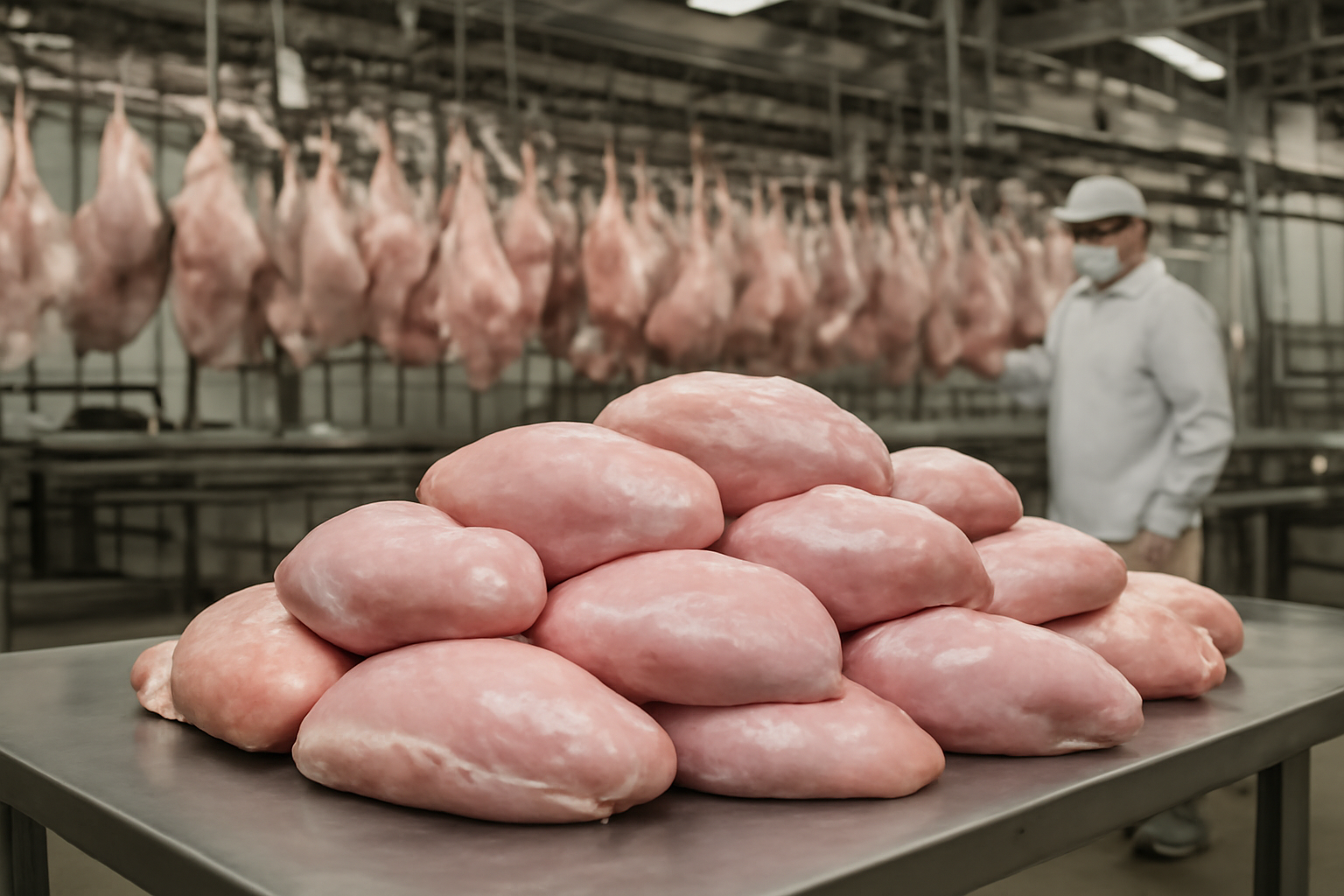
Brazil’s turkey meat industry is expanding again after a decade of declining output, supported by higher exports and access to additional overseas markets. Canal Rural reported that the country produced nearly 137,000 tonnes in 2025, an increase of 7.4% from the previous year. The recovery gives Brazilian poultry companies another product with which to broaden a global portfolio still dominated by chicken meat.
The domestic market also improved, although consumption remains limited compared with Brazil’s larger animal-protein categories. Per-capita turkey consumption increased from 297 grams to 332 grams, according to Canal Rural. That rise provides some support for processors, but foreign demand remains the main source of momentum. Nearly half of the turkey meat produced in Brazil is now destined for other countries, making access to buyers and compliance with importing-market requirements central to production decisions.
Exports rise as destination base broadens
Brazil exported more than 33,000 tonnes of turkey meat between January and June 2026, a 40% increase, Canal Rural reported. Export revenue rose from $154 million to $213 million, equivalent to growth of 38%. The available report does not specify the comparison period for those revenue figures, but the direction indicates that export earnings advanced alongside volumes.
Mexico is Brazil’s leading destination for turkey meat. Other important buyers include Chile, South Africa, the European Union and Peru. Brazilian product reached 88 international markets in 2025, giving exporters a relatively diversified destination base. This geographical spread can help processors place different cuts and processed products, while reducing reliance on a single buyer. It also increases the operational burden: plants must satisfy different sanitary protocols, certification rules and product specifications across importing markets.
Southern states anchor the supply chain
Production and exports are concentrated in southern Brazil. Santa Catarina accounted for 44.8% of shipments, followed by Rio Grande do Sul with 32% and Paraná with 22.5%, according to Canal Rural. Together, the three states represent virtually all Brazilian turkey meat exports. Their established poultry farms, feed supply, slaughtering infrastructure and port access give the region a practical base for rebuilding a turkey chain that already existed but had contracted over the previous decade.
A major project announced in Paraná for 2026 includes significant investment in a turkey meat plant focused on exports, although the publication did not identify the investor or disclose the value or planned capacity. The project points to expectations that foreign demand can support additional processing. Producers and processors will still need to adapt facilities and follow strict sanitary standards to enter demanding markets. For exporters, the commercial opportunity therefore depends not only on raising output, but also on maintaining animal-health controls, securing plant approvals and matching products to the requirements of a growing list of destinations.