Bosnia's Federation caps wood pellet trade margins at 4% and 8% as prices reach 900 KM per tonne
The Government of the Federation of Bosnia and Herzegovina has capped wholesale pellet margins at four percent and retail margins at eight percent for 90 days. The measure follows a run-up in prices to between 550 and 900 KM per tonne ahead of the heating season. Producer selling prices are not limited.
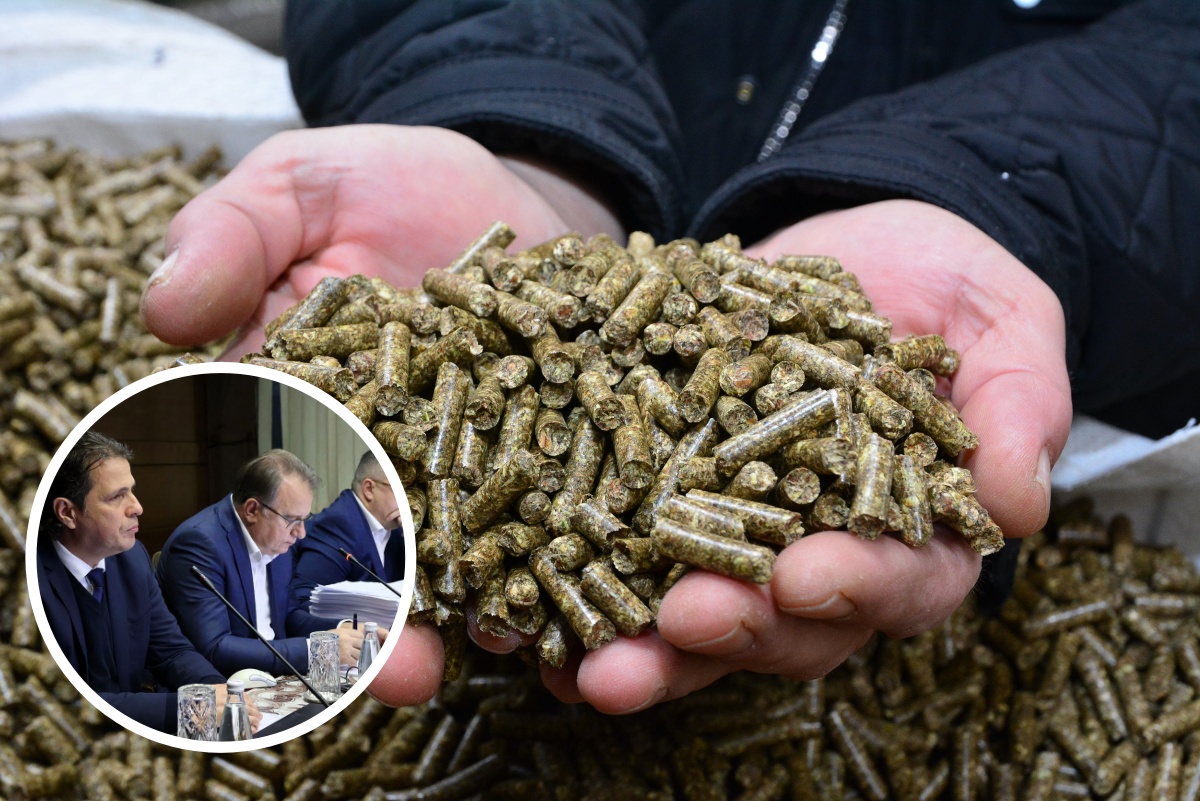
The Government of the Federation of Bosnia and Herzegovina has imposed direct price controls on wood pellets, capping the margins that wholesalers and retailers may charge. The decision was taken on 18 September at a telephone session, on the proposal of the Federal Ministry of Trade, Radiosarajevo.ba reported.
Under the decision, the maximum wholesale margin is four percent, calculated on the initial purchase base, and represents the total permitted margin of all wholesalers in the same distribution chain within the Federation. The maximum retail margin is eight percent of the retailer's purchase price. All calculations must be expressed in convertible marks (KM) per tonne of net weight, with the selling price of an individual package set in proportion to its net weight.
Scope and enforcement
The measure applies to companies and other legal and natural persons trading pellets on the territory of the Federation, regardless of their registered seat, the method of sale or the origin of the goods, according to jabuka.tv and Radiosarajevo.ba. It covers every trade name and quality class of wood pellet, in all packaging and in bulk, irrespective of whether the product carries a quality certificate. The decision does not change quality requirements or other conditions for placing the product legally on the market.
Alongside the margin caps, the decision regulates the purchase price and recognised costs, the calculation through the wholesale chain, internal transfers between related participants and producers, the selling price and additional fees, the treatment of existing stocks and price alignment, documentation and reporting obligations, and inspection supervision. It applies for 90 days from the day it enters into force.
The Federal Ministry of Trade, as proposer, said the aim is to prevent unjustified increases in trade margins while recognising actual delivery costs and monitoring market supply. The stated intent is to protect living standards, particularly for lower-income households, and to ease the burden of heating costs on family budgets. The decision does not set a single maximum retail price and does not limit the selling price charged by producers.
Prices from 550 to 900 KM per tonne
According to the latest figures of the Federal Ministry of Trade cited by cazin.net, a tonne of pellets cost around 750 KM in September, against 550 to 650 KM at the start of the year.
In the Una-Sana Canton, cazin.net reported prices ranging from about 550 to 900 KM per tonne, with the cheapest material difficult to obtain. Online listings reach about 850 KM per tonne, rising to 900 KM with delivery included. Muhamed Helać, director of a pellet production company, told cazin.net that current retail prices run between 830 and 850 KM per tonne including VAT, depending on the quality and class of the pellets and on whether transport is included.
An average heating season requires between three and four tonnes. At 900 KM per tonne, a household would spend between 2,700 and 3,600 KM on heating fuel alone. For a family buying four tonnes, the gap between 550 and 900 KM amounts to 1,400 KM per season.
Prices of around 550 KM can be found at some producers, but availability is the constraint: waiting lists are long, and some residents say that despite registering and waiting they never obtain the cheaper pellets, cazin.net reported. Buyers then turn to other traders, including filling stations that secured larger volumes earlier. According to market information cited by the outlet, some traders buy up significant quantities of output, repack the pellets in their own packaging and resell them to end customers at considerably higher prices.
"This lack of market control, this inability to limit margins and everything that is happening has no justification," said Murisa Marić, executive director of the DON consumer association from Prijedor.
Raw material squeeze behind the increases
Producers link the price increases to problems in sourcing feedstock. Lower output in the wood processing industry means less sawdust and other residues used to make pellets, while difficulties also exist in obtaining wood raw material from forestry, according to cazin.net. At the same time, part of domestic pellet output is sold on the European Union market, where producers find buyers with far greater purchasing power.
The Association of Certified Pellet Producers in BiH warned that some traders are trying to extract maximum advantage from the current situation. Its president, Goran Ivanović, said one solution would be to give producers access to larger volumes of raw material at more favourable prices.
Pellets sold in the Una-Sana Canton come mainly from production plants in the areas of Bosanski Petrovac, Bihać, Bosanska Krupa and Novi Grad.