Argentina’s crop exports underpin currency flows after $2.75 billion August settlement
Argentina’s agricultural sector settled $2.75 billion in August, taking the year-to-date total to $19.02 billion. Substantial exportable supplies of corn, wheat, soybean products and sunflower products could sustain foreign-currency inflows through year-end.
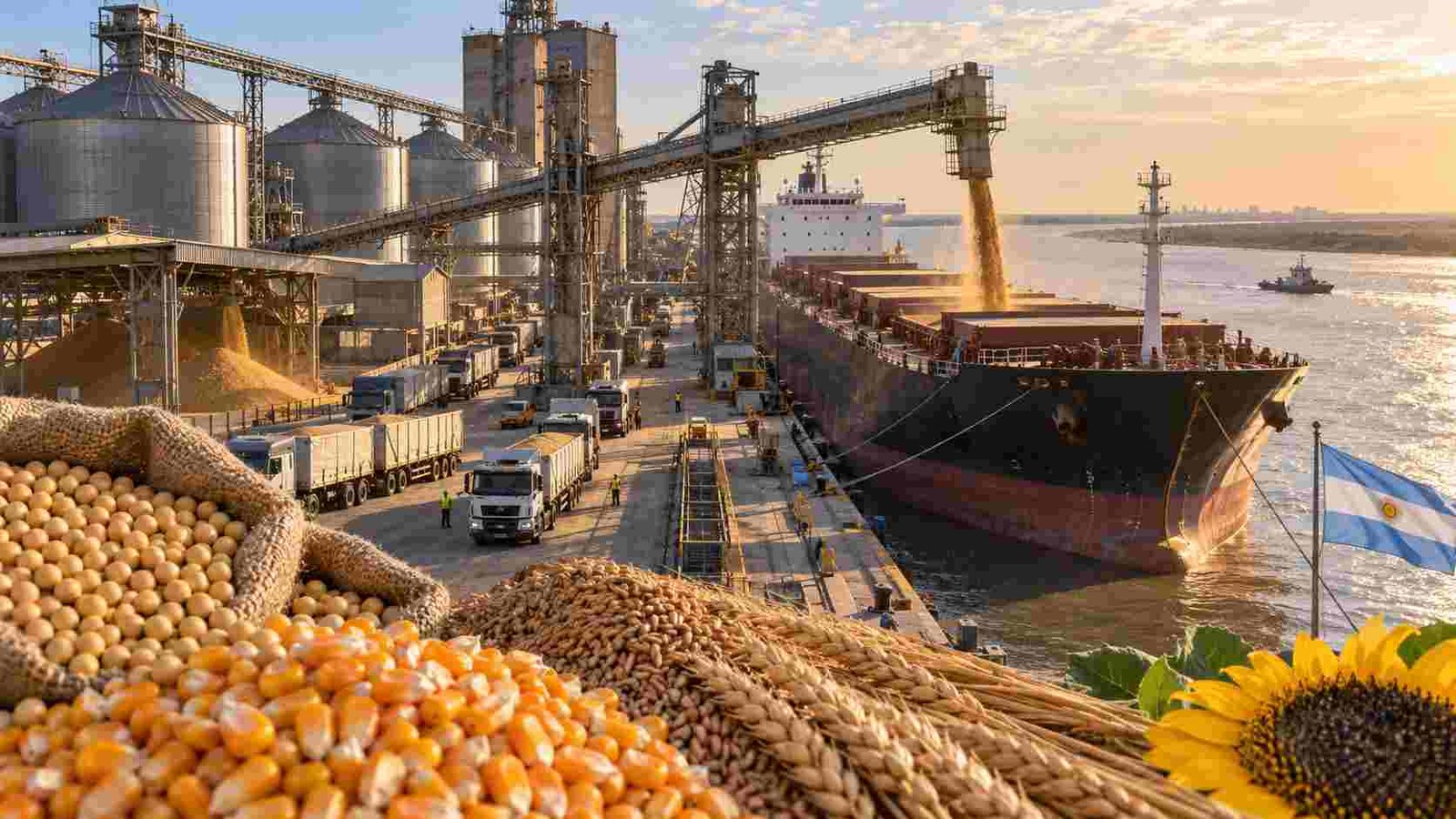
Large grain supplies support the foreign-exchange outlook
Argentina’s agricultural sector settled $2.75 billion in export earnings in August, bringing the total for the year to $19.02 billion, according to Ruralnet. The flow is being supported by sizeable unsold and unshipped supplies of corn, wheat, soybean products and sunflower products, giving the country’s foreign-exchange market a substantial pipeline for the remaining months of the year.
The outlook differs by commodity, but the central factor is volume. Export registrations already cover large portions of the available grain, while additional tonnage remains to be priced, sold and shipped. The report argues that current currency stability is being sustained more by market supply and demand than by temporary foreign-exchange incentives used in previous years.
Corn and wheat retain export capacity
More than 34 million tonnes of corn have been registered for export against a USDA-projected exportable balance of 45 million tonnes. The final availability could be higher when opening stocks and production are included: Argentina’s Secretariat of Agriculture, Livestock and Fisheries estimates output at more than 70 million tonnes. Argentina, the United States, Brazil and Ukraine together account for 90% of international corn trade.
Registrations for corn shipments from October onward remain limited, leaving a significant share of future export business still open. That creates potential for continued dollar settlements, although the timing will depend on producer sales, export execution and international prices.
For wheat, the 2025/26 harvest generated an estimated export potential of 21 million tonnes, of which 16 million tonnes have already been registered. Lower-than-expected protein quality had initially raised the prospect of a larger unsold surplus. However, developments in the Black Sea region, which represents 30% of global wheat trade, strengthened the market from July and prompted unusually high registrations for this stage of the season.
Preliminary August data also indicate broader destination diversification. Brazil, normally the near-exclusive buyer of Argentine wheat at this point in the year, accounted for only 50% to 60% of purchases. The remaining share suggests increased demand from other markets, reducing Argentina’s immediate reliance on a single buyer.
Soybean products hold the largest remaining value
Soybean processing remains a major source of potential export revenue. Registrations stand at 16 million tonnes of soybean meal against a potential 26 million tonnes, while soybean oil registrations total 3.3 million tonnes against an attainable 6 million tonnes. Crushing plants continue to process more than 4 million tonnes per month despite declining crushing margins.
At current prices, soybean by-products alone could still generate about $7 billion in settlements. Unprocessed soybean exports also retain positive margins, but September registrations are expected to remain well below 2025 levels, when preferential “soy dollar” arrangements accelerated sales in that channel.
Sunflower exports provide an additional source of foreign currency. The campaign is projected to deliver 2 million tonnes of exports in both oil and meal. With four months remaining, registered volumes already exceed the total recorded during 2025, meaning the sector’s foreign-exchange contribution could double compared with last year.
Futures activity reaches a record
Argentina’s A3 futures market handled almost 13 million tonnes in August, setting an operating record and exceeding the 11 million tonnes traded in September 2025, when a zero-withholding-tax soy dollar programme was in effect. Accumulated A3 hedges have reached almost 75 million tonnes and could surpass 100 million tonnes by year-end.
The figures show producers and commercial operators using market instruments to manage volatility while maintaining a pipeline of physical exports. For processors, traders and overseas buyers, the combination of large crop supplies and increased hedging offers greater visibility, although crushing margins, global prices and Black Sea conditions remain important variables for the pace of settlements.