Almond export shipments rise 12% to 18,867 KWE in July as Asian demand splits
Global almond export shipments reached 18,867 KWE in July, a 12 per cent increase, but cumulative volumes for March to July remained 2 per cent below the previous year. Southeast Asia expanded its intake while China, India and the Middle East followed divergent trends, leaving exporters without a single Asian demand signal.
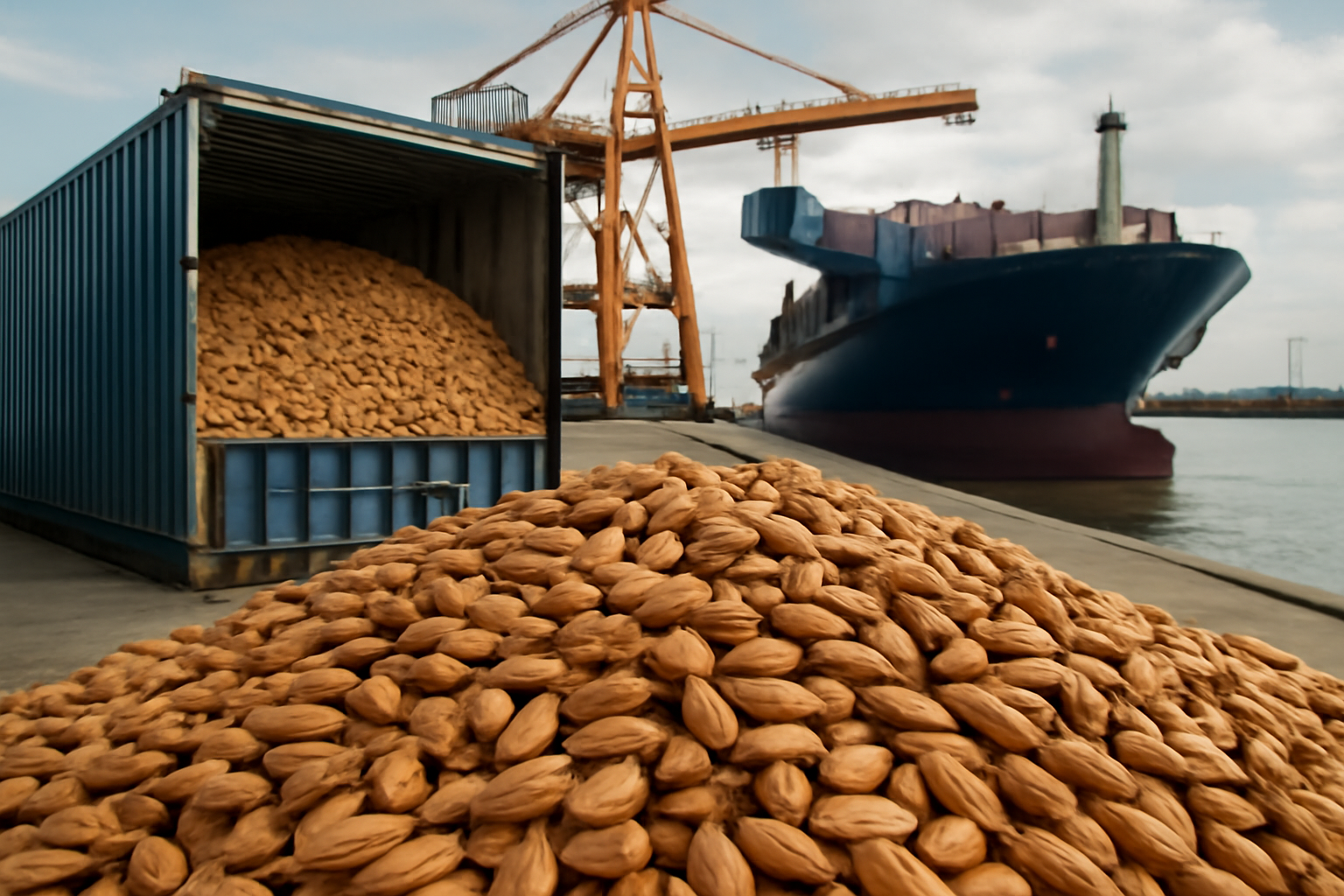
July shipments up 12 per cent
Global almond export shipments reached 18,867 KWE in July, up 12 per cent, according to monthly trade figures for the global almond market. KWE — kernel weight equivalent — is the unit the trade uses to put in-shell and shelled consignments on a single comparable basis, so monthly totals can be read directly against prior-year volumes without adjusting for shell content. The July figure marks a clear break from the softer shipment pace recorded earlier in the marketing year.
The rebound is a monthly result, not a seasonal one. Cumulative export shipments over the March-to-July window were still 2 per cent below the same period a year earlier. One month of double-digit growth has restored momentum without erasing the shortfall built up since March. For exporters holding forward positions, that distinction shapes how much of the current crop still has to move before the season closes.
Reading the two numbers together
The 12 per cent gain and the 2 per cent decline are not in conflict; they measure different windows. The first describes a single month, the second five months of cumulative trade. A five-month deficit narrows slowly, and July's contribution to the cumulative total is limited by its share of the period. The season-to-date gap will close only if August and the months that follow repeat or exceed July's pace.
- July export shipments: 18,867 KWE, a 12 per cent increase
- March-to-July cumulative shipments: 2 per cent below the prior year
- Demand direction: Southeast Asia expanding, with China, India and the Middle East on divergent paths
Those three lines describe a market that is moving again but has not recovered its earlier baseline. Volume growth concentrated in one month also raises the question of whether July reflected genuine consumption or restocking by buyers who had drawn down inventories during the weaker spring months. The answer will appear in the following months' shipment data rather than in the July headline.
Asia is no longer a single demand bloc
The clearest structural signal in the month is the split within Asian demand. Southeast Asia expanded its intake, while China, India and the Middle East followed divergent trends. These have been the pivot markets for almond trade flows, and when they move in the same direction the effect on global shipment totals is amplified. In July they did not.
For exporters, divergence changes the commercial approach. A market in which one region is growing while others move independently cannot be served with a single price, a single grade mix or a single allocation plan. Shipment programmes have to be set destination by destination, and the negotiating position differs in each. Southeast Asian buyers competing for kernels face different terms from counterparts in markets where offtake is flat or falling.
What the trade takes from July
For producers and processors, the July number relieves some pressure on carry-out and confirms that demand exists at current price levels. It does not confirm that the season will finish level with the previous year, and the 2 per cent cumulative shortfall remains the more reliable indicator of where the market stands.
For importers and distributors, the risk sits in the divergence rather than in the headline volume. Buyers in expanding markets are bidding into a supply pool that a strong export month has partly cleared, while those in markets with weaker offtake retain more leverage. The next monthly shipment release will show whether July was the start of a recovery or a single month of catch-up.