






"MENA" region includes following countries:
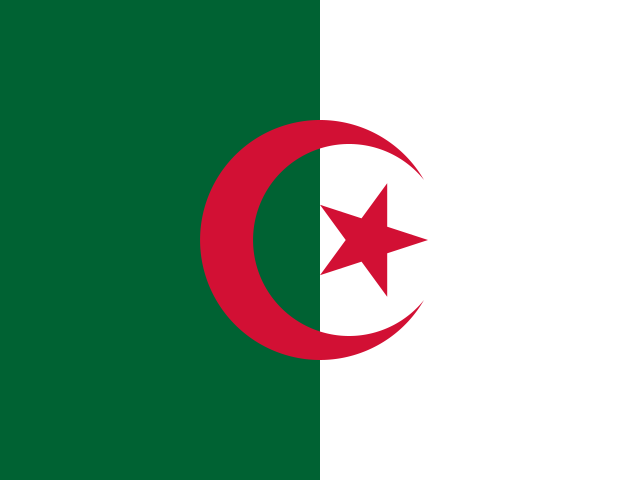 Algeria
 Bahrain
 Djibouti
 Egypt
Egypt Israel
 Jordan
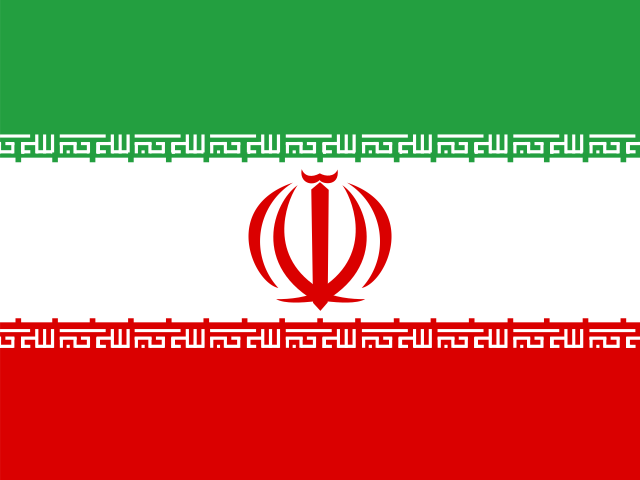 Iran
Iran Iraq
Iraq Qatar
Qatar Kuwait
 Lebanon
 Libya
Libya Malta
Malta Morocco
 the United Arab Emirates
 Oman
Oman Saudi Arabia
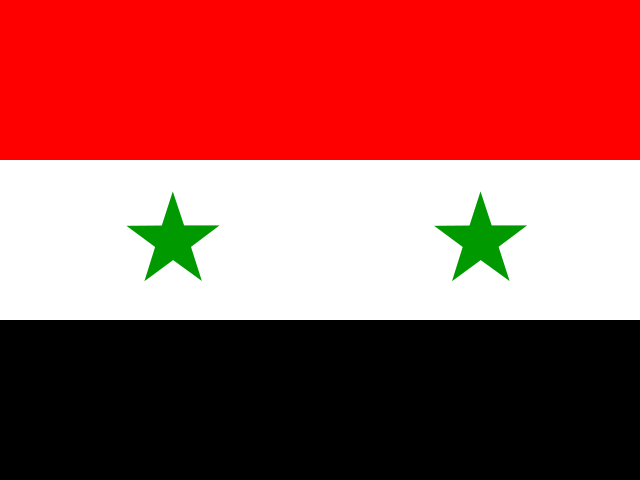 Syria
Syria Tunisia
 Yemen
YemenEarlier Report Observations
Between 2018 and 2020, the watermelon market in MENA showed mixed trends. The increasing digitalization of fruit and vegetable supply chains created new opportunities, while high levels of produce waste and the elevated price of organic products compared to conventional ones limited market expansion. By 2020, Saudi Arabia's Ministry of Environment, Water and Agriculture developed environmental, water, and agricultural policies to enhance sustainability and food security under Vision 2030, which helped support the market's value even as its physical volume saw a modest decline.
In 2021, a strategic agreement between Indian company KissanPro and Dubai's Barakat Vegetables & Fruit Co. facilitated access for agricultural produce to the Middle East, coinciding with a rise in the market's value to 9 372 million USD. The following year, despite Egypt's investment of approximately 2.73 billion USD to boost agricultural production through integrated development initiatives, the overall market volume fell to 7.0 million tons and its value dropped to 7 614 million USD.
The market's volume continued to contract in 2023, reaching 6.8 million tons, while its value declined to 5 900 million USD. By 2024, a 30% growth in regional e-commerce, increased demand for cold-chain logistics in the UAE, and a shift in consumer preferences towards fresh, high-quality produce had become notable factors in the region's fresh produce landscape.
Table of content
- 1. Disclaimer
- 2. Terms of use of the report
- 3. Product codes in the statistical classifications used in the report
-
4. Key Market Indicators and Trends
-
4.1. Key Market Indicators
-
4.1.1. In kind
- 4.1.1.1. Production, 2018-2023
- 4.1.1.2. Imports, 2018-2024
- 4.1.1.3. Exports, 2018-2024
- 4.1.1.4. Market size, 2018-2023
-
4.1.2. In value
- 4.1.2.1. Production, 2018-2023
- 4.1.2.2. Imports, 2018-2024
- 4.1.2.3. Exports, 2018-2024
- 4.1.2.4. Market size, 2018-2023
-
4.1.1. In kind
- 4.2. Market Trends and Factors
-
4.1. Key Market Indicators
-
5. Production
-
5.1. Production in MENA
- 5.1.1. Annual dynamics of production in MENA in kind, 2018-2023, K t
-
5.2. Global production by Country, 2018-2023
- 5.2.1. Annual dynamics of production by macroregions in kind, 2018-2023, K t
- 5.2.2. Dynamics of production structure by macroregions in kind, 2018-2023
- 5.2.3. Annual dynamics of production by country in kind, 2018-2023, K t
- 5.2.4. Structure of production by countries in kind, 2018-2023
- 5.2.5. Dynamics of peoduction structure by countries in kind, 2018-2023
-
5.1. Production in MENA
-
6. Exports
-
6.1. Exports (Direct Data*)
- 6.1.1. Exports - Total information
-
6.1.2. Exports in kind, K t
- 6.1.2.1. Annual dynamics of product's exports from Algeria in kind, 2018-2024, K t
- 6.1.2.2. Dynamics of product's exports in kind from Algeria by countries, 2018-2024, K t
- 6.1.2.3. Structure of product's exports in kind by countries, 2018-2024
-
6.1.3. Exports in value, M $ US
- 6.1.3.1. Annual dynamics of product's exports from Algeria in value, 2018-2024, M $ US
- 6.1.3.2. Dynamics of product's exports in value from Algeria by countries, 2018-2024, M $ US
- 6.1.3.3. Structure of product's exports in value by countries, 2018-2024
-
6.1.4. Average price of product's exports, $ US/t
- 6.1.4.1. Annual dynamics of average price of product's exports from Algeria, 2018-2024, $ US/t
- 6.1.4.2. Dynamics of average price of product's exports from Algeria by countries, 2018-2024, $ US/t
-
6.2. Exports (Mirror Data)
- 6.2.1. Exports - Total information
-
6.2.2. Exports in kind, K t
- 6.2.2.1. Annual dynamics of product's exports from Algeria in kind, 2018-2024, K t
- 6.2.2.2. Dynamics of product's exports in kind from Algeria by countries, 2018-2024, K t
- 6.2.2.3. Structure of product's exports in kind by countries, 2018-2024
-
6.2.3. Exports in value, M $ US
- 6.2.3.1. Annual dynamics of product's exports from Algeria in value, 2018-2024, M $ US
- 6.2.3.2. Dynamics of product's exports in value from Algeria by countries, 2018-2024, M $ US
- 6.2.3.3. Structure of product's exports in value by countries, 2018-2024
-
6.2.4. Average price of product's exports, $ US/t
- 6.2.4.1. Annual dynamics of average price of product's exports from Algeria, 2018-2024, $ US/t
- 6.2.4.2. Dynamics of average price of product's exports from Algeria by countries, 2018-2024, $ US/t
-
6.1. Exports (Direct Data*)
-
7. Imports
-
7.1. Imports (Direct Data*)
- 7.1.1. Imports - Total information
-
7.1.2. Imports in kind, K t
- 7.1.2.1. Annual dynamics of product's imports to Algeria in kind, 2018-2024, K t
- 7.1.2.2. Dynamics of product's imports in kind to Algeria by countries, 2018-2024, K t
- 7.1.2.3. Structure of product's imports in kind by countries, 2018-2024
-
7.1.3. Imports in value, M $ US
- 7.1.3.1. Annual dynamics of product's imports to Algeria in value, 2018-2024, M $ US
- 7.1.3.2. Dynamics of product's imports in value to Algeria by countries, 2018-2024, M $ US
- 7.1.3.3. Structure of product's imports in value by countries, 2018-2024
-
7.1.4. Average price of product's imports, $ US/t
- 7.1.4.1. Annual dynamics of average price of product's imports to Algeria, 2018-2024, $ US/t
- 7.1.4.2. Dynamics of average price of product's imports to Algeria by countries, 2018-2024, $ US/t
-
7.2. Imports (Mirror Data)
- 7.2.1. Imports - Total information
-
7.2.2. Imports in kind, K t
- 7.2.2.1. Annual dynamics of product's imports to Algeria in kind, 2018-2024, K t
- 7.2.2.2. Dynamics of product's imports in kind to Algeria by countries, 2018-2024, K t
- 7.2.2.3. Structure of product's imports in kind by countries, 2018-2024
-
7.2.3. Imports in value, M $ US
- 7.2.3.1. Annual dynamics of product's imports to Algeria in value, 2018-2024, M $ US
- 7.2.3.2. Dynamics of product's imports in value to Algeria by countries, 2018-2024, M $ US
- 7.2.3.3. Structure of product's imports in value by countries, 2018-2024
-
7.2.4. Average price of product's imports, $ US/t
- 7.2.4.1. Annual dynamics of average price of product's imports to Algeria, 2018-2024, $ US/t
- 7.2.4.2. Dynamics of average price of product's imports to Algeria by countries, 2018-2024, $ US/t
-
7.1. Imports (Direct Data*)
-
8. Trade balance
-
8.1. Trade balance (Direct Data)
- 8.1.1. In kind, K t
- 8.1.2. In value, M $ US
-
8.2. Trade balance (Mirror Data)
- 8.2.1. In kind, K t
- 8.2.2. In value, M $ US
-
8.1. Trade balance (Direct Data)
-
9. Top buying and selling countries, 2018-2024
-
9.1. Direct Data
- 9.1.1. Import in Value by Countries-buyers
- 9.1.2. Export in Value by Countries-suppliers
-
9.2. Mirror Data
- 9.2.1. Import in Value by Countries-buyers
- 9.2.2. Export in Value by Countries-suppliers
-
9.1. Direct Data
Production watermelons in MENA
In kind, 2017-2020, K t
Top producers of watermelons, 2017-2020
World map of production of watermelons, 2017-2020
MENA's watermelon production volume declined after two years of growth. In 2020, the region produced 8 159 K t of watermelons, representing a 3.3% year-over-year decrease. Over the 2017-2020 period, production increased by 6%, with a compound annual growth rate of 2.0%. The highest production volume was recorded in 2019 at 8 433 K t, while the largest annual increase occurred in 2018 at 5.1%.
Annual dynamics of production in MENA in kind, 2017-2020, K t
| Parameter | 2018 | 2019 | 2020 | CAGR | |
|---|---|---|---|---|---|
| 1 | Change from last year | 5.1% | 4.3% | (3.3%) | 2.0% |
In value, 2017-2020, M $ US
Following two years of decline, watermelon production value in MENA increased. In 2020, watermelon output was valued at 8 669 M $ US, up 2.4% from the previous year. Between 2017 and 2020, production value decreased by 11.8%, equivalent to an annualized decline of 4.1%. The lowest value was recorded in 2019 at 8 464 M $ US, with the largest annual decrease occurring that same year at 8.3%.
Annual dynamics of production in MENA in value, 2017-2020, M $ US
| Parameter | 2018 | 2019 | 2020 | CAGR | |
|---|---|---|---|---|---|
| 1 | Change from last year | (6.1%) | (8.3%) | 2.4% | (4.1%) |
Exports watermelons from MENA
Exports in kind, K t
The market demonstrated volatility during the observed period. Exports bottomed in 2018 at 317.1 K t and peaked in 2020 at 658.2 K t, representing a 2.1-fold difference between these years. In 2020, MENA's watermelon export volume reached 658.2 K t, showing a moderate 4.1% increase compared to 2019. The largest decline occurred in 2018 at 40.1%, while the largest increase was recorded in 2019 at 99.3%.
Annual dynamics of product's exports from MENA in kind, 2017-2020, K t
| Parameter | 2018 | 2019 | 2020 | CAGR | |
|---|---|---|---|---|---|
| 1 | Change from last year | (40.1%) | 99.3% | 4.1% | 7.6% |
Between 2017 and 2020, Spain (6.5% of exports in kind), France (6.2% of exports in kind), and Turkey (5.7% of exports in kind) were notable but not dominant buyers of watermelons from MENA. Together, these three countries accounted for 18.4% of total exports in kind.
Structure of product's exports in kind by countries, 2017-2020
World map of product's exports from MENA in kind, 2017-2020
Exports in value, M $ US
In 2020, the value of watermelons exported from MENA totaled 360.6 M $ US, representing a 17.8% increase from the previous year. Over the 2017-2020 period, export value increased by 35.5%, with a compound annual growth rate of 10.7%. The largest decline occurred in 2019 at 3.7%, while the largest increase was recorded in 2018 at 19.5%.
Annual dynamics of product's exports from MENA in value, 2017-2020, M $ US
| Parameter | 2018 | 2019 | 2020 | CAGR | |
|---|---|---|---|---|---|
| 1 | Change from last year | 19.5% | (3.7%) | 17.8% | 10.7% |
Between 2017 and 2020, MENA's watermelon export market featured a broad portfolio of buyers. Spain (13.9% of exports in value terms), France (13.7% of exports in value terms), and Turkey (3.8% of exports in value terms) together accounted for 31.4% of total export value. Many other countries held smaller but still significant shares in the remaining portion.
Structure of product's exports in value by countries, 2017-2020
World map of product's exports from MENA in value, 2017-2020
Imports watermelons to MENA
Imports in kind, K t
MENA's watermelon import volume increased for the second consecutive year. In 2020, imports reached 314.0 K t, up 3.6% from the previous year. Between 2017 and 2020, import volume decreased by 4%, equivalent to an annualized decline of 1.3%. The lowest import volume was recorded in 2018 at 263.6 K t, with the largest annual decrease occurring that same year at 19.4%. The largest annual increase was recorded in 2019 at 15.0%.
Annual dynamics of product's imports to MENA in kind, 2017-2020, K t
| Parameter | 2018 | 2019 | 2020 | CAGR | |
|---|---|---|---|---|---|
| 1 | Change from last year | (19.4%) | 15.0% | 3.6% | (1.3%) |
Throughout 2017-2020, India (4.6% of imports in kind), Turkey (1.3% of imports in kind), and Australia (0.7% of imports in kind) played leading roles in watermelon imports to MENA. Together, these three countries accounted for 6.6% of total import flows.
Structure of product's imports in kind by countries, 2017-2020
World map of product's imports to MENA in kind, 2017-2020
Imports in value, M $ US
In 2020, the value of watermelons imported by MENA amounted to 177.2 M $ US, down 15.4% from the previous year. Between 2017 and 2020, import value decreased by 7.3%, equivalent to an annualized decline of 2.5%. The highest import value was recorded in 2019 at 209.6 M $ US, with the largest annual increase occurring that same year at 13.5%.
Annual dynamics of product's imports to MENA in value, 2017-2020, M $ US
| Parameter | 2018 | 2019 | 2020 | CAGR | |
|---|---|---|---|---|---|
| 1 | Change from last year | (3.4%) | 13.5% | (15.4%) | (2.5%) |
Between 2017 and 2020, the country structure of watermelon imports by value remained highly diversified. India (7.0% of imports in value terms), Australia (4.9% of imports in value terms), and Turkey (1.1% of imports in value terms) together accounted for only 12.9% of total import value. The remaining 87.1% was distributed among numerous smaller markets.
Structure of product's imports in value by countries, 2017-2020
World map of product's imports to MENA in value, 2017-2020
Related Reports

2026-03-28
Watermelons market in Tajikistan
2026-03-28
Watermelons market in Southern Europe
2026-03-28
2026-03-28

Apples, pears and quinces market in MENA
2026-03-28

2026-03-28

2026-03-28

2026-03-28
Why Choose Us?
Only Verified Data
No Hidden Costs or Separate Fees
Smarter Subscription Pricing
Contact Our Team
Submit your inquiry using the form below — our team will get back to you within 24 hours.