






"SADC" region includes following countries:
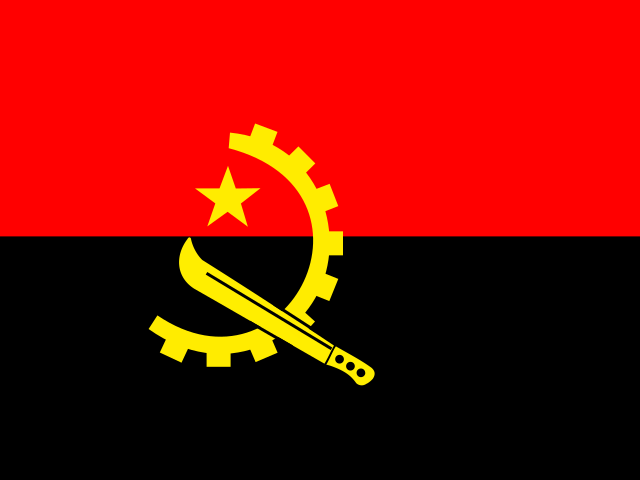 Angola
 Botswana
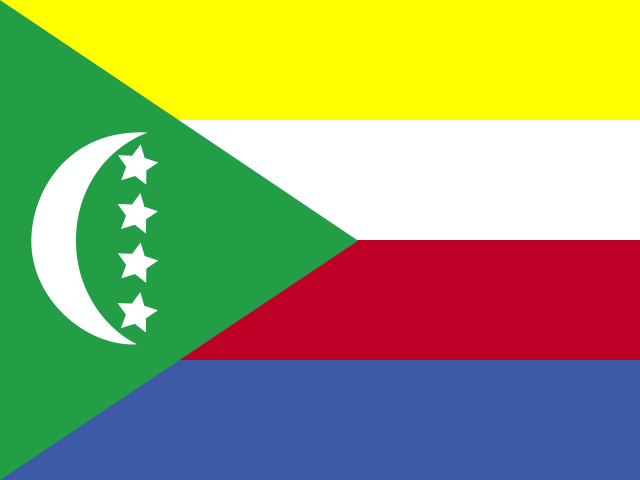 Comoros
 Democratic Republic of the Congo
 Eswatini
 Lesotho
 Madagascar
 Malawi
 Mauritius
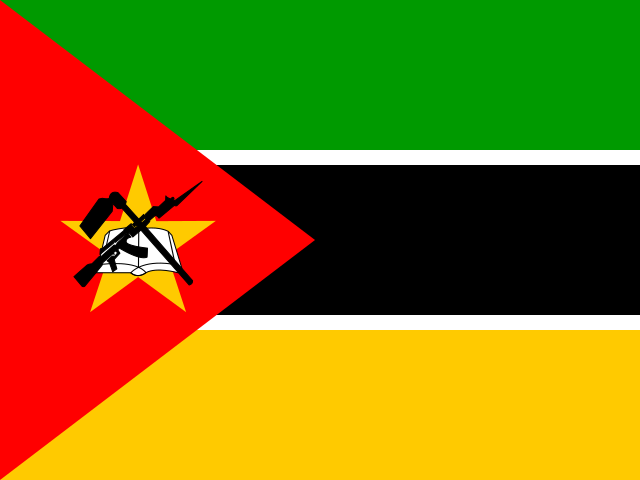 Mozambique
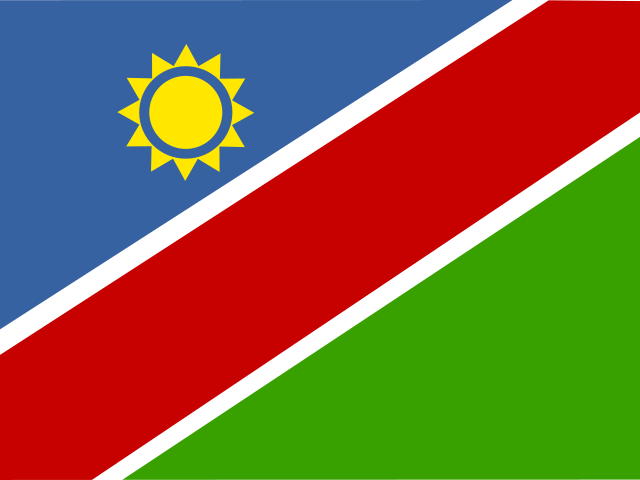 Namibia
 Seychelles
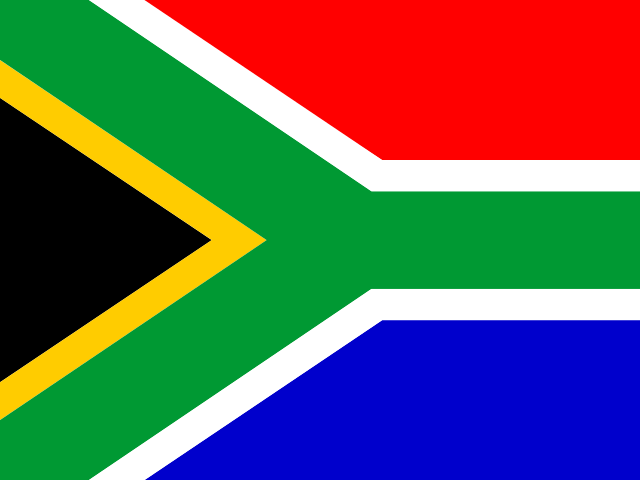 South Africa
 Tanzania
 Zambia
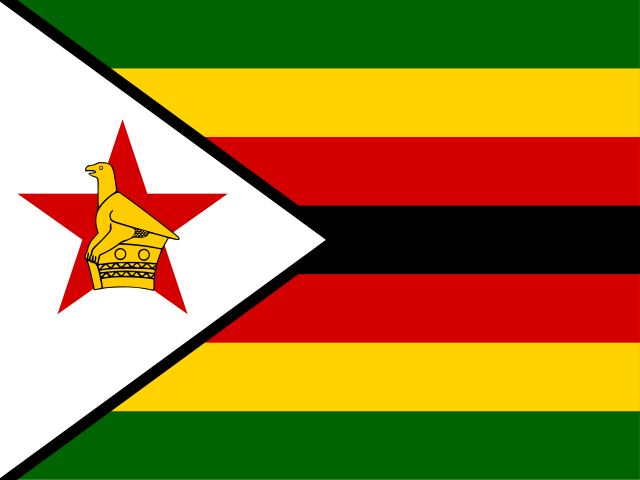 Zimbabwe
Earlier Report Observations
Between 2018 and 2021, soybean oilcake production in SADC grew from 1 106 to 1 481 thousand tons, while the market volume expanded from 1 704 to 2 034 thousand tons. This sustained increase was primarily driven by capital investment in crushing infrastructure, which added 600 000 tons of annual capacity over two years and supported import substitution. The rising demand for animal feed, linked to a growing middle class seeking high-protein food, provided a consistent pull for greater local output.
The COVID-19 pandemic in 2020 caused global supply chain disruptions, affecting soybean trade flows. However, expanded domestic crushing capacity helped mitigate import dependency during this period. Subsequently, the ongoing exploration of new export markets, including the near-ratification of a trade protocol with China, alongside continued infrastructure investment, supported production growth even as market volume saw a temporary adjustment in 2022 due to shifting trade patterns.
By 2023, production reached 1 847 thousand tons and the market volume stood at 2 071 thousand tons. The market's upward trajectory was maintained, underpinned by the established crushing capacity and a policy focus on stabilizing feed prices through domestic production, without major new regulatory changes influencing the period.
Table of content
- 1. Disclaimer
- 2. Terms of use of the report
- 3. Product codes in the statistical classifications used in the report
-
4. Key Market Indicators and Trends
-
4.1. Key Market Indicators
-
4.1.1. In kind
- 4.1.1.1. Production, 2018-2023
- 4.1.1.2. Imports, 2018-2024
- 4.1.1.3. Exports, 2018-2024
- 4.1.1.4. Market size, 2018-2023
-
4.1.1. In kind
- 4.2. Market Trends and Factors
-
4.1. Key Market Indicators
-
5. Production
-
5.1. Production in SADC
- 5.1.1. Annual dynamics of production in SADC in kind, 2018-2023, K t
-
5.2. Global production by Country, 2018-2023
- 5.2.1. Annual dynamics of production by macroregions in kind, 2018-2023, K t
- 5.2.2. Dynamics of production structure by macroregions in kind, 2018-2023
- 5.2.3. Annual dynamics of production by country in kind, 2018-2023, K t
- 5.2.4. Structure of production by countries in kind, 2018-2023
- 5.2.5. Dynamics of peoduction structure by countries in kind, 2018-2023
-
5.1. Production in SADC
-
6. Imports
-
6.1. Imports (Direct Data*)
- 6.1.1. Imports - Total information
-
6.1.2. Imports in kind, K t
- 6.1.2.1. Annual dynamics of product's imports to Angola in kind, 2018-2024, K t
- 6.1.2.2. Dynamics of product's imports in kind to Angola by countries, 2018-2024, K t
- 6.1.2.3. Structure of product's imports in kind by countries, 2018-2024
-
6.1.3. Imports in value, M $ US
- 6.1.3.1. Annual dynamics of product's imports to Angola in value, 2018-2024, M $ US
- 6.1.3.2. Dynamics of product's imports in value to Angola by countries, 2018-2024, M $ US
- 6.1.3.3. Structure of product's imports in value by countries, 2018-2024
-
6.1.4. Average price of product's imports, $ US/t
- 6.1.4.1. Annual dynamics of average price of product's imports to Angola, 2018-2024, $ US/t
- 6.1.4.2. Dynamics of average price of product's imports to Angola by countries, 2018-2024, $ US/t
-
6.2. Imports (Mirror Data)
- 6.2.1. Imports - Total information
-
6.2.2. Imports in kind, K t
- 6.2.2.1. Annual dynamics of product's imports to Angola in kind, 2018-2024, K t
- 6.2.2.2. Dynamics of product's imports in kind to Angola by countries, 2018-2024, K t
- 6.2.2.3. Structure of product's imports in kind by countries, 2018-2024
-
6.2.3. Imports in value, M $ US
- 6.2.3.1. Annual dynamics of product's imports to Angola in value, 2018-2024, M $ US
- 6.2.3.2. Dynamics of product's imports in value to Angola by countries, 2018-2024, M $ US
- 6.2.3.3. Structure of product's imports in value by countries, 2018-2024
-
6.2.4. Average price of product's imports, $ US/t
- 6.2.4.1. Annual dynamics of average price of product's imports to Angola, 2018-2024, $ US/t
- 6.2.4.2. Dynamics of average price of product's imports to Angola by countries, 2018-2024, $ US/t
-
6.1. Imports (Direct Data*)
-
7. Exports
-
7.1. Exports (Direct Data*)
- 7.1.1. Exports - Total information
-
7.1.2. Exports in kind, K t
- 7.1.2.1. Annual dynamics of product's exports from Angola in kind, 2018-2024, K t
- 7.1.2.2. Dynamics of product's exports in kind from Angola by countries, 2018-2024, K t
- 7.1.2.3. Structure of product's exports in kind by countries, 2018-2024
-
7.1.3. Exports in value, M $ US
- 7.1.3.1. Annual dynamics of product's exports from Angola in value, 2018-2024, M $ US
- 7.1.3.2. Dynamics of product's exports in value from Angola by countries, 2018-2024, M $ US
- 7.1.3.3. Structure of product's exports in value by countries, 2018-2024
-
7.1.4. Average price of product's exports, $ US/t
- 7.1.4.1. Annual dynamics of average price of product's exports from Angola, 2018-2024, $ US/t
- 7.1.4.2. Dynamics of average price of product's exports from Angola by countries, 2018-2024, $ US/t
-
7.2. Exports (Mirror Data)
- 7.2.1. Exports - Total information
-
7.2.2. Exports in kind, K t
- 7.2.2.1. Annual dynamics of product's exports from Angola in kind, 2018-2024, K t
- 7.2.2.2. Dynamics of product's exports in kind from Angola by countries, 2018-2024, K t
- 7.2.2.3. Structure of product's exports in kind by countries, 2018-2024
-
7.2.3. Exports in value, M $ US
- 7.2.3.1. Annual dynamics of product's exports from Angola in value, 2018-2024, M $ US
- 7.2.3.2. Dynamics of product's exports in value from Angola by countries, 2018-2024, M $ US
- 7.2.3.3. Structure of product's exports in value by countries, 2018-2024
-
7.2.4. Average price of product's exports, $ US/t
- 7.2.4.1. Annual dynamics of average price of product's exports from Angola, 2018-2024, $ US/t
- 7.2.4.2. Dynamics of average price of product's exports from Angola by countries, 2018-2024, $ US/t
-
7.1. Exports (Direct Data*)
-
8. Trade balance
-
8.1. Trade balance (Direct Data)
- 8.1.1. In kind, K t
- 8.1.2. In value, M $ US
-
8.2. Trade balance (Mirror Data)
- 8.2.1. In kind, K t
- 8.2.2. In value, M $ US
-
8.1. Trade balance (Direct Data)
-
9. Top buying and selling countries, 2018-2024
-
9.1. Direct Data
- 9.1.1. Import in Value by Countries-buyers
- 9.1.2. Export in Value by Countries-suppliers
-
9.2. Mirror Data
- 9.2.1. Import in Value by Countries-buyers
- 9.2.2. Export in Value by Countries-suppliers
-
9.1. Direct Data
Production soybean oilcake in SADC
In kind, 2017-2020, K t
Top producers of soybean oilcake, 2017-2020
World map of production of soybean oilcake, 2017-2020
SADC's soybean oilcake production has grown for the third year in a row. In 2020, the region produced 1 327 K t of soybean oilcake, marking a strong 11.7% increase from 2019. From 2017 to 2020, production rose by 50%, with an average annual growth rate of 14.5%.
Annual dynamics of production in SADC in kind, 2017-2020, K t
| Parameter | 2018 | 2019 | 2020 | CAGR | |
|---|---|---|---|---|---|
| 1 | Change from last year | 25.0% | 7.4% | 11.7% | 14.5% |
Exports soybean oilcake from SADC
Exports in kind, K t
The market showed an unstable pattern over the period. Exports reached their lowest point in 2018 at 64.6 K t, then peaked in 2017, with a 3.1-fold difference between these years. In 2020, SADC's soybean oilcake exports totaled 174.7 K t, reflecting a sharp year-over-year increase of 116.2%. The largest decline occurred in 2018, at 67.9%.
Annual dynamics of product's exports from SADC in kind, 2017-2020, K t
| Parameter | 2018 | 2019 | 2020 | CAGR | |
|---|---|---|---|---|---|
| 1 | Change from last year | (67.9%) | 25.1% | 116.2% | (4.6%) |
From 2017 to 2020, Kenya and Rwanda were the primary destinations for soybean oilcake exports in kind, accounting for 11.4% of total flows.
Structure of product's exports in kind by countries, 2017-2020
World map of product's exports from SADC in kind, 2017-2020
Exports in value, M $ US
In 2020, SADC exported 105.8 M $ US of soybean oilcake, showing a modest 3.5% increase from the previous year. Between 2017 and 2020, exports grew by 31.4%, equivalent to an annualized rate of 9.5%. The highest value was recorded in 2018 at 123.8 M $ US, while the largest decline occurred in 2019 at 17.5%. The largest increase was in 2018, at 53.8%.
Annual dynamics of product's exports from SADC in value, 2017-2020, M $ US
| Parameter | 2018 | 2019 | 2020 | CAGR | |
|---|---|---|---|---|---|
| 1 | Change from last year | 53.8% | (17.5%) | 3.5% | 9.5% |
Throughout 2017 to 2020, Kenya and Rwanda remained the top markets for soybean oilcake exports in value terms from SADC, together making up 13.1% of total flows.
Structure of product's exports in value by countries, 2017-2020
World map of product's exports from SADC in value, 2017-2020
Imports soybean oilcake to SADC
Imports in kind, K t
In 2020, foreign soybean oilcake supplies to SADC amounted to 669.7 K t, which is 6.2% lower than in 2019. From 2017 to 2020, imports decreased by 11.3%, with an annualized rate of 3.9%. The lowest value was in 2018 at 662.9 K t, and the largest decline occurred that same year at 12.2%. The largest increase was in 2019, at 7.7%.
Annual dynamics of product's imports to SADC in kind, 2017-2020, K t
| Parameter | 2018 | 2019 | 2020 | CAGR | |
|---|---|---|---|---|---|
| 1 | Change from last year | (12.2%) | 7.7% | (6.2%) | (3.9%) |
From 2017 to 2020, Argentina, India, and Paraguay were the leading sources for soybean oilcake imports in kind to SADC. Argentina accounted for 65.3% of imports, India for 3.6%, and Paraguay for 2.1%, together representing 71.0% of total flows.
Structure of product's imports in kind by countries, 2017-2020
World map of product's imports to SADC in kind, 2017-2020
Imports in value, M $ US
In 2020, cross-border shipments of soybean oilcake to SADC registered 262.3 M $ US, indicating a slight 2.3% year-over-year uptick. Over the period 2017 to 2020, imports fell by 6.5%, with a compound annual growth rate of 2.2%. The minimum value was in 2019 at 256.5 M $ US, while the maximum was in 2018 at 289.8 M $ US. The largest decline occurred in 2019 at 11.5%, and the largest increase was in 2018 at 3.3%.
Annual dynamics of product's imports to SADC in value, 2017-2020, M $ US
| Parameter | 2018 | 2019 | 2020 | CAGR | |
|---|---|---|---|---|---|
| 1 | Change from last year | 3.3% | (11.5%) | 2.3% | (2.2%) |
Throughout 2017 to 2020, Argentina, India, and Paraguay formed the core group of markets for soybean oilcake imports in value terms to SADC. Argentina contributed 59.7% of imports, India 4.7%, and Paraguay 2.2%, together accounting for 66.6% of total flows.
Structure of product's imports in value by countries, 2017-2020
World map of product's imports to SADC in value, 2017-2020
Related Reports

Soybean oilcake market in Vietnam
2026-03-29
Soybean oilcake market in Asia
2026-03-29
Soybean oilcake market Ukraine
2026-03-29
Soybean oilcake market in Tunisia
2026-03-29

Rapeseed oilcake market in SADC
2026-03-29

Cottonseed oil-cake market in SADC
2026-03-29

Why Choose Us?
Only Verified Data
No Hidden Costs or Separate Fees
Smarter Subscription Pricing
Contact Our Team
Submit your inquiry using the form below — our team will get back to you within 24 hours.