






"Western Africa" region includes following countries:
 Cabo Verde
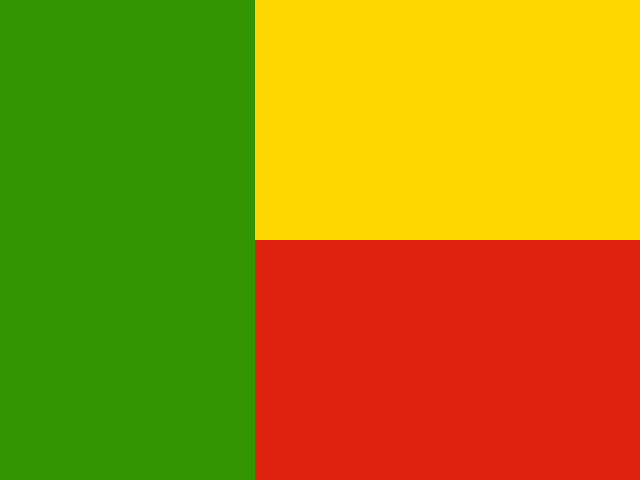 Benin
Benin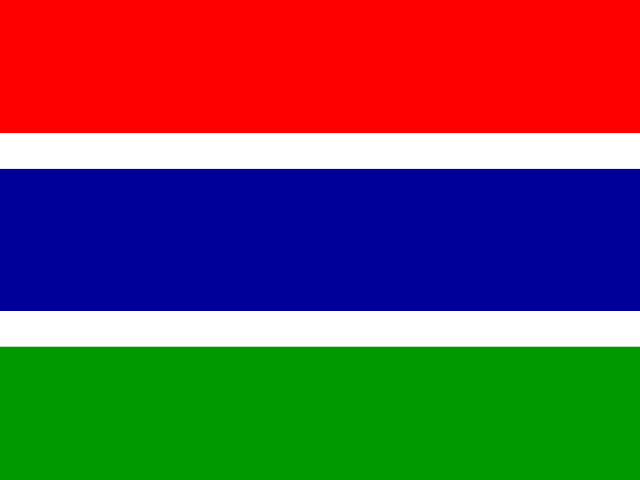 Gambia
 Ghana
Ghana Guinea
 Côte d'Ivoire
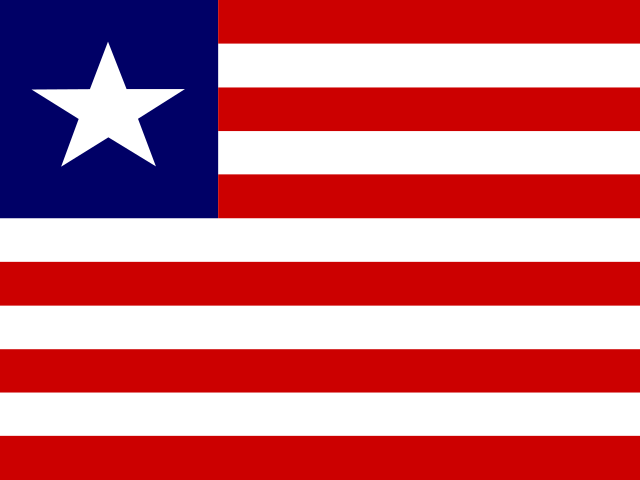 Liberia
 Mali
Mali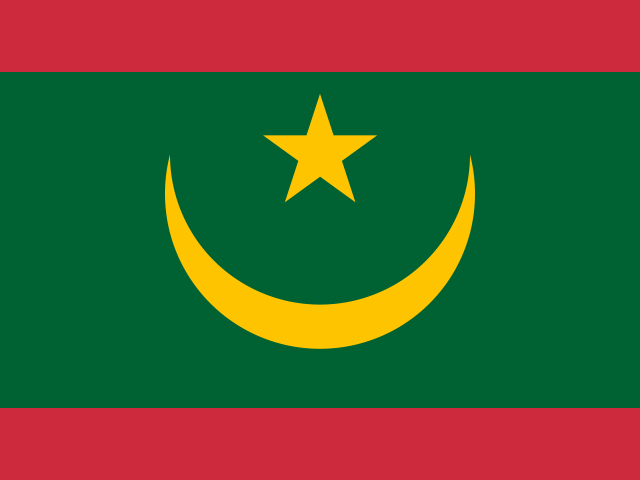 Mauritania
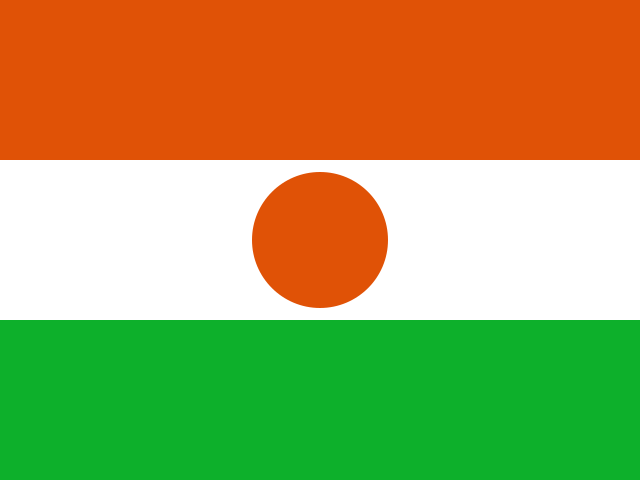 Niger
Niger Nigeria
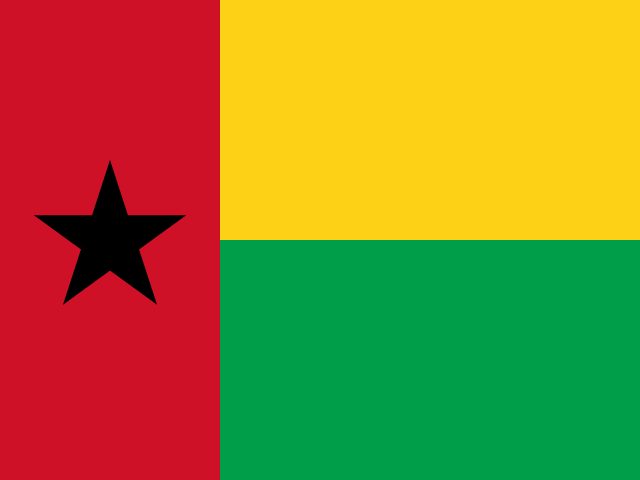 Guinea-Bissau
 Saint Helena, Ascension and Tristan da Cunha
 Senegal
 Sierra Leone
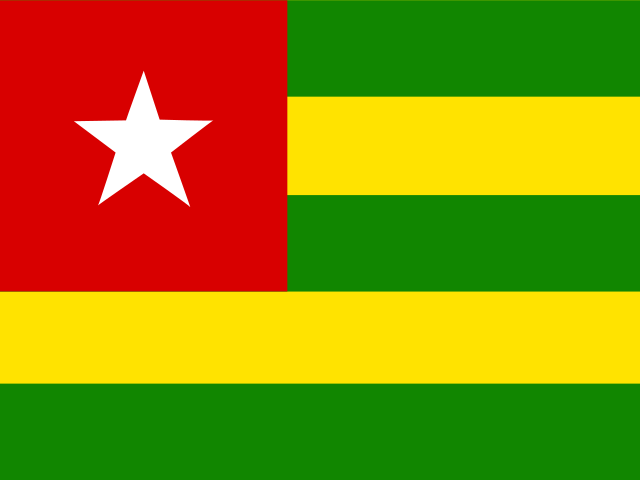 Togo
Togo Burkina Faso
Earlier Report Observations
The market for non-chemically modified soybean oil in West Africa expanded significantly from 2018 to 2020, with market volume rising from 272 thousand tons to 435 thousand tons. This growth was driven by increasing domestic production, which more than doubled over the period, and a surge in imports during 2020.
After peaking in 2020, market volume contracted to 343 thousand tons in 2021 and stabilized around 335-359 thousand tons in 2022-2023. The market adjustment in 2022 coincided with the ongoing impact of the COVID-19 pandemic on supply chains and trade, as noted in industry reports covering that period. By 2023, production reached a new high of 222 thousand tons, supporting market volume despite rising exports.
By 2024, broader trends such as growing consumer preference for non-GMO oils and government policies promoting sustainable agriculture and biofuels were influencing the market's direction, contributing to shifts in trade patterns and domestic production capacity.
Table of content
- 1. Disclaimer
- 2. Terms of use of the report
- 3. Product codes in the statistical classifications used in the report
-
4. Key Market Indicators and Trends
-
4.1. Key Market Indicators
-
4.1.1. In kind
- 4.1.1.1. Production, 2018-2023
- 4.1.1.2. Imports, 2018-2024
- 4.1.1.3. Exports, 2018-2024
- 4.1.1.4. Market size, 2018-2023
-
4.1.1. In kind
- 4.2. Market Trends and Factors
-
4.1. Key Market Indicators
-
5. Production
-
5.1. Production in Western Africa
- 5.1.1. Annual dynamics of production in Western Africa in kind, 2018-2023, K t
-
5.2. Global production by Country, 2018-2023
- 5.2.1. Annual dynamics of production by macroregions in kind, 2018-2023, K t
- 5.2.2. Dynamics of production structure by macroregions in kind, 2018-2023
- 5.2.3. Annual dynamics of production by country in kind, 2018-2023, K t
- 5.2.4. Structure of production by countries in kind, 2018-2023
- 5.2.5. Dynamics of peoduction structure by countries in kind, 2018-2023
-
5.1. Production in Western Africa
-
6. Imports
-
6.1. Imports (Direct Data*)
- 6.1.1. Imports - Total information
-
6.1.2. Imports in kind, K t
- 6.1.2.1. Annual dynamics of product's imports to Cabo Verde in kind, 2018-2024, K t
- 6.1.2.2. Dynamics of product's imports in kind to Cabo Verde by countries, 2018-2024, K t
- 6.1.2.3. Structure of product's imports in kind by countries, 2018-2024
-
6.1.3. Imports in value, M $ US
- 6.1.3.1. Annual dynamics of product's imports to Cabo Verde in value, 2018-2024, M $ US
- 6.1.3.2. Dynamics of product's imports in value to Cabo Verde by countries, 2018-2024, M $ US
- 6.1.3.3. Structure of product's imports in value by countries, 2018-2024
-
6.1.4. Average price of product's imports, $ US/t
- 6.1.4.1. Annual dynamics of average price of product's imports to Cabo Verde, 2018-2024, $ US/t
- 6.1.4.2. Dynamics of average price of product's imports to Cabo Verde by countries, 2018-2024, $ US/t
-
6.2. Imports (Mirror Data)
- 6.2.1. Imports - Total information
-
6.2.2. Imports in kind, K t
- 6.2.2.1. Annual dynamics of product's imports to Cabo Verde in kind, 2018-2024, K t
- 6.2.2.2. Dynamics of product's imports in kind to Cabo Verde by countries, 2018-2024, K t
- 6.2.2.3. Structure of product's imports in kind by countries, 2018-2024
-
6.2.3. Imports in value, M $ US
- 6.2.3.1. Annual dynamics of product's imports to Cabo Verde in value, 2018-2024, M $ US
- 6.2.3.2. Dynamics of product's imports in value to Cabo Verde by countries, 2018-2024, M $ US
- 6.2.3.3. Structure of product's imports in value by countries, 2018-2024
-
6.2.4. Average price of product's imports, $ US/t
- 6.2.4.1. Annual dynamics of average price of product's imports to Cabo Verde, 2018-2024, $ US/t
- 6.2.4.2. Dynamics of average price of product's imports to Cabo Verde by countries, 2018-2024, $ US/t
-
6.1. Imports (Direct Data*)
-
7. Exports
-
7.1. Exports (Direct Data*)
- 7.1.1. Exports - Total information
-
7.1.2. Exports in kind, K t
- 7.1.2.1. Annual dynamics of product's exports from Cabo Verde in kind, 2018-2024, K t
- 7.1.2.2. Dynamics of product's exports in kind from Cabo Verde by countries, 2018-2024, K t
- 7.1.2.3. Structure of product's exports in kind by countries, 2018-2024
-
7.1.3. Exports in value, M $ US
- 7.1.3.1. Annual dynamics of product's exports from Cabo Verde in value, 2018-2024, M $ US
- 7.1.3.2. Dynamics of product's exports in value from Cabo Verde by countries, 2018-2024, M $ US
- 7.1.3.3. Structure of product's exports in value by countries, 2018-2024
-
7.1.4. Average price of product's exports, $ US/t
- 7.1.4.1. Annual dynamics of average price of product's exports from Cabo Verde, 2018-2024, $ US/t
- 7.1.4.2. Dynamics of average price of product's exports from Cabo Verde by countries, 2018-2024, $ US/t
-
7.2. Exports (Mirror Data)
- 7.2.1. Exports - Total information
-
7.2.2. Exports in kind, K t
- 7.2.2.1. Annual dynamics of product's exports from Cabo Verde in kind, 2018-2024, K t
- 7.2.2.2. Dynamics of product's exports in kind from Cabo Verde by countries, 2018-2024, K t
- 7.2.2.3. Structure of product's exports in kind by countries, 2018-2024
-
7.2.3. Exports in value, M $ US
- 7.2.3.1. Annual dynamics of product's exports from Cabo Verde in value, 2018-2024, M $ US
- 7.2.3.2. Dynamics of product's exports in value from Cabo Verde by countries, 2018-2024, M $ US
- 7.2.3.3. Structure of product's exports in value by countries, 2018-2024
-
7.2.4. Average price of product's exports, $ US/t
- 7.2.4.1. Annual dynamics of average price of product's exports from Cabo Verde, 2018-2024, $ US/t
- 7.2.4.2. Dynamics of average price of product's exports from Cabo Verde by countries, 2018-2024, $ US/t
-
7.1. Exports (Direct Data*)
-
8. Trade balance
-
8.1. Trade balance (Direct Data)
- 8.1.1. In kind, K t
- 8.1.2. In value, M $ US
-
8.2. Trade balance (Mirror Data)
- 8.2.1. In kind, K t
- 8.2.2. In value, M $ US
-
8.1. Trade balance (Direct Data)
-
9. Top buying and selling countries, 2018-2024
-
9.1. Direct Data
- 9.1.1. Import in Value by Countries-buyers
- 9.1.2. Export in Value by Countries-suppliers
-
9.2. Mirror Data
- 9.2.1. Import in Value by Countries-buyers
- 9.2.2. Export in Value by Countries-suppliers
-
9.1. Direct Data
Production soybean oil and fractions in Western Africa
In kind, 2017-2020, K t
Top producers of soybean oil and fractions, 2017-2020
World map of production of soybean oil and fractions, 2017-2020
Soybean oil and fractions production in Western Africa has increased for the third consecutive year. In 2020, production reached 161.8 K t, marking a 13.1% rise compared to the previous year. From 2017 to 2020, production grew by 81.7%, which translates to an annualized growth rate of 22.0%.
Annual dynamics of production in Western Africa in kind, 2017-2020, K t
| Parameter | 2018 | 2019 | 2020 | CAGR | |
|---|---|---|---|---|---|
| 1 | Change from last year | 10.4% | 45.6% | 13.1% | 22.0% |
Exports soybean oil and fractions from Western Africa
Exports in kind, K t
The market experienced significant fluctuations during this period. Export volumes peaked in 2018 at 7.7 K t, then dropped sharply to a low of 0.1 K t in 2019, representing a 55-fold decrease. In 2020, Western Africa exported 0.2 K t of soybean oil and fractions, showing a 41.3% increase from the previous year. The largest decline occurred in 2019, with a drop of 98.2%, while the largest increase was recorded in 2018, at 4 305.5%.
Annual dynamics of product's exports from Western Africa in kind, 2017-2020, K t
| Parameter | 2018 | 2019 | 2020 | CAGR | |
|---|---|---|---|---|---|
| 1 | Change from last year | 4 305.5% | (98.2%) | 41.3% | 4.3% |
From 2017 to 2020, France was the leading export partner for soybean oil and fractions from Western Africa, accounting for 84.8% of total flows, with the remainder distributed among other partners.
Structure of product's exports in kind by countries, 2017-2020
World map of product's exports from Western Africa in kind, 2017-2020
Exports in value, M $ US
The data shows irregular changes, indicating a volatile market environment. Export values reached a peak in 2018 at 4.2 M $ US, then fell to a low of 0.1 M $ US in 2020, a 38-fold difference. In 2020, the value of soybean oil and fractions exported from Western Africa was 0.1 M $ US, down 21.8% from the previous year. The largest decline occurred in 2019, with a decrease of 96.6%, while the largest increase was in 2018, at 2 202.0%.
Annual dynamics of product's exports from Western Africa in value, 2017-2020, M $ US
| Parameter | 2018 | 2019 | 2020 | CAGR | |
|---|---|---|---|---|---|
| 1 | Change from last year | 2 202.0% | (96.6%) | (21.8%) | (15.1%) |
From 2017 to 2020, the export structure in value terms was dominated by France and India, which together accounted for 80.5% of total flows.
Structure of product's exports in value by countries, 2017-2020
World map of product's exports from Western Africa in value, 2017-2020
Imports soybean oil and fractions to Western Africa
Imports in kind, K t
After a two-year decline, imports of soybean oil and fractions into Western Africa increased. In 2020, import volume totaled 273.1 K t, a 58.3% rise year-over-year. From 2017 to 2020, imports grew by 37.7%, with a compound annual growth rate (CAGR) of 11.3%. The lowest volume was recorded in 2019 at 172.5 K t, and the largest decline occurred in 2018, with an 8.5% drop.
Annual dynamics of product's imports to Western Africa in kind, 2017-2020, K t
| Parameter | 2018 | 2019 | 2020 | CAGR | |
|---|---|---|---|---|---|
| 1 | Change from last year | (8.5%) | (4.9%) | 58.3% | 11.3% |
From 2017 to 2020, Malaysia (28.4% of imports in kind), Indonesia (24.8% of imports in kind), and Singapore (18.7% of imports in kind) were the leading sources for imports into Western Africa, together making up 71.8% of total flows.
Structure of product's imports in kind by countries, 2017-2020
World map of product's imports to Western Africa in kind, 2017-2020
Imports in value, M $ US
The market showed an unstable trend throughout the period. Import values varied threefold, from a low in 2019 to a high in 2020. In 2020, Western Africa imported 219.9 M $ US worth of soybean oil and fractions, a sharp increase of 197.4% compared to 2019. The lowest value was recorded in 2019 at 73.9 M $ US, and the largest decline occurred in 2018, with a 7.2% decrease.
Annual dynamics of product's imports to Western Africa in value, 2017-2020, M $ US
| Parameter | 2018 | 2019 | 2020 | CAGR | |
|---|---|---|---|---|---|
| 1 | Change from last year | (7.2%) | (5.2%) | 197.4% | 37.8% |
From 2017 to 2020, Malaysia (22.6% of imports in value terms), Indonesia (20.3% of imports in value terms), and Singapore (17.9% of imports in value terms) remained the main suppliers of soybean oil and fractions to Western Africa, collectively accounting for 60.8% of total imports in value terms.
Structure of product's imports in value by countries, 2017-2020
World map of product's imports to Western Africa in value, 2017-2020
Related Reports
Soybean oil and fractions market in Vietnam
2026-03-28
Soybean oil and fractions market in Africa
2026-03-28




Why Choose Us?
Only Verified Data
No Hidden Costs or Separate Fees
Smarter Subscription Pricing
Contact Our Team
Submit your inquiry using the form below — our team will get back to you within 24 hours.