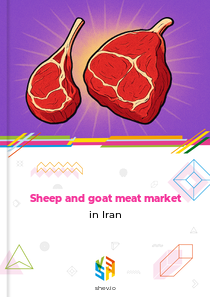







Earlier Report Observations
The market for sheep and goat meat in Iran showed considerable volatility between 2018 and 2023. Starting at 421.6 thousand tons in 2018, the total market volume contracted sharply to 305.8 thousand tons in 2019. A recovery phase began in 2020, lifting the market to 369.8 thousand tons, followed by a very strong expansion to 553.7 thousand tons in 2021. Growth continued, albeit at a slower pace, reaching a peak of 590.4 thousand tons in 2022 before a modest correction to 557.1 thousand tons in 2023.
Imports of sheep and goat meat fell dramatically from 40.5 thousand tons in 2018 to a mere 0.6 thousand tons in 2021, indicating a period of greatly reduced foreign supply. This trend reversed from 2022 onward, with imports recovering to 20.1 thousand tons in 2023 and then surging to 44.4 thousand tons in 2024. This final increase was driven by direct state intervention to regulate the market. Authorities initiated daily imports of frozen meat from countries like Mongolia, Australia, and Russia, distributing it through Tehran's fruit and vegetable markets at controlled prices to combat domestic price inflation, which had exceeded 40% for red meat. The state-owned Livestock Support Company played a central role in this import and distribution scheme aimed at stabilizing supply for consumers.
Table of content
- 1. Disclaimer
- 2. Terms of use of the report
- 3. Product codes in the statistical classifications used in the report
-
4. Key Market Indicators and Trends
-
4.1. Key Market Indicators
-
4.1.1. In kind
- 4.1.1.1. Production, 2018-2023
- 4.1.1.2. Imports, 2018-2024
- 4.1.1.3. Exports, 2018-2024
- 4.1.1.4. Market size, 2018-2023
-
4.1.1. In kind
- 4.2. Market Trends and Factors
-
4.1. Key Market Indicators
-
5. Production
-
5.1. Production in Iran
- 5.1.1. Annual dynamics of production in Iran in kind, 2018-2023, K t
- 5.1.2. Annual dynamics of production in Iran in value, 2018-2023, $ US
-
5.2. Global production by Country, 2018-2023
- 5.2.1. Annual dynamics of production by macroregions in kind, 2018-2023, K t
- 5.2.2. Dynamics of production structure by macroregions in kind, 2018-2023
- 5.2.3. Annual dynamics of production by country in kind, 2018-2023, K t
- 5.2.4. Structure of production by countries in kind, 2018-2023
- 5.2.5. Dynamics of peoduction structure by countries in kind, 2018-2023
-
5.1. Production in Iran
-
6. Imports
-
6.1. Imports (Direct Data*)
- 6.1.1. Imports - Total information
-
6.1.2. Imports in kind, t
- 6.1.2.1. Annual dynamics of product's imports to Iran in kind, 2018-2024, t
- 6.1.2.2. Dynamics of product's imports in kind to Iran by countries, 2018-2024, t
- 6.1.2.3. Structure of product's imports in kind by countries, 2018-2024
-
6.1.3. Imports in value, M $ US
- 6.1.3.1. Annual dynamics of product's imports to Iran in value, 2018-2024, M $ US
- 6.1.3.2. Dynamics of product's imports in value to Iran by countries, 2018-2024, M $ US
- 6.1.3.3. Structure of product's imports in value by countries, 2018-2024
-
6.1.4. Average price of product's imports, $ US/t
- 6.1.4.1. Annual dynamics of average price of product's imports to Iran, 2018-2024, $ US/t
- 6.1.4.2. Dynamics of average price of product's imports to Iran by countries, 2018-2024, $ US/t
-
6.2. Imports (Mirror Data)
- 6.2.1. Imports - Total information
-
6.2.2. Imports in kind, t
- 6.2.2.1. Annual dynamics of product's imports to Iran in kind, 2018-2024, t
- 6.2.2.2. Dynamics of product's imports in kind to Iran by countries, 2018-2024, t
- 6.2.2.3. Structure of product's imports in kind by countries, 2018-2024
-
6.2.3. Imports in value, M $ US
- 6.2.3.1. Annual dynamics of product's imports to Iran in value, 2018-2024, M $ US
- 6.2.3.2. Dynamics of product's imports in value to Iran by countries, 2018-2024, M $ US
- 6.2.3.3. Structure of product's imports in value by countries, 2018-2024
-
6.2.4. Average price of product's imports, $ US/t
- 6.2.4.1. Annual dynamics of average price of product's imports to Iran, 2018-2024, $ US/t
- 6.2.4.2. Dynamics of average price of product's imports to Iran by countries, 2018-2024, $ US/t
-
6.1. Imports (Direct Data*)
-
7. Exports
-
7.1. Exports (Direct Data*)
- 7.1.1. Exports - Total information
-
7.1.2. Exports in kind, t
- 7.1.2.1. Annual dynamics of product's exports from Iran in kind, 2018-2024, t
- 7.1.2.2. Dynamics of product's exports in kind from Iran by countries, 2018-2024, t
- 7.1.2.3. Structure of product's exports in kind by countries, 2018-2024
-
7.1.3. Exports in value, M $ US
- 7.1.3.1. Annual dynamics of product's exports from Iran in value, 2018-2024, M $ US
- 7.1.3.2. Dynamics of product's exports in value from Iran by countries, 2018-2024, M $ US
- 7.1.3.3. Structure of product's exports in value by countries, 2018-2024
-
7.1.4. Average price of product's exports, $ US/t
- 7.1.4.1. Annual dynamics of average price of product's exports from Iran, 2018-2024, $ US/t
- 7.1.4.2. Dynamics of average price of product's exports from Iran by countries, 2018-2024, $ US/t
-
7.2. Exports (Mirror Data)
- 7.2.1. Exports - Total information
-
7.2.2. Exports in kind, t
- 7.2.2.1. Annual dynamics of product's exports from Iran in kind, 2018-2024, t
- 7.2.2.2. Dynamics of product's exports in kind from Iran by countries, 2018-2024, t
- 7.2.2.3. Structure of product's exports in kind by countries, 2018-2024
-
7.2.3. Exports in value, M $ US
- 7.2.3.1. Annual dynamics of product's exports from Iran in value, 2018-2024, M $ US
- 7.2.3.2. Dynamics of product's exports in value from Iran by countries, 2018-2024, M $ US
- 7.2.3.3. Structure of product's exports in value by countries, 2018-2024
-
7.2.4. Average price of product's exports, $ US/t
- 7.2.4.1. Annual dynamics of average price of product's exports from Iran, 2018-2024, $ US/t
- 7.2.4.2. Dynamics of average price of product's exports from Iran by countries, 2018-2024, $ US/t
-
7.1. Exports (Direct Data*)
-
8. Trade balance
-
8.1. Trade balance (Direct Data)
- 8.1.1. In kind, t
- 8.1.2. In value, M $ US
-
8.2. Trade balance (Mirror Data)
- 8.2.1. In kind, t
- 8.2.2. In value, M $ US
-
8.1. Trade balance (Direct Data)
-
9. Top buying and selling countries, 2018-2024
-
9.1. Direct Data
- 9.1.1. Import in Value by Countries-buyers
- 9.1.2. Export in Value by Countries-suppliers
-
9.2. Mirror Data
- 9.2.1. Import in Value by Countries-buyers
- 9.2.2. Export in Value by Countries-suppliers
-
9.1. Direct Data
Production sheep and goat meat in Iran
In kind, 2017-2020, K t
Globally, Iran ranked as the 17th largest producer of sheep and goat meat during the 2017-2020 period.
Top producers of sheep and goat meat, 2017-2020
World map of production of sheep and goat meat, 2017-2020
Following two consecutive years of decline, Iran's sheep and goat meat production rebounded in 2020. The country produced 365.1 thousand tons that year, marking a significant 29.9% year-over-year increase. However, looking at the broader 2017-2020 timeframe, overall production actually fell by 35.3%, which translates to an average annual decline of 13.5%. Production hit its lowest point in 2019 at 281.0 thousand tons, with the steepest single-year drop occurring in 2018 at 32.5%.
Annual dynamics of production in Iran in kind, 2017-2020, K t
| Parameter | 2018 | 2019 | 2020 | CAGR | |
|---|---|---|---|---|---|
| 1 | Change from last year | (32.5%) | (26.3%) | 29.9% | (13.5%) |
Exports sheep and goat meat from Iran
Exports in kind, t
Iran's exports of sheep and goat meat plummeted to just 1 ton in 2018, representing a sharp 83.4% decrease compared to the previous year.
Annual dynamics of product's exports from Iran in kind, 2017-2020, t
| Parameter | 2018 | 2019 | 2020 | CAGR | |
|---|---|---|---|---|---|
| 1 | Change from last year | (83.4%) | n/a | n/a | - |
Between 2017 and 2020, the United Arab Emirates and Oman were the exclusive destinations for Iran's sheep and goat meat exports in volume terms, together accounting for 100% of the total export flows.
Structure of product's exports in kind by countries, 2017-2020
World map of product's exports from Iran in kind, 2017-2020
Exports in value, M $ US
The value of Iran's sheep and goat meat exports dropped dramatically to $0.0 million in 2018, reflecting an 89.8% decline from the year before.
Annual dynamics of product's exports from Iran in value, 2017-2020, M $ US
| Parameter | 2018 | 2019 | 2020 | CAGR | |
|---|---|---|---|---|---|
| 1 | Change from last year | (89.8%) | n/a | n/a | - |
From 2017 to 2020, Oman and the United Arab Emirates continued to be the primary buyers of Iranian sheep and goat meat in value terms, jointly representing 100% of total export earnings.
Structure of product's exports in value by countries, 2017-2020
World map of product's exports from Iran in value, 2017-2020
Imports sheep and goat meat to Iran
Imports in kind, t
Import volumes showed considerable volatility during this period. After peaking in 2018, imports fell sharply to a low in 2020, with the difference between these two years amounting to an 8.7-fold decrease. In 2020, Iran imported 4 668 tons of sheep and goat meat, which was 81.2% lower than the previous year. The highest import volume was recorded in 2018 at 40 543 tons, which also saw the largest annual increase of 111.5%.
Annual dynamics of product's imports to Iran in kind, 2017-2020, t
| Parameter | 2018 | 2019 | 2020 | CAGR | |
|---|---|---|---|---|---|
| 1 | Change from last year | 111.5% | (38.8%) | (81.2%) | (37.6%) |
Australia, Russia, and Georgia were the leading sources of Iran's sheep and goat meat imports by volume from 2017 to 2020. Australia contributed 24.3% of the total import volume, Russia 22.1%, and Georgia 15.6%. Together, these three countries supplied 62.0% of Iran's total import flows in this category.
Structure of product's imports in kind by countries, 2017-2020
World map of product's imports to Iran in kind, 2017-2020
Imports in value, M $ US
The import market exhibited significant volatility over the observed years. Imports reached their highest value in 2018 and their lowest in 2020, with the peak being 9.3 times greater than the trough. In 2020, the total value of sheep and goat meat imported by Iran was $0.0 million, representing an 80.9% decrease from 2019. The maximum import value was $284.3 million in 2018, which also experienced the largest annual surge of 121.1%.
Annual dynamics of product's imports to Iran in value, 2017-2020, M $ US
| Parameter | 2018 | 2019 | 2020 | CAGR | |
|---|---|---|---|---|---|
| 1 | Change from last year | 121.1% | (44.0%) | (80.9%) | (38.1%) |
From 2017 to 2020, Australia, Russia, and Georgia remained the key suppliers of sheep and goat meat to Iran in terms of import value. Australia accounted for 27.7% of the total import value, Russia for 22.0%, and Georgia for 14.8%. Collectively, these three markets represented 64.5% of Iran's total import expenditure on sheep and goat meat during this period.
Structure of product's imports in value by countries, 2017-2020
World map of product's imports to Iran in value, 2017-2020
Related Reports

Sheep and goat meat market in Cabo Verde
2026-03-27
Sheep and goat meat market in Pakistan
2026-03-27
Sheep and goat meat market in Hong Kong
2026-03-27

Chicken meat and offal market in Iran
2026-03-27
Goose meat and offal market in Iran
2026-03-27

Turkey meat and offal market in Iran
2026-03-27

Camel meat and offal market in Iran
2026-03-27
Why Choose Us?
Only Verified Data
No Hidden Costs or Separate Fees
Smarter Subscription Pricing
Contact Our Team
Submit your inquiry using the form below — our team will get back to you within 24 hours.