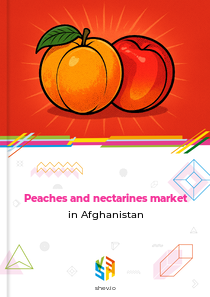







Earlier Report Observations
The market volume for fresh peaches and nectarines in Afghanistan expanded robustly from 44.7 thousand tons in 2018 to 102.8 thousand tons in 2021, marking a 130% increase over three years. This growth phase included a 37% rise in 2019 and a further 45% surge in 2021.
After reaching its peak, the market stabilized near 101.3 thousand tons in 2022, showing only a marginal decrease. However, a significant contraction occurred in 2023, with volume falling by 23% to 77.8 thousand tons.
Despite the decline in 2023, the market's volume remained 74% higher than the 2018 level, indicating a substantial net growth across the entire period from 2018 to 2023.
Table of content
- 1. Disclaimer
- 2. Terms of use of the report
- 3. Product codes in the statistical classifications used in the report
-
4. Key Market Indicators and Trends
-
4.1. Key Market Indicators
-
4.1.1. In kind
- 4.1.1.1. Production, 2018-2023
- 4.1.1.2. Imports, 2018-2024
- 4.1.1.3. Exports, 2018-2024
- 4.1.1.4. Market size, 2018-2023
-
4.1.1. In kind
- 4.2. Market Trends and Factors
-
4.1. Key Market Indicators
-
5. Production
-
5.1. Production in Afghanistan
- 5.1.1. Annual dynamics of production in Afghanistan in kind, 2018-2023, K t
- 5.1.2. Annual dynamics of production in Afghanistan in value, 2018-2023, $ US
-
5.2. Global production by Country, 2018-2023
- 5.2.1. Annual dynamics of production by macroregions in kind, 2018-2023, K t
- 5.2.2. Dynamics of production structure by macroregions in kind, 2018-2023
- 5.2.3. Annual dynamics of production by country in kind, 2018-2023, K t
- 5.2.4. Structure of production by countries in kind, 2018-2023
- 5.2.5. Dynamics of peoduction structure by countries in kind, 2018-2023
-
5.1. Production in Afghanistan
-
6. Imports
-
6.1. Imports (Direct Data*)
- 6.1.1. Imports - Total information
-
6.1.2. Imports in kind, t
- 6.1.2.1. Annual dynamics of product's imports to Afghanistan in kind, 2018-2024, t
- 6.1.2.2. Dynamics of product's imports in kind to Afghanistan by countries, 2018-2024, t
- 6.1.2.3. Structure of product's imports in kind by countries, 2018-2024
-
6.1.3. Imports in value, K $ US
- 6.1.3.1. Annual dynamics of product's imports to Afghanistan in value, 2018-2024, K $ US
- 6.1.3.2. Dynamics of product's imports in value to Afghanistan by countries, 2018-2024, K $ US
- 6.1.3.3. Structure of product's imports in value by countries, 2018-2024
-
6.1.4. Average price of product's imports, $ US/t
- 6.1.4.1. Annual dynamics of average price of product's imports to Afghanistan, 2018-2024, $ US/t
- 6.1.4.2. Dynamics of average price of product's imports to Afghanistan by countries, 2018-2024, $ US/t
-
6.2. Imports (Mirror Data)
- 6.2.1. Imports - Total information
-
6.2.2. Imports in kind, t
- 6.2.2.1. Annual dynamics of product's imports to Afghanistan in kind, 2018-2024, t
- 6.2.2.2. Dynamics of product's imports in kind to Afghanistan by countries, 2018-2024, t
- 6.2.2.3. Structure of product's imports in kind by countries, 2018-2024
-
6.2.3. Imports in value, K $ US
- 6.2.3.1. Annual dynamics of product's imports to Afghanistan in value, 2018-2024, K $ US
- 6.2.3.2. Dynamics of product's imports in value to Afghanistan by countries, 2018-2024, K $ US
- 6.2.3.3. Structure of product's imports in value by countries, 2018-2024
-
6.2.4. Average price of product's imports, $ US/t
- 6.2.4.1. Annual dynamics of average price of product's imports to Afghanistan, 2018-2024, $ US/t
- 6.2.4.2. Dynamics of average price of product's imports to Afghanistan by countries, 2018-2024, $ US/t
-
6.1. Imports (Direct Data*)
-
7. Exports
-
7.1. Exports (Direct Data*)
- 7.1.1. Exports - Total information
-
7.1.2. Exports in kind, t
- 7.1.2.1. Annual dynamics of product's exports from Afghanistan in kind, 2018-2024, t
- 7.1.2.2. Dynamics of product's exports in kind from Afghanistan by countries, 2018-2024, t
- 7.1.2.3. Structure of product's exports in kind by countries, 2018-2024
-
7.1.3. Exports in value, K $ US
- 7.1.3.1. Annual dynamics of product's exports from Afghanistan in value, 2018-2024, K $ US
- 7.1.3.2. Dynamics of product's exports in value from Afghanistan by countries, 2018-2024, K $ US
- 7.1.3.3. Structure of product's exports in value by countries, 2018-2024
-
7.1.4. Average price of product's exports, $ US/t
- 7.1.4.1. Annual dynamics of average price of product's exports from Afghanistan, 2018-2024, $ US/t
- 7.1.4.2. Dynamics of average price of product's exports from Afghanistan by countries, 2018-2024, $ US/t
-
7.2. Exports (Mirror Data)
- 7.2.1. Exports - Total information
-
7.2.2. Exports in kind, t
- 7.2.2.1. Annual dynamics of product's exports from Afghanistan in kind, 2018-2024, t
- 7.2.2.2. Dynamics of product's exports in kind from Afghanistan by countries, 2018-2024, t
- 7.2.2.3. Structure of product's exports in kind by countries, 2018-2024
-
7.2.3. Exports in value, K $ US
- 7.2.3.1. Annual dynamics of product's exports from Afghanistan in value, 2018-2024, K $ US
- 7.2.3.2. Dynamics of product's exports in value from Afghanistan by countries, 2018-2024, K $ US
- 7.2.3.3. Structure of product's exports in value by countries, 2018-2024
-
7.2.4. Average price of product's exports, $ US/t
- 7.2.4.1. Annual dynamics of average price of product's exports from Afghanistan, 2018-2024, $ US/t
- 7.2.4.2. Dynamics of average price of product's exports from Afghanistan by countries, 2018-2024, $ US/t
-
7.1. Exports (Direct Data*)
-
8. Trade balance
-
8.1. Trade balance (Direct Data)
- 8.1.1. In kind, t
- 8.1.2. In value, K $ US
-
8.2. Trade balance (Mirror Data)
- 8.2.1. In kind, t
- 8.2.2. In value, K $ US
-
8.1. Trade balance (Direct Data)
-
9. Top buying and selling countries, 2018-2024
-
9.1. Direct Data
- 9.1.1. Import in Value by Countries-buyers
- 9.1.2. Export in Value by Countries-suppliers
-
9.2. Mirror Data
- 9.2.1. Import in Value by Countries-buyers
- 9.2.2. Export in Value by Countries-suppliers
-
9.1. Direct Data
Production peaches and nectarines in Afghanistan
In kind, 2017-2020, t
From 2017 to 2020, Afghanistan ranked 29th globally in the production of peaches and nectarines.
Top producers of peaches and nectarines, 2017-2020
World map of production of peaches and nectarines, 2017-2020
Afghanistan's production of peaches and nectarines grew for the second year in a row. In 2020, the country produced 70 012 tonnes, marking a 14.1% increase from 2019. Over the 2017-2020 period, production rose by 12.8%, with an average annual growth rate of 4.1%. The lowest production was in 2018 at 47 935 tonnes, which represented the largest decline of 22.8%. In contrast, 2019 saw the biggest increase at 28.0%.
Annual dynamics of production in Afghanistan in kind, 2017-2020, t
| Parameter | 2018 | 2019 | 2020 | CAGR | |
|---|---|---|---|---|---|
| 1 | Change from last year | (22.8%) | 28.0% | 14.1% | 4.1% |
Exports peaches and nectarines from Afghanistan
Exports in kind, t
The export market for peaches and nectarines from Afghanistan was highly volatile during these years. Exports hit their lowest point in 2019 at just 1 tonne, while the peak was in 2018 at 3 351 tonnes, resulting in a 6 519-fold difference between these two years. In 2020, exports surged to 139 tonnes, a dramatic year-on-year increase of 26 943.6%. The largest decline occurred in 2019, with a 100.0% drop.
Annual dynamics of product's exports from Afghanistan in kind, 2017-2020, t
| Parameter | 2018 | 2019 | 2020 | CAGR | |
|---|---|---|---|---|---|
| 1 | Change from last year | 99.3% | (100.0%) | 26 943.6% | (56.4%) |
From 2017 to 2020, Pakistan was the dominant export partner for Afghanistan's peaches and nectarines in volume terms, accounting for 77.1% of total exports. Other markets made up the remainder, forming a long tail of smaller partners.
Structure of product's exports in kind by countries, 2017-2020
World map of product's exports from Afghanistan in kind, 2017-2020
Exports in value, K $ US
The export market in value terms showed significant volatility over the observed period. Exports reached their minimum in 2019 at 1 000 US dollars, while the maximum was in 2018 at 5 740 000 US dollars, creating a 10 254-fold difference. In 2020, exports jumped to 89 000 US dollars, a sharp year-on-year rise of 15 862.1%. The largest decline was in 2019, with a 100.0% decrease.
Annual dynamics of product's exports from Afghanistan in value, 2017-2020, K $ US
| Parameter | 2018 | 2019 | 2020 | CAGR | |
|---|---|---|---|---|---|
| 1 | Change from last year | 91.4% | (100.0%) | 15 862.1% | (69.0%) |
During 2017-2020, Pakistan remained the primary destination for Afghanistan's peach and nectarine exports in value terms, holding a 77.7% share of total flows. Other markets contributed the rest, forming a long tail of smaller partners.
Structure of product's exports in value by countries, 2017-2020
World map of product's exports from Afghanistan in value, 2017-2020
Imports peaches and nectarines to Afghanistan
Imports in kind, t
Import volumes for peaches and nectarines into Afghanistan experienced irregular changes, reflecting a volatile market. The lowest point was in 2019 at 19 tonnes, while the peak occurred in 2020 at 1 160 tonnes, resulting in a 62-fold difference. In 2020, imports saw an abrupt gain of 6 149.8% compared to the previous year. The largest decline was in 2019, with an 85.4% drop.
Annual dynamics of product's imports to Afghanistan in kind, 2017-2020, t
| Parameter | 2018 | 2019 | 2020 | CAGR | |
|---|---|---|---|---|---|
| 1 | Change from last year | 131.2% | (85.4%) | 6 149.8% | 176.4% |
Throughout 2017-2020, Iran was the leading source for Afghanistan's imports of peaches and nectarines in volume terms, accounting for 72.8% of total imports. Other markets together made up the remaining share.
Structure of product's imports in kind by countries, 2017-2020
World map of product's imports to Afghanistan in kind, 2017-2020
Imports in value, K $ US
The import market in value terms displayed volatility over the period. Imports were at their lowest in 2019 at 9 000 US dollars and peaked in 2020 at 1 237 000 US dollars, showing a 135-fold difference. In 2020, imports increased by 13 421.5% from the year before. The largest decline was in 2019, with a 72.8% decrease.
Annual dynamics of product's imports to Afghanistan in value, 2017-2020, K $ US
| Parameter | 2018 | 2019 | 2020 | CAGR | |
|---|---|---|---|---|---|
| 1 | Change from last year | 88.9% | (72.8%) | 13 421.5% | 311.2% |
From 2017 to 2020, Iran and the United Arab Emirates were the dominant sources for Afghanistan's imports of peaches and nectarines in value terms, jointly accounting for 95.3% of total flows. The remaining volume was distributed among smaller markets.
Structure of product's imports in value by countries, 2017-2020
World map of product's imports to Afghanistan in value, 2017-2020
Related Reports

Peaches and nectarines market in Colombia
2026-03-28

Fresh grapes market in Afghanistan
2026-03-28
2026-03-28
In-shell almonds market in Afghanistan
2026-03-28

2026-03-28
Why Choose Us?
Only Verified Data
No Hidden Costs or Separate Fees
Smarter Subscription Pricing
Contact Our Team
Submit your inquiry using the form below — our team will get back to you within 24 hours.