






Earlier Report Observations
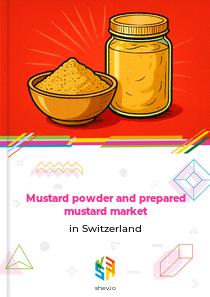
The mustard powder and prepared mustard market in Switzerland experienced considerable volume fluctuations between 2018 and 2023. Starting at 1 065 t in 2018, the market size expanded sharply to 1 403 t in 2019, eased to 1 350 t in 2020, then surged to a high of 1 763 t in 2021. It plateaued at 1 780 t in 2022 before contracting to 1 599 t in 2023. Early in the period, the market was shaped by established players defending against new low-cost entrants, while a consumer trend favoring diverse mustard varieties from fruity to spicy supported product diversification and likely contributed to demand growth.
By 2024, several regulatory and competitive shifts set a new context for the market. The abolition of import duties on industrial goods from January 2024 eased entry for imported mustard, intensifying competition. Concurrently, the standard VAT rate increased from 7.7% to 8.1%, affecting consumer pricing. Online trade grew by 3.5%, opening new sales channels, and consumer preferences continued moving toward high-quality, regional, and organic products. This shift was reflected in the activities of small-scale manufacturers reviving traditional methods and major producer Nestlé investing in sustainability for its Thomy-Senf brand.
A record number of new company foundations in Switzerland during 4 signaled vibrant entrepreneurial activity, potentially fostering innovation in the mustard segment. New food law rules effective from February 2024 directly impacted consumers, while heightened sustainability and ESG reporting requirements introduced additional considerations for market participants. These factors collectively pointed to a dynamically evolving, competitive landscape for mustard in Switzerland.
Table of content
- 1. Disclaimer
- 2. Terms of use of the report
- 3. Product codes in the statistical classifications used in the report
-
4. Key Market Indicators and Trends
-
4.1. Key Market Indicators
-
4.1.1. In kind
- 4.1.1.1. Production, 2018-2023
- 4.1.1.2. Imports, 2018-2024
- 4.1.1.3. Exports, 2018-2024
- 4.1.1.4. Market size, 2018-2023
-
4.1.1. In kind
- 4.2. Market Trends and Factors
-
4.1. Key Market Indicators
-
5. Production
-
5.1. Production in Switzerland
- 5.1.1. Annual dynamics of production in Switzerland in kind, 2018-2023, t
- 5.1.2. Annual dynamics of production in Switzerland in value, 2018-2023, $ US
-
5.2. Global production by Country, 2018-2023
- 5.2.1. Annual dynamics of production by macroregions in kind, 2018-2023, t
- 5.2.2. Dynamics of production structure by macroregions in kind, 2018-2023
- 5.2.3. Annual dynamics of production by country in kind, 2018-2023, t
- 5.2.4. Structure of production by countries in kind, 2018-2023
- 5.2.5. Dynamics of peoduction structure by countries in kind, 2018-2023
-
5.1. Production in Switzerland
-
6. Imports
-
6.1. Imports (Direct Data)
- 6.1.1. Imports - Total information
-
6.1.2. Imports in kind, t
- 6.1.2.1. Annual dynamics of product's imports to Switzerland in kind, 2018-2024, t
- 6.1.2.2. Dynamics of product's imports in kind to Switzerland by countries, 2018-2024, t
- 6.1.2.3. Structure of product's imports in kind by countries, 2018-2024
-
6.1.3. Imports in value, K $ US
- 6.1.3.1. Annual dynamics of product's imports to Switzerland in value, 2018-2024, K $ US
- 6.1.3.2. Dynamics of product's imports in value to Switzerland by countries, 2018-2024, K $ US
- 6.1.3.3. Structure of product's imports in value by countries, 2018-2024
-
6.1.4. Average price of product's imports, $ US/t
- 6.1.4.1. Annual dynamics of average price of product's imports to Switzerland, 2018-2024, $ US/t
- 6.1.4.2. Dynamics of average price of product's imports to Switzerland by countries, 2018-2024, $ US/t
-
6.2. Imports (Mirror Data)
- 6.2.1. Imports - Total information
-
6.2.2. Imports in kind, t
- 6.2.2.1. Annual dynamics of product's imports to Switzerland in kind, 2018-2024, t
- 6.2.2.2. Dynamics of product's imports in kind to Switzerland by countries, 2018-2024, t
- 6.2.2.3. Structure of product's imports in kind by countries, 2018-2024
-
6.2.3. Imports in value, K $ US
- 6.2.3.1. Annual dynamics of product's imports to Switzerland in value, 2018-2024, K $ US
- 6.2.3.2. Dynamics of product's imports in value to Switzerland by countries, 2018-2024, K $ US
- 6.2.3.3. Structure of product's imports in value by countries, 2018-2024
-
6.2.4. Average price of product's imports, $ US/t
- 6.2.4.1. Annual dynamics of average price of product's imports to Switzerland, 2018-2024, $ US/t
- 6.2.4.2. Dynamics of average price of product's imports to Switzerland by countries, 2018-2024, $ US/t
-
6.1. Imports (Direct Data)
-
7. Exports
-
7.1. Exports (Direct Data)
- 7.1.1. Exports - Total information
-
7.1.2. Exports in kind, t
- 7.1.2.1. Annual dynamics of product's exports from Switzerland in kind, 2018-2024, t
- 7.1.2.2. Dynamics of product's exports in kind from Switzerland by countries, 2018-2024, t
- 7.1.2.3. Structure of product's exports in kind by countries, 2018-2024
-
7.1.3. Exports in value, K $ US
- 7.1.3.1. Annual dynamics of product's exports from Switzerland in value, 2018-2024, K $ US
- 7.1.3.2. Dynamics of product's exports in value from Switzerland by countries, 2018-2024, K $ US
- 7.1.3.3. Structure of product's exports in value by countries, 2018-2024
-
7.1.4. Average price of product's exports, $ US/t
- 7.1.4.1. Annual dynamics of average price of product's exports from Switzerland, 2018-2024, $ US/t
- 7.1.4.2. Dynamics of average price of product's exports from Switzerland by countries, 2018-2024, $ US/t
-
7.2. Exports (Mirror Data)
- 7.2.1. Exports - Total information
-
7.2.2. Exports in kind, t
- 7.2.2.1. Annual dynamics of product's exports from Switzerland in kind, 2018-2024, t
- 7.2.2.2. Dynamics of product's exports in kind from Switzerland by countries, 2018-2024, t
- 7.2.2.3. Structure of product's exports in kind by countries, 2018-2024
-
7.2.3. Exports in value, K $ US
- 7.2.3.1. Annual dynamics of product's exports from Switzerland in value, 2018-2024, K $ US
- 7.2.3.2. Dynamics of product's exports in value from Switzerland by countries, 2018-2024, K $ US
- 7.2.3.3. Structure of product's exports in value by countries, 2018-2024
-
7.2.4. Average price of product's exports, $ US/t
- 7.2.4.1. Annual dynamics of average price of product's exports from Switzerland, 2018-2024, $ US/t
- 7.2.4.2. Dynamics of average price of product's exports from Switzerland by countries, 2018-2024, $ US/t
-
7.1. Exports (Direct Data)
-
8. Trade balance
-
8.1. Trade balance (Direct Data)
- 8.1.1. In kind, t
- 8.1.2. In value, K $ US
-
8.2. Trade balance (Mirror Data)
- 8.2.1. In kind, t
- 8.2.2. In value, K $ US
-
8.1. Trade balance (Direct Data)
-
9. Top buying and selling countries, 2018-2024
-
9.1. Direct Data
- 9.1.1. Import in Value by Countries-buyers
- 9.1.2. Export in Value by Countries-suppliers
-
9.2. Mirror Data
- 9.2.1. Import in Value by Countries-buyers
- 9.2.2. Export in Value by Countries-suppliers
-
9.1. Direct Data
Production mustard powder and prepared mustard in Switzerland
In kind, 2017-2020, t
Globally, Switzerland ranked as the 28th largest producer of mustard powder and prepared mustard between 2017 and 2020.
Top producers of mustard powder and prepared mustard, 2017-2020
World map of production of mustard powder and prepared mustard, 2017-2020
In 2020, Switzerland produced 331.9 tonnes of mustard powder and prepared mustard, marking a sharp decline of 26.3% from the previous year. Over the 2017-2020 period, production fell by 14.6%, with a compound annual growth rate (CAGR) of -5.1%. The highest production level was recorded in 2019 at 450.6 tonnes, which also saw the largest increase of 22.5%.
Annual dynamics of production in Switzerland in kind, 2017-2020, t
| Parameter | 2018 | 2019 | 2020 | CAGR | |
|---|---|---|---|---|---|
| 1 | Change from last year | (5.4%) | 22.5% | (26.3%) | (5.1%) |
In value, 2017-2020, K $ US
In 2020, the output of mustard powder and prepared mustard in Switzerland was valued at 950 thousand US dollars, representing a notable decrease of 23.1% compared to the previous year. From 2017 to 2020, production value dropped by 15.4%, with a CAGR of -5.4%. The peak value occurred in 2019 at 1 236 thousand US dollars, which also experienced the largest increase of 23.3%.
Annual dynamics of production in Switzerland in value, 2017-2020, K $ US
| Parameter | 2018 | 2019 | 2020 | CAGR | |
|---|---|---|---|---|---|
| 1 | Change from last year | (10.7%) | 23.3% | (23.1%) | (5.4%) |
Exports mustard powder and prepared mustard from Switzerland
Exports in kind, t
In 2020, Switzerland exported 432 tonnes of mustard powder and prepared mustard, showing a gradual rise of 8.7% from the year before. Between 2017 and 2020, exports grew by 14%, equivalent to an annualized rate of 4.5%. The highest export volume was in 2018 at 466 tonnes, which also saw the largest increase of 23.0%. In contrast, the largest decline occurred in 2019 with a drop of 14.8%.
Annual dynamics of product's exports from Switzerland in kind, 2017-2020, t
| Parameter | 2018 | 2019 | 2020 | CAGR | |
|---|---|---|---|---|---|
| 1 | Change from last year | 23.0% | (14.8%) | 8.7% | 4.5% |
From 2017 to 2020, the main buyers of mustard powder and prepared mustard from Switzerland were Croatia, accounting for 39.0% of exports in kind, France with 21.5%, and Serbia at 18.6%. Together, these three countries formed 79.1% of Switzerland's total exports in kind.
Structure of product's exports in kind by countries, 2017-2020
World map of product's exports from Switzerland in kind, 2017-2020
Exports in value, K $ US
In 2020, Switzerland's exports of mustard powder and prepared mustard were valued at 1 236 thousand US dollars, reflecting a gain of 13.5% compared to the prior year. Over the 2017-2020 period, export value increased by 12.9%, with a CAGR of 4.1%. The lowest value was recorded in 2019 at 1 089 thousand US dollars, which also saw the largest decline of 14.2%. The peak value occurred in 2018 at 1 269 thousand US dollars, with the largest increase of 16.0%.
Annual dynamics of product's exports from Switzerland in value, 2017-2020, K $ US
| Parameter | 2018 | 2019 | 2020 | CAGR | |
|---|---|---|---|---|---|
| 1 | Change from last year | 16.0% | (14.2%) | 13.5% | 4.1% |
Throughout 2017-2020, Croatia, France, and Serbia remained the primary markets for Switzerland's mustard powder and prepared mustard exports in value terms. Croatia accounted for 31.8% of exports, France for 20.9%, and Serbia for 16.1%, collectively representing 68.9% of total export flows.
Structure of product's exports in value by countries, 2017-2020
World map of product's exports from Switzerland in value, 2017-2020
Imports mustard powder and prepared mustard to Switzerland
Imports in kind, t
Imports of mustard powder and prepared mustard into Switzerland increased for the third consecutive year. In 2020, Switzerland imported 1 450 tonnes, which is 7.5% more than in 2019. Between 2017 and 2020, imports surged by 70.9%, equating to an annualized growth rate of 19.6%.
Annual dynamics of product's imports to Switzerland in kind, 2017-2020, t
| Parameter | 2018 | 2019 | 2020 | CAGR | |
|---|---|---|---|---|---|
| 1 | Change from last year | 37.0% | 16.0% | 7.5% | 19.6% |
From 2017 to 2020, the primary suppliers of mustard powder and prepared mustard to Switzerland were France, contributing 57.4% of imports in kind, Germany with 21.2%, and the Netherlands at 7.3%. Together, these three countries accounted for 85.9% of total imports in kind.
Structure of product's imports in kind by countries, 2017-2020
World map of product's imports to Switzerland in kind, 2017-2020
Imports in value, K $ US
Imports of mustard powder and prepared mustard into Switzerland rose for the third year in a row. In 2020, imports reached 5 220 thousand US dollars, equivalent to a limited increase of 7.3% year-over-year. Between 2017 and 2020, import value jumped by 79.8%, corresponding to an annualized rate of 21.6%.
Annual dynamics of product's imports to Switzerland in value, 2017-2020, K $ US
| Parameter | 2018 | 2019 | 2020 | CAGR | |
|---|---|---|---|---|---|
| 1 | Change from last year | 43.1% | 17.1% | 7.3% | 21.6% |
Throughout 2017-2020, France and Germany were the dominant suppliers in value terms for mustard powder and prepared mustard imports to Switzerland, while other markets played a less significant role individually.
Structure of product's imports in value by countries, 2017-2020
World map of product's imports to Switzerland in value, 2017-2020
Related Reports


Sunflower-seed oilcake market in Switzerland
2026-03-29

Linseed oil-cake market in Switzerland
2026-03-29

In-depth market research on this product
Global Mustard Market 2021–2031: Size, Share, Trends and Forecast
Global market report: size, trends and forecast to 2031 · 186 pages
Why Choose Us?
Only Verified Data
No Hidden Costs or Separate Fees
Smarter Subscription Pricing
Contact Our Team
Submit your inquiry using the form below — our team will get back to you within 24 hours.