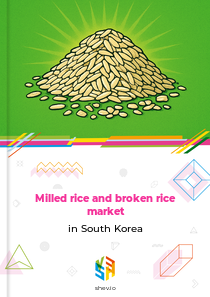







Earlier Report Observations
The South Korean milled rice market contracted from 4.4 million tons in 2018 to 4.1 million tons in 2023. A key driver was the long-term shift in dietary habits, which reduced per capita rice consumption. In 2019, this trend contributed to a 3% market decline. Government initiatives, such as promoting rice consumption and supporting the rice processing industry, were launched to counteract the downward trend.
Market volume rebounded by 9% in 2021 to 4.35 million tons, fueled by higher domestic production and steady demand from the business sector. The COVID-19 pandemic increased home cooking and meal kit usage, which helped stabilize consumption patterns. However, the market shrank again in 2022 and 2023, though the pace of decline slowed as the rice processing industry expanded and home meal consumption remained resilient.
In 2024, rice production fell by 3.2% due to unusually high temperatures and pest damage, tightening supply. The government responded with enhanced supply management, including adjusted planting area controls and direct payment programs, to stabilize prices and farm incomes while continuing to promote rice-based processed foods.
Table of content
- 1. Disclaimer
- 2. Terms of use of the report
- 3. Product codes in the statistical classifications used in the report
-
4. Key Market Indicators and Trends
-
4.1. Key Market Indicators
-
4.1.1. In kind
- 4.1.1.1. Production, 2018-2023
- 4.1.1.2. Imports, 2018-2024
- 4.1.1.3. Exports, 2018-2024
- 4.1.1.4. Market size, 2018-2023
-
4.1.1. In kind
- 4.2. Market Trends and Factors
-
4.1. Key Market Indicators
-
5. Production
-
5.1. Production in South Korea
- 5.1.1. Annual dynamics of production in South Korea in kind, 2018-2023, K t
- 5.1.2. Annual dynamics of production in South Korea in value, 2018-2023, $ US
-
5.2. Global production by Country, 2018-2023
- 5.2.1. Annual dynamics of production by macroregions in kind, 2018-2023, K t
- 5.2.2. Dynamics of production structure by macroregions in kind, 2018-2023
- 5.2.3. Annual dynamics of production by country in kind, 2018-2023, K t
- 5.2.4. Structure of production by countries in kind, 2018-2023
- 5.2.5. Dynamics of peoduction structure by countries in kind, 2018-2023
-
5.1. Production in South Korea
-
6. Imports
-
6.1. Imports (Direct Data)
- 6.1.1. Imports - Total information
-
6.1.2. Imports in kind, K t
- 6.1.2.1. Annual dynamics of product's imports to South Korea in kind, 2018-2024, K t
- 6.1.2.2. Dynamics of product's imports in kind to South Korea by countries, 2018-2024, K t
- 6.1.2.3. Structure of product's imports in kind by countries, 2018-2024
-
6.1.3. Imports in value, K $ US
- 6.1.3.1. Annual dynamics of product's imports to South Korea in value, 2018-2024, K $ US
- 6.1.3.2. Dynamics of product's imports in value to South Korea by countries, 2018-2024, K $ US
- 6.1.3.3. Structure of product's imports in value by countries, 2018-2024
-
6.1.4. Average price of product's imports, $ US/t
- 6.1.4.1. Annual dynamics of average price of product's imports to South Korea, 2018-2024, $ US/t
- 6.1.4.2. Dynamics of average price of product's imports to South Korea by countries, 2018-2024, $ US/t
-
6.2. Imports (Mirror Data)
- 6.2.1. Imports - Total information
-
6.2.2. Imports in kind, K t
- 6.2.2.1. Annual dynamics of product's imports to South Korea in kind, 2018-2024, K t
- 6.2.2.2. Dynamics of product's imports in kind to South Korea by countries, 2018-2024, K t
- 6.2.2.3. Structure of product's imports in kind by countries, 2018-2024
-
6.2.3. Imports in value, K $ US
- 6.2.3.1. Annual dynamics of product's imports to South Korea in value, 2018-2024, K $ US
- 6.2.3.2. Dynamics of product's imports in value to South Korea by countries, 2018-2024, K $ US
- 6.2.3.3. Structure of product's imports in value by countries, 2018-2024
-
6.2.4. Average price of product's imports, $ US/t
- 6.2.4.1. Annual dynamics of average price of product's imports to South Korea, 2018-2024, $ US/t
- 6.2.4.2. Dynamics of average price of product's imports to South Korea by countries, 2018-2024, $ US/t
-
6.1. Imports (Direct Data)
-
7. Exports
-
7.1. Exports (Direct Data)
- 7.1.1. Exports - Total information
-
7.1.2. Exports in kind, K t
- 7.1.2.1. Annual dynamics of product's exports from South Korea in kind, 2018-2024, K t
- 7.1.2.2. Dynamics of product's exports in kind from South Korea by countries, 2018-2024, K t
- 7.1.2.3. Structure of product's exports in kind by countries, 2018-2024
-
7.1.3. Exports in value, K $ US
- 7.1.3.1. Annual dynamics of product's exports from South Korea in value, 2018-2024, K $ US
- 7.1.3.2. Dynamics of product's exports in value from South Korea by countries, 2018-2024, K $ US
- 7.1.3.3. Structure of product's exports in value by countries, 2018-2024
-
7.1.4. Average price of product's exports, $ US/t
- 7.1.4.1. Annual dynamics of average price of product's exports from South Korea, 2018-2024, $ US/t
- 7.1.4.2. Dynamics of average price of product's exports from South Korea by countries, 2018-2024, $ US/t
-
7.2. Exports (Mirror Data)
- 7.2.1. Exports - Total information
-
7.2.2. Exports in kind, K t
- 7.2.2.1. Annual dynamics of product's exports from South Korea in kind, 2018-2024, K t
- 7.2.2.2. Dynamics of product's exports in kind from South Korea by countries, 2018-2024, K t
- 7.2.2.3. Structure of product's exports in kind by countries, 2018-2024
-
7.2.3. Exports in value, K $ US
- 7.2.3.1. Annual dynamics of product's exports from South Korea in value, 2018-2024, K $ US
- 7.2.3.2. Dynamics of product's exports in value from South Korea by countries, 2018-2024, K $ US
- 7.2.3.3. Structure of product's exports in value by countries, 2018-2024
-
7.2.4. Average price of product's exports, $ US/t
- 7.2.4.1. Annual dynamics of average price of product's exports from South Korea, 2018-2024, $ US/t
- 7.2.4.2. Dynamics of average price of product's exports from South Korea by countries, 2018-2024, $ US/t
-
7.1. Exports (Direct Data)
-
8. Trade balance
-
8.1. Trade balance (Direct Data)
- 8.1.1. In kind, K t
- 8.1.2. In value, K $ US
-
8.2. Trade balance (Mirror Data)
- 8.2.1. In kind, K t
- 8.2.2. In value, K $ US
-
8.1. Trade balance (Direct Data)
-
9. Top buying and selling countries, 2018-2024
-
9.1. Direct Data
- 9.1.1. Import in Value by Countries-buyers
- 9.1.2. Export in Value by Countries-suppliers
-
9.2. Mirror Data
- 9.2.1. Import in Value by Countries-buyers
- 9.2.2. Export in Value by Countries-suppliers
-
9.1. Direct Data
Production milled rice and broken rice in South Korea
In kind, 2017-2020, K t
From 2017 to 2020, South Korea ranked 12th globally in the production of milled rice and broken rice.
Top producers of milled rice and broken rice, 2017-2020
World map of production of milled rice and broken rice, 2017-2020
South Korea's production of milled rice and broken rice declined for the third year in a row. In 2020, the country produced 3 993 thousand tonnes, marking a 6.4% decrease from the previous year. Over the 2017-2020 period, production fell by 12.6%, which translates to an average annual decline of 4.4%.
Annual dynamics of production in South Korea in kind, 2017-2020, K t
| Parameter | 2018 | 2019 | 2020 | CAGR | |
|---|---|---|---|---|---|
| 1 | Change from last year | (3.0%) | (3.7%) | (6.4%) | (4.4%) |
Exports milled rice and broken rice from South Korea
Exports in kind, t
The data shows irregular fluctuations, pointing to a volatile market environment. Exports hit their lowest point in 2017 and peaked in 2018, with a 24-fold difference between these years. In 2020, South Korea exported 54 941 tonnes of milled rice and broken rice, a gradual increase of 4.7% compared to 2019. The highest volume was recorded in 2018 at 63 977 tonnes. The largest decline occurred in 2019, dropping by 18.0%, while the biggest surge was in 2018, with a 2,339.2% increase.
Annual dynamics of product's exports from South Korea in kind, 2017-2020, t
| Parameter | 2018 | 2019 | 2020 | CAGR | |
|---|---|---|---|---|---|
| 1 | Change from last year | 2 339.2% | (18.0%) | 4.7% | 175.7% |
Between 2017 and 2020, the main buyers of South Korea's milled rice and broken rice were Yemen, accounting for 31.6% of exports in kind, Kenya at 24.7%, and Somalia with 18.4%. Together, these three countries made up 74.7% of total exports in kind.
Structure of product's exports in kind by countries, 2017-2020
World map of product's exports from South Korea in kind, 2017-2020
Exports in value, K $ US
The market exhibited volatility during the observed period. Export values varied 8.2 times, from the low in 2017 to the high in 2018. In 2020, South Korea's exports of milled rice and broken rice amounted to 26 591 thousand US dollars, showing a modest rise of 3.2% from the previous year. The peak value was in 2018 at 43 410 thousand US dollars. The largest decline happened in 2019, falling by 40.7%, while the most significant increase was in 2018, with a 718.4% jump.
Annual dynamics of product's exports from South Korea in value, 2017-2020, K $ US
| Parameter | 2018 | 2019 | 2020 | CAGR | |
|---|---|---|---|---|---|
| 1 | Change from last year | 718.4% | (40.7%) | 3.2% | 71.1% |
From 2017 to 2020, the key buyers of South Korea's milled rice and broken rice in value terms were Yemen, representing 20.2% of exports, Vietnam at 16.5%, and Kenya with 16.1%. Combined, these three markets accounted for 52.8% of total export value.
Structure of product's exports in value by countries, 2017-2020
World map of product's exports from South Korea in value, 2017-2020
Imports milled rice and broken rice to South Korea
Imports in kind, t
In 2020, South Korea imported 41 568 tonnes of milled rice and broken rice, a slight decline of 1.4% compared to the previous year. Over the 2017-2020 period, imports decreased by 5.4%, averaging an annual drop of 1.8%. The lowest volume was in 2018 at 40 714 tonnes. The largest decrease occurred in 2018, down by 7.3%, while the biggest increase was in 2019, rising by 3.6%.
Annual dynamics of product's imports to South Korea in kind, 2017-2020, t
| Parameter | 2018 | 2019 | 2020 | CAGR | |
|---|---|---|---|---|---|
| 1 | Change from last year | (7.3%) | 3.6% | (1.4%) | (1.8%) |
Between 2017 and 2020, the United States was the primary source of milled rice and broken rice for South Korea, making up 87.3% of total imports in kind, with other countries contributing a smaller share.
Structure of product's imports in kind by countries, 2017-2020
World map of product's imports to South Korea in kind, 2017-2020
Imports in value, K $ US
After two years of growth, South Korea's imports of milled rice and broken rice declined. In 2020, the country imported 38 374 thousand US dollars worth, a limited drop of 3.7% from the past year. Over the 2017-2020 period, imports increased by 28.7%, with a compound annual growth rate of 8.8%. The highest value was recorded in 2019 at 39 868 thousand US dollars. The largest increase happened in 2019, up by 22.4%.
Annual dynamics of product's imports to South Korea in value, 2017-2020, K $ US
| Parameter | 2018 | 2019 | 2020 | CAGR | |
|---|---|---|---|---|---|
| 1 | Change from last year | 9.2% | 22.4% | (3.7%) | 8.8% |
From 2017 to 2020, the United States was nearly the sole supplier of milled rice and broken rice to South Korea, accounting for 90.3% of total imports in value terms.
Structure of product's imports in value by countries, 2017-2020
World map of product's imports to South Korea in value, 2017-2020
Related Reports




In-depth market research on this product
Global Broken Rice Market 2021–2031: Size, Share, Trends and Forecast
Global market report: size, trends and forecast to 2031 · 192 pages
Why Choose Us?
Only Verified Data
No Hidden Costs or Separate Fees
Smarter Subscription Pricing
Contact Our Team
Submit your inquiry using the form below — our team will get back to you within 24 hours.