






"South America" region includes following countries:
 Argentina
 Bolivia
 Brazil
 Chile
Chile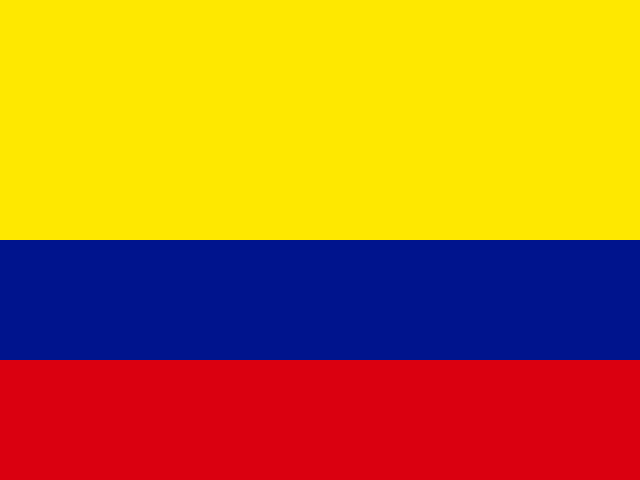 Colombia
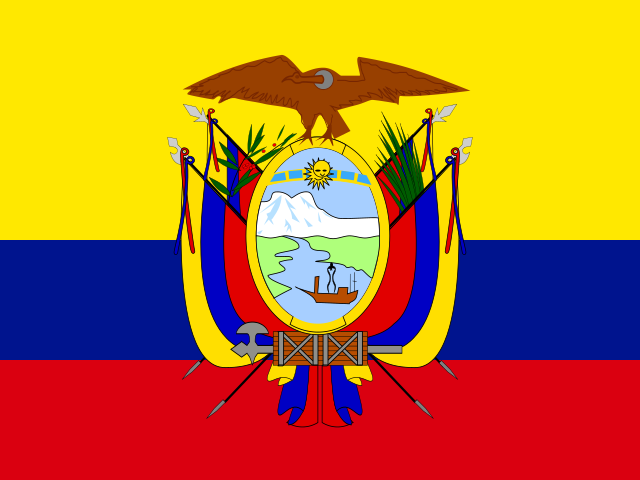 Ecuador
 Falkland Islands (Malvinas)
 French Guiana
 Guyana
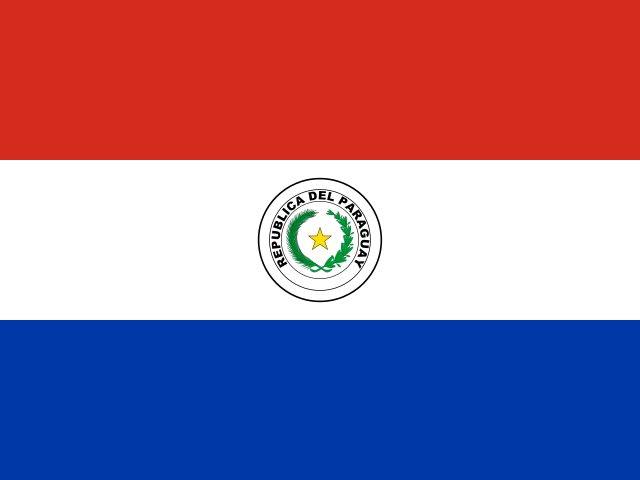 Paraguay
 Peru
Peru Suriname
 Uruguay
 Venezuela
Earlier Report Observations
South America's milk market volume grew from 64.9 million tonnes in 2018 to 69.1 million tonnes in 2020, while its value increased from 162.3 billion USD to 228.6 billion USD. This growth was primarily driven by the expansion of modern distribution channels such as supermarkets and convenience stores, which improved accessibility to packaged milk and drinking yogurts across the region. Although a truckers' strike in Brazil temporarily disrupted production and collection in 2018, output in other key countries like Argentina, Colombia, Chile, and Uruguay continued to rise. The onset of the COVID-19 pandemic in 2020 introduced higher input costs and logistical complexities, yet the market maintained its upward trajectory in both volume and value.
From 2021 to 2023, the market experienced shifts due to cost pressures and environmental factors. Soaring production costs in 2021 limited volume growth, leading to a period of stabilization. In 2022, the La Niña weather phenomenon caused severe flooding in production areas like Colombia, adversely affecting cattle health and milk output, while high food inflation, particularly for dairy, tempered consumption. This resulted in a slight contraction in market volume. However, consumer interest in healthier dairy options and new product segments like flavored milk helped sustain market value. By 2023, production in Brazil showed signs of recovery, supported by industry investments in innovation and operational sustainability, allowing the overall market volume to reach 69.4 million tonnes and value to attain 257.7 billion USD.
Table of content
- 1. Disclaimer
- 2. Terms of use of the report
- 3. Product codes in the statistical classifications used in the report
-
4. Key Market Indicators and Trends
-
4.1. Key Market Indicators
-
4.1.1. In kind
- 4.1.1.1. Production, 2018-2023
- 4.1.1.2. Imports, 2018-2024
- 4.1.1.3. Exports, 2018-2024
- 4.1.1.4. Market size, 2018-2023
-
4.1.2. In value
- 4.1.2.1. Production, 2018-2023
- 4.1.2.2. Imports, 2018-2024
- 4.1.2.3. Exports, 2018-2024
- 4.1.2.4. Market size, 2018-2023
-
4.1.1. In kind
- 4.2. Market Trends and Factors
-
4.1. Key Market Indicators
-
5. Production
-
5.1. Production in South America
- 5.1.1. Annual dynamics of production in South America in kind, 2018-2023, K t
-
5.2. Global production by Country, 2018-2023
- 5.2.1. Annual dynamics of production by macroregions in kind, 2018-2023, K t
- 5.2.2. Dynamics of production structure by macroregions in kind, 2018-2023
- 5.2.3. Annual dynamics of production by country in kind, 2018-2023, K t
- 5.2.4. Structure of production by countries in kind, 2018-2023
- 5.2.5. Dynamics of peoduction structure by countries in kind, 2018-2023
-
5.1. Production in South America
-
6. Exports
-
6.1. Exports (Direct Data*)
- 6.1.1. Exports - Total information
-
6.1.2. Exports in kind, K t
- 6.1.2.1. Annual dynamics of product's exports from Argentina in kind, 2018-2024, K t
- 6.1.2.2. Dynamics of product's exports in kind from Argentina by countries, 2018-2024, K t
- 6.1.2.3. Structure of product's exports in kind by countries, 2018-2024
-
6.1.3. Exports in value, M $ US
- 6.1.3.1. Annual dynamics of product's exports from Argentina in value, 2018-2024, M $ US
- 6.1.3.2. Dynamics of product's exports in value from Argentina by countries, 2018-2024, M $ US
- 6.1.3.3. Structure of product's exports in value by countries, 2018-2024
-
6.1.4. Average price of product's exports, $ US/t
- 6.1.4.1. Annual dynamics of average price of product's exports from Argentina, 2018-2024, $ US/t
- 6.1.4.2. Dynamics of average price of product's exports from Argentina by countries, 2018-2024, $ US/t
-
6.2. Exports (Mirror Data)
- 6.2.1. Exports - Total information
-
6.2.2. Exports in kind, K t
- 6.2.2.1. Annual dynamics of product's exports from Argentina in kind, 2018-2024, K t
- 6.2.2.2. Dynamics of product's exports in kind from Argentina by countries, 2018-2024, K t
- 6.2.2.3. Structure of product's exports in kind by countries, 2018-2024
-
6.2.3. Exports in value, M $ US
- 6.2.3.1. Annual dynamics of product's exports from Argentina in value, 2018-2024, M $ US
- 6.2.3.2. Dynamics of product's exports in value from Argentina by countries, 2018-2024, M $ US
- 6.2.3.3. Structure of product's exports in value by countries, 2018-2024
-
6.2.4. Average price of product's exports, $ US/t
- 6.2.4.1. Annual dynamics of average price of product's exports from Argentina, 2018-2024, $ US/t
- 6.2.4.2. Dynamics of average price of product's exports from Argentina by countries, 2018-2024, $ US/t
-
6.1. Exports (Direct Data*)
-
7. Imports
-
7.1. Imports (Direct Data*)
- 7.1.1. Imports - Total information
-
7.1.2. Imports in kind, K t
- 7.1.2.1. Annual dynamics of product's imports to Argentina in kind, 2018-2024, K t
- 7.1.2.2. Dynamics of product's imports in kind to Argentina by countries, 2018-2024, K t
- 7.1.2.3. Structure of product's imports in kind by countries, 2018-2024
-
7.1.3. Imports in value, M $ US
- 7.1.3.1. Annual dynamics of product's imports to Argentina in value, 2018-2024, M $ US
- 7.1.3.2. Dynamics of product's imports in value to Argentina by countries, 2018-2024, M $ US
- 7.1.3.3. Structure of product's imports in value by countries, 2018-2024
-
7.1.4. Average price of product's imports, $ US/t
- 7.1.4.1. Annual dynamics of average price of product's imports to Argentina, 2018-2024, $ US/t
- 7.1.4.2. Dynamics of average price of product's imports to Argentina by countries, 2018-2024, $ US/t
-
7.2. Imports (Mirror Data)
- 7.2.1. Imports - Total information
-
7.2.2. Imports in kind, K t
- 7.2.2.1. Annual dynamics of product's imports to Argentina in kind, 2018-2024, K t
- 7.2.2.2. Dynamics of product's imports in kind to Argentina by countries, 2018-2024, K t
- 7.2.2.3. Structure of product's imports in kind by countries, 2018-2024
-
7.2.3. Imports in value, M $ US
- 7.2.3.1. Annual dynamics of product's imports to Argentina in value, 2018-2024, M $ US
- 7.2.3.2. Dynamics of product's imports in value to Argentina by countries, 2018-2024, M $ US
- 7.2.3.3. Structure of product's imports in value by countries, 2018-2024
-
7.2.4. Average price of product's imports, $ US/t
- 7.2.4.1. Annual dynamics of average price of product's imports to Argentina, 2018-2024, $ US/t
- 7.2.4.2. Dynamics of average price of product's imports to Argentina by countries, 2018-2024, $ US/t
-
7.1. Imports (Direct Data*)
-
8. Trade balance
-
8.1. Trade balance (Direct Data)
- 8.1.1. In kind, K t
- 8.1.2. In value, M $ US
-
8.2. Trade balance (Mirror Data)
- 8.2.1. In kind, K t
- 8.2.2. In value, M $ US
-
8.1. Trade balance (Direct Data)
-
9. Top buying and selling countries, 2018-2024
-
9.1. Direct Data
- 9.1.1. Import in Value by Countries-buyers
- 9.1.2. Export in Value by Countries-suppliers
-
9.2. Mirror Data
- 9.2.1. Import in Value by Countries-buyers
- 9.2.2. Export in Value by Countries-suppliers
-
9.1. Direct Data
Production milk in South America
In kind, 2017-2020, K t
Top producers of milk, 2017-2020
World map of production of milk, 2017-2020
South America's milk production has grown for the third year in a row. In 2020, the region produced 68 526 thousand tons of milk, marking a 3.4% increase from the previous year. From 2017 to 2020, production rose by 7.5%, which translates to an average annual growth rate of 2.5%.
Annual dynamics of production in South America in kind, 2017-2020, K t
| Parameter | 2018 | 2019 | 2020 | CAGR | |
|---|---|---|---|---|---|
| 1 | Change from last year | 2.1% | 1.8% | 3.4% | 2.5% |
In value, 2017-2020, B $ US
South America's milk production value has increased for the second consecutive year. In 2020, the output was valued at 229.0 billion US dollars, showing a significant rise of 30.2% compared to 2019. Over the period from 2017 to 2020, production value grew by 30.9%, with a compound annual growth rate of 9.4%. The lowest value was recorded in 2018 at 162.7 billion US dollars, which also saw the largest decline of 7.0%.
Annual dynamics of production in South America in value, 2017-2020, B $ US
| Parameter | 2018 | 2019 | 2020 | CAGR | |
|---|---|---|---|---|---|
| 1 | Change from last year | (7.0%) | 8.1% | 30.2% | 9.4% |
Exports milk from South America
Exports in kind, K t
Milk exports from South America have declined for the second year in a row. In 2020, exports amounted to 354.8 thousand tons, reflecting a modest decrease of 7.4% compared to the previous year. The highest export volume was recorded in 2018 at 451.9 thousand tons, which also saw the largest increase of 29.4%. The largest decline occurred in 2019, with a drop of 15.2%.
Annual dynamics of product's exports from South America in kind, 2017-2020, K t
| Parameter | 2018 | 2019 | 2020 | CAGR | |
|---|---|---|---|---|---|
| 1 | Change from last year | 29.4% | (15.2%) | (7.4%) | 0.5% |
From 2017 to 2020, South America's milk exports were distributed across a wide range of buyers. Algeria accounted for 26.7% of exports in kind, Haiti for 8.6%, and the United States for 5.4%, together making up only 40.7% of total exports. Many other countries held smaller but notable shares, indicating a diversified export portfolio.
Structure of product's exports in kind by countries, 2017-2020
World map of product's exports from South America in kind, 2017-2020
Exports in value, M $ US
In 2020, South America's milk export value reached 1 185 million US dollars, which is 16.6% higher than the previous year. Between 2017 and 2020, export value increased by 23.7%, equating to an annualized growth rate of 7.3%. The largest decline was recorded in 2019 at 10.0%, while the largest increase occurred in 2018 with a rise of 17.9%.
Annual dynamics of product's exports from South America in value, 2017-2020, M $ US
| Parameter | 2018 | 2019 | 2020 | CAGR | |
|---|---|---|---|---|---|
| 1 | Change from last year | 17.9% | (10.0%) | 16.6% | 7.3% |
The structure of milk exports in value terms from 2017 to 2020 shows a diversified set of trading partners. Algeria contributed 32.2% of exports in value, Russia 4.2%, and China 3.9%, together accounting for only 40.3% of total flows. The remaining 59.7% was spread across numerous smaller markets, highlighting the region's broad export base.
Structure of product's exports in value by countries, 2017-2020
World map of product's exports from South America in value, 2017-2020
Imports milk to South America
Imports in kind, K t
In 2020, South America's milk imports amounted to 269.6 thousand tons, which is 21.1% more than in 2019. Over the period from 2017 to 2020, imports decreased by 8%, with a compound annual growth rate of -2.7%. The lowest import volume was recorded in 2019 at 222.7 thousand tons, which also saw the largest decline of 24.6%. The highest volume was in 2018 at 295.4 thousand tons.
Annual dynamics of product's imports to South America in kind, 2017-2020, K t
| Parameter | 2018 | 2019 | 2020 | CAGR | |
|---|---|---|---|---|---|
| 1 | Change from last year | 0.8% | (24.6%) | 21.1% | (2.7%) |
From 2017 to 2020, South America's milk imports in kind came from a broad range of partners. The United States accounted for 18.6% of imports, Mexico for 10.7%, and New Zealand for 6.8%, together representing only 36.2% of total flows, with many other countries contributing smaller shares.
Structure of product's imports in kind by countries, 2017-2020
World map of product's imports to South America in kind, 2017-2020
Imports in value, M $ US
After two years of decline, South America's milk import value has increased. In 2020, import volume totaled 826 million US dollars, up by 32.6% compared to 2019. Over the period from 2017 to 2020, import value rose by 3.2%, with a compound annual growth rate of 1.0%. The lowest value was recorded in 2019 at 623 million US dollars, which also saw the largest decline of 20.5%.
Annual dynamics of product's imports to South America in value, 2017-2020, M $ US
| Parameter | 2018 | 2019 | 2020 | CAGR | |
|---|---|---|---|---|---|
| 1 | Change from last year | (2.2%) | (20.5%) | 32.6% | 1.0% |
The partner structure for milk imports in value terms from 2017 to 2020 remained fragmented. The United States accounted for 17.8% of imports, Mexico for 9.7%, and New Zealand for 8.1%, together making up only 35.6% of total flows. No single country dominated, with the rest distributed among numerous smaller markets.
Structure of product's imports in value by countries, 2017-2020
World map of product's imports to South America in value, 2017-2020
Related Reports

2026-03-30
2026-03-30
2026-03-30
2026-03-30



Milk and cream market in South America
2026-03-27

2026-03-27
In-depth market research on this product
Global Sheep Milk Cheese Market 2021–2031: Size, Share, Trends and Forecast
Global market report: size, trends and forecast to 2031 · 186 pages
Global Skimmed Milk Powder Market 2021–2031: Size, Share, Trends and Forecast
Global market report: size, trends and forecast to 2031 · 192 pages
Global Whole Milk Powder Market 2021–2031: Size, Share, Trends and Forecast
Global market report: size, trends and forecast to 2031 · 214 pages
Global Condensed Milk Market 2021–2031: Size, Share, Trends and Forecast
Global market report: size, trends and forecast to 2031 · 224 pages
Why Choose Us?
Only Verified Data
No Hidden Costs or Separate Fees
Smarter Subscription Pricing
Contact Our Team
Submit your inquiry using the form below — our team will get back to you within 24 hours.