






"Middle Africa" region includes following countries:
 Angola
 Cameroon
 Central African Republic
 Chad
Chad Congo
Congo Democratic Republic of the Congo
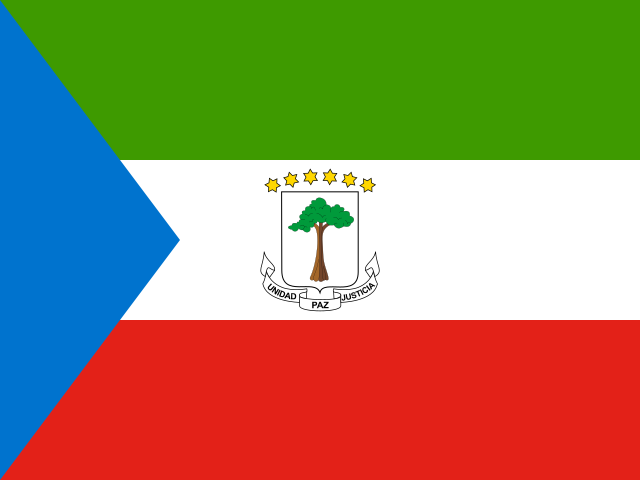 Equatorial Guinea
 Gabon
Gabon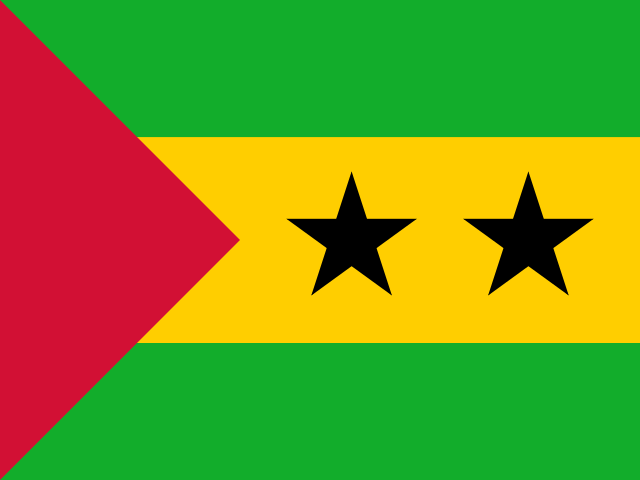 Sao Tome and Principe
Earlier Report Observations
The milk market in Middle Africa contracted from 1 198 thousand tonnes in 2018 to 1 115 thousand tonnes in 2020, driven by successive declines in both domestic production and import volumes over the two-year period.
A recovery began in 2021, with market volume growing to 1 173 thousand tonnes by 2023. This expansion aligned with a phase of strong international dairy demand amid constrained global production, influenced by the aftermath of the COVID-19 pandemic. The direct impact of the war in Ukraine on world dairy markets in 2022 contributed to supply chain pressures and price volatility, further shaping the market's trajectory. Global milk production remained subdued in key surplus regions through 2023, while international trade flows receded. By 2024, import volumes rose to 134 thousand tonnes against a backdrop of stable world production but limited availability in major exporting basins.
Table of content
- 1. Disclaimer
- 2. Terms of use of the report
- 3. Product codes in the statistical classifications used in the report
-
4. Key Market Indicators and Trends
-
4.1. Key Market Indicators
-
4.1.1. In kind
- 4.1.1.1. Production, 2018-2023
- 4.1.1.2. Imports, 2018-2024
- 4.1.1.3. Exports, 2018-2024
- 4.1.1.4. Market size, 2018-2023
-
4.1.1. In kind
- 4.2. Market Trends and Factors
-
4.1. Key Market Indicators
-
5. Production
-
5.1. Production in Middle Africa
- 5.1.1. Annual dynamics of production in Middle Africa in kind, 2018-2023, K t
-
5.2. Global production by Country, 2018-2023
- 5.2.1. Annual dynamics of production by macroregions in kind, 2018-2023, K t
- 5.2.2. Dynamics of production structure by macroregions in kind, 2018-2023
- 5.2.3. Annual dynamics of production by country in kind, 2018-2023, K t
- 5.2.4. Structure of production by countries in kind, 2018-2023
- 5.2.5. Dynamics of peoduction structure by countries in kind, 2018-2023
-
5.1. Production in Middle Africa
-
6. Imports
-
6.1. Imports (Direct Data*)
- 6.1.1. Imports - Total information
-
6.1.2. Imports in kind, K t
- 6.1.2.1. Annual dynamics of product's imports to Angola in kind, 2018-2024, K t
- 6.1.2.2. Dynamics of product's imports in kind to Angola by countries, 2018-2024, K t
- 6.1.2.3. Structure of product's imports in kind by countries, 2018-2024
-
6.1.3. Imports in value, M $ US
- 6.1.3.1. Annual dynamics of product's imports to Angola in value, 2018-2024, M $ US
- 6.1.3.2. Dynamics of product's imports in value to Angola by countries, 2018-2024, M $ US
- 6.1.3.3. Structure of product's imports in value by countries, 2018-2024
-
6.1.4. Average price of product's imports, $ US/t
- 6.1.4.1. Annual dynamics of average price of product's imports to Angola, 2018-2024, $ US/t
- 6.1.4.2. Dynamics of average price of product's imports to Angola by countries, 2018-2024, $ US/t
-
6.2. Imports (Mirror Data)
- 6.2.1. Imports - Total information
-
6.2.2. Imports in kind, K t
- 6.2.2.1. Annual dynamics of product's imports to Angola in kind, 2018-2024, K t
- 6.2.2.2. Dynamics of product's imports in kind to Angola by countries, 2018-2024, K t
- 6.2.2.3. Structure of product's imports in kind by countries, 2018-2024
-
6.2.3. Imports in value, M $ US
- 6.2.3.1. Annual dynamics of product's imports to Angola in value, 2018-2024, M $ US
- 6.2.3.2. Dynamics of product's imports in value to Angola by countries, 2018-2024, M $ US
- 6.2.3.3. Structure of product's imports in value by countries, 2018-2024
-
6.2.4. Average price of product's imports, $ US/t
- 6.2.4.1. Annual dynamics of average price of product's imports to Angola, 2018-2024, $ US/t
- 6.2.4.2. Dynamics of average price of product's imports to Angola by countries, 2018-2024, $ US/t
-
6.1. Imports (Direct Data*)
-
7. Exports
-
7.1. Exports (Direct Data*)
- 7.1.1. Exports - Total information
-
7.1.2. Exports in kind, K t
- 7.1.2.1. Annual dynamics of product's exports from Angola in kind, 2018-2024, K t
- 7.1.2.2. Dynamics of product's exports in kind from Angola by countries, 2018-2024, K t
- 7.1.2.3. Structure of product's exports in kind by countries, 2018-2024
-
7.1.3. Exports in value, M $ US
- 7.1.3.1. Annual dynamics of product's exports from Angola in value, 2018-2024, M $ US
- 7.1.3.2. Dynamics of product's exports in value from Angola by countries, 2018-2024, M $ US
- 7.1.3.3. Structure of product's exports in value by countries, 2018-2024
-
7.1.4. Average price of product's exports, $ US/t
- 7.1.4.1. Annual dynamics of average price of product's exports from Angola, 2018-2024, $ US/t
- 7.1.4.2. Dynamics of average price of product's exports from Angola by countries, 2018-2024, $ US/t
-
7.2. Exports (Mirror Data)
- 7.2.1. Exports - Total information
-
7.2.2. Exports in kind, K t
- 7.2.2.1. Annual dynamics of product's exports from Angola in kind, 2018-2024, K t
- 7.2.2.2. Dynamics of product's exports in kind from Angola by countries, 2018-2024, K t
- 7.2.2.3. Structure of product's exports in kind by countries, 2018-2024
-
7.2.3. Exports in value, M $ US
- 7.2.3.1. Annual dynamics of product's exports from Angola in value, 2018-2024, M $ US
- 7.2.3.2. Dynamics of product's exports in value from Angola by countries, 2018-2024, M $ US
- 7.2.3.3. Structure of product's exports in value by countries, 2018-2024
-
7.2.4. Average price of product's exports, $ US/t
- 7.2.4.1. Annual dynamics of average price of product's exports from Angola, 2018-2024, $ US/t
- 7.2.4.2. Dynamics of average price of product's exports from Angola by countries, 2018-2024, $ US/t
-
7.1. Exports (Direct Data*)
-
8. Trade balance
-
8.1. Trade balance (Direct Data)
- 8.1.1. In kind, K t
- 8.1.2. In value, M $ US
-
8.2. Trade balance (Mirror Data)
- 8.2.1. In kind, K t
- 8.2.2. In value, M $ US
-
8.1. Trade balance (Direct Data)
-
9. Top buying and selling countries, 2018-2024
-
9.1. Direct Data
- 9.1.1. Import in Value by Countries-buyers
- 9.1.2. Export in Value by Countries-suppliers
-
9.2. Mirror Data
- 9.2.1. Import in Value by Countries-buyers
- 9.2.2. Export in Value by Countries-suppliers
-
9.1. Direct Data
Production milk in Middle Africa
In kind, 2017-2020, K t
Top producers of milk, 2017-2020
World map of production of milk, 2017-2020
Milk production in Middle Africa has declined for the second year in a row. In 2019, production fell by 4.2%, followed by a further 1.0% decrease in 2020, bringing output down to 1 008 thousand tonnes. The highest production level was recorded in 2018 at 1 062 thousand tonnes, which represented a 4.1% increase from the previous year.
Annual dynamics of production in Middle Africa in kind, 2017-2020, K t
| Parameter | 2018 | 2019 | 2020 | CAGR | |
|---|---|---|---|---|---|
| 1 | Change from last year | 4.1% | (4.2%) | (1.0%) | (0.4%) |
Exports milk from Middle Africa
Exports in kind, K t
After rising for two consecutive years, milk exports from Middle Africa declined in 2020. Exports fell by 45.3% year-on-year to 1.0 thousand tonnes. The peak was in 2019 at 1.9 thousand tonnes, following a 16.8% increase in 2018. Overall, from 2017 to 2020, exports decreased by 27.6%, with an average annual decline of 10.2%.
Annual dynamics of product's exports from Middle Africa in kind, 2017-2020, K t
| Parameter | 2018 | 2019 | 2020 | CAGR | |
|---|---|---|---|---|---|
| 1 | Change from last year | 16.8% | 13.4% | (45.3%) | (10.2%) |
From 2017 to 2020, Mali, Vietnam, and Rwanda were the top destinations for milk exports from Middle Africa in volume terms. Each accounted for 1.8% of total exports, collectively making up 5.4% of all export flows.
Structure of product's exports in kind by countries, 2017-2020
World map of product's exports from Middle Africa in kind, 2017-2020
Exports in value, M $ US
Milk exports from Middle Africa in value terms dropped to 4.1 million US dollars in 2020, down 18.2% from the previous year. The highest value was recorded in 2019 at 5.0 million US dollars, which saw a 4.4% increase. Over the period from 2017 to 2020, exports decreased by 15%, with an average annual decline of 5.3%.
Annual dynamics of product's exports from Middle Africa in value, 2017-2020, M $ US
| Parameter | 2018 | 2019 | 2020 | CAGR | |
|---|---|---|---|---|---|
| 1 | Change from last year | (0.3%) | 4.4% | (18.2%) | (5.3%) |
Between 2017 and 2020, Mali and Vietnam were the leading markets for milk exports from Middle Africa in value terms. Together, they accounted for 2.4% of total export flows.
Structure of product's exports in value by countries, 2017-2020
World map of product's exports from Middle Africa in value, 2017-2020
Imports milk to Middle Africa
Imports in kind, K t
Milk imports into Middle Africa have fallen for the third consecutive year. In 2020, imports decreased by 12.9% to 108.2 thousand tonnes. From 2017 to 2020, imports declined by 68.4%, with an average annual reduction of 31.9%.
Annual dynamics of product's imports to Middle Africa in kind, 2017-2020, K t
| Parameter | 2018 | 2019 | 2020 | CAGR | |
|---|---|---|---|---|---|
| 1 | Change from last year | (59.7%) | (9.8%) | (12.9%) | (31.9%) |
From 2017 to 2020, Portugal, France, and the Netherlands were the key sources for milk imports into Middle Africa in volume terms. Portugal accounted for 48.2% of imports, France for 8.4%, and the Netherlands for 7.1%, together making up 63.8% of total import flows.
Structure of product's imports in kind by countries, 2017-2020
World map of product's imports to Middle Africa in kind, 2017-2020
Imports in value, M $ US
After increasing for two years, milk imports into Middle Africa in value terms declined in 2020. Imports fell by 16.0% to approximately 249.8 million US dollars. The peak was in 2019 at 297.5 million US dollars, following a 53.8% increase in 2018. Overall, from 2017 to 2020, imports grew by 33.7%, with an average annual increase of 10.2%.
Annual dynamics of product's imports to Middle Africa in value, 2017-2020, M $ US
| Parameter | 2018 | 2019 | 2020 | CAGR | |
|---|---|---|---|---|---|
| 1 | Change from last year | 53.8% | 3.5% | (16.0%) | 10.2% |
Between 2017 and 2020, milk imports into Middle Africa in value terms were spread across multiple markets. The Netherlands accounted for 21.3% of imports, Portugal for 13.5%, and Belgium for 10.1%, with these three countries together representing 44.9% of total import flows.
Structure of product's imports in value by countries, 2017-2020
World map of product's imports to Middle Africa in value, 2017-2020
Related Reports




In-depth market research on this product
Global Sheep Milk Cheese Market 2021–2031: Size, Share, Trends and Forecast
Global market report: size, trends and forecast to 2031 · 186 pages
Global Skimmed Milk Powder Market 2021–2031: Size, Share, Trends and Forecast
Global market report: size, trends and forecast to 2031 · 192 pages
Global Whole Milk Powder Market 2021–2031: Size, Share, Trends and Forecast
Global market report: size, trends and forecast to 2031 · 214 pages
Global Condensed Milk Market 2021–2031: Size, Share, Trends and Forecast
Global market report: size, trends and forecast to 2031 · 224 pages
Why Choose Us?
Only Verified Data
No Hidden Costs or Separate Fees
Smarter Subscription Pricing
Contact Our Team
Submit your inquiry using the form below — our team will get back to you within 24 hours.