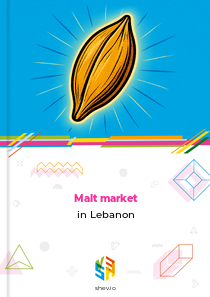







Earlier Report Observations
The malt market in Lebanon contracted sharply from 17 305 t in 2018 to 10 552 t in 2020, driven by a severe economic crisis that devalued the currency and raised agricultural production costs. Deteriorating barley output was exacerbated by stagnant farmer incomes, while regulatory changes allowing private sector imports of feed barley boosted commercial trade activity but could not offset the broader decline.
Market volume recovered to 12 356 t in 2021 as initiatives to expand domestic production through increased planted areas and high-yield barley varieties aimed to reduce import reliance. Growth continued to 13 508 t in 2022 despite ongoing economic and political turmoil, alongside logistical disruptions from regional conflict that challenged supply chains.
In 2023, the market declined to 11 872 t amid political instability and economic stagnation, exacerbated by the absence of an elected president, which dampened agricultural investment. Lebanon maintained its position in global barley production into 2024, though domestic market conditions remained pressured by global competition and climatic factors.
Table of content
- 1. Disclaimer
- 2. Terms of use of the report
- 3. Product codes in the statistical classifications used in the report
-
4. Key Market Indicators and Trends
-
4.1. Key Market Indicators
-
4.1.1. In kind
- 4.1.1.1. Production, 2018-2023
- 4.1.1.2. Imports, 2018-2024
- 4.1.1.3. Exports, 2018-2024
- 4.1.1.4. Market size, 2018-2023
-
4.1.1. In kind
- 4.2. Market Trends and Factors
-
4.1. Key Market Indicators
-
5. Production
-
5.1. Production in Lebanon
- 5.1.1. Annual dynamics of production in Lebanon in kind, 2018-2023, t
- 5.1.2. Annual dynamics of production in Lebanon in value, 2018-2023, $ US
-
5.2. Global production by Country, 2018-2023
- 5.2.1. Annual dynamics of production by macroregions in kind, 2018-2023, t
- 5.2.2. Dynamics of production structure by macroregions in kind, 2018-2023
- 5.2.3. Annual dynamics of production by country in kind, 2018-2023, t
- 5.2.4. Structure of production by countries in kind, 2018-2023
- 5.2.5. Dynamics of peoduction structure by countries in kind, 2018-2023
-
5.1. Production in Lebanon
-
6. Exports
-
6.1. Exports (Direct Data)
- 6.1.1. Exports - Total information
-
6.1.2. Exports in kind, t
- 6.1.2.1. Annual dynamics of product's exports from Lebanon in kind, 2018-2024, t
- 6.1.2.2. Dynamics of product's exports in kind from Lebanon by countries, 2018-2024, t
- 6.1.2.3. Structure of product's exports in kind by countries, 2018-2024
-
6.1.3. Exports in value, K $ US
- 6.1.3.1. Annual dynamics of product's exports from Lebanon in value, 2018-2024, K $ US
- 6.1.3.2. Dynamics of product's exports in value from Lebanon by countries, 2018-2024, K $ US
- 6.1.3.3. Structure of product's exports in value by countries, 2018-2024
-
6.1.4. Average price of product's exports, $ US/t
- 6.1.4.1. Annual dynamics of average price of product's exports from Lebanon, 2018-2024, $ US/t
- 6.1.4.2. Dynamics of average price of product's exports from Lebanon by countries, 2018-2024, $ US/t
-
6.2. Exports (Mirror Data)
- 6.2.1. Exports - Total information
-
6.2.2. Exports in kind, t
- 6.2.2.1. Annual dynamics of product's exports from Lebanon in kind, 2018-2024, t
- 6.2.2.2. Dynamics of product's exports in kind from Lebanon by countries, 2018-2024, t
- 6.2.2.3. Structure of product's exports in kind by countries, 2018-2024
-
6.2.3. Exports in value, K $ US
- 6.2.3.1. Annual dynamics of product's exports from Lebanon in value, 2018-2024, K $ US
- 6.2.3.2. Dynamics of product's exports in value from Lebanon by countries, 2018-2024, K $ US
- 6.2.3.3. Structure of product's exports in value by countries, 2018-2024
-
6.2.4. Average price of product's exports, $ US/t
- 6.2.4.1. Annual dynamics of average price of product's exports from Lebanon, 2018-2024, $ US/t
- 6.2.4.2. Dynamics of average price of product's exports from Lebanon by countries, 2018-2024, $ US/t
-
6.1. Exports (Direct Data)
-
7. Imports
-
7.1. Imports (Direct Data)
- 7.1.1. Imports - Total information
-
7.1.2. Imports in kind, t
- 7.1.2.1. Annual dynamics of product's imports to Lebanon in kind, 2018-2024, t
- 7.1.2.2. Dynamics of product's imports in kind to Lebanon by countries, 2018-2024, t
- 7.1.2.3. Structure of product's imports in kind by countries, 2018-2024
-
7.1.3. Imports in value, K $ US
- 7.1.3.1. Annual dynamics of product's imports to Lebanon in value, 2018-2024, K $ US
- 7.1.3.2. Dynamics of product's imports in value to Lebanon by countries, 2018-2024, K $ US
- 7.1.3.3. Structure of product's imports in value by countries, 2018-2024
-
7.1.4. Average price of product's imports, $ US/t
- 7.1.4.1. Annual dynamics of average price of product's imports to Lebanon, 2018-2024, $ US/t
- 7.1.4.2. Dynamics of average price of product's imports to Lebanon by countries, 2018-2024, $ US/t
-
7.2. Imports (Mirror Data)
- 7.2.1. Imports - Total information
-
7.2.2. Imports in kind, t
- 7.2.2.1. Annual dynamics of product's imports to Lebanon in kind, 2018-2024, t
- 7.2.2.2. Dynamics of product's imports in kind to Lebanon by countries, 2018-2024, t
- 7.2.2.3. Structure of product's imports in kind by countries, 2018-2024
-
7.2.3. Imports in value, K $ US
- 7.2.3.1. Annual dynamics of product's imports to Lebanon in value, 2018-2024, K $ US
- 7.2.3.2. Dynamics of product's imports in value to Lebanon by countries, 2018-2024, K $ US
- 7.2.3.3. Structure of product's imports in value by countries, 2018-2024
-
7.2.4. Average price of product's imports, $ US/t
- 7.2.4.1. Annual dynamics of average price of product's imports to Lebanon, 2018-2024, $ US/t
- 7.2.4.2. Dynamics of average price of product's imports to Lebanon by countries, 2018-2024, $ US/t
-
7.1. Imports (Direct Data)
-
8. Trade balance
-
8.1. Trade balance (Direct Data)
- 8.1.1. In kind, t
- 8.1.2. In value, K $ US
-
8.2. Trade balance (Mirror Data)
- 8.2.1. In kind, t
- 8.2.2. In value, K $ US
-
8.1. Trade balance (Direct Data)
-
9. Top buying and selling countries, 2018-2024
-
9.1. Direct Data
- 9.1.1. Import in Value by Countries-buyers
- 9.1.2. Export in Value by Countries-suppliers
-
9.2. Mirror Data
- 9.2.1. Import in Value by Countries-buyers
- 9.2.2. Export in Value by Countries-suppliers
-
9.1. Direct Data
Production malt in Lebanon
In kind, 2017-2020, t
Top producers of malt, 2017-2020
World map of production of malt, 2017-2020
In 2020, Lebanon produced 10 612 tons of malt, marking a significant 23.9% decline from 2019. Over the 2017-2020 period, production fell by 36.2%, with an average annual decrease of 13.9%. The only year of growth during this timeframe was 2019, which saw a modest 1.6% increase.
Annual dynamics of production in Lebanon in kind, 2017-2020, t
| Parameter | 2018 | 2019 | 2020 | CAGR | |
|---|---|---|---|---|---|
| 1 | Change from last year | (17.5%) | 1.6% | (23.9%) | (13.9%) |
Exports malt from Lebanon
Exports in kind, t
Lebanon's malt exports grew for the third consecutive year in 2020, reaching 2 021 tons. This represents a substantial 16.6% increase compared to the previous year. Over the 2017-2020 period, export volumes surged by 103 196.5%, translating to an average annual growth rate of 910.9%.
Annual dynamics of product's exports from Lebanon in kind, 2017-2020, t
| Parameter | 2018 | 2019 | 2020 | CAGR | |
|---|---|---|---|---|---|
| 1 | Change from last year | 10.1% | 80 361.1% | 16.6% | 910.9% |
From 2017 to 2020, Lebanon's malt exports were almost exclusively directed to Jordan, which accounted for 99.9% of total export volumes.
Structure of product's exports in kind by countries, 2017-2020
World map of product's exports from Lebanon in kind, 2017-2020
Exports in value, K $ US
The value of Lebanon's malt exports showed considerable volatility between 2017 and 2020. Exports reached their lowest point in 2017 and peaked in 2019, with a 500-fold difference between these two years. In 2020, export value stood at 311 thousand US dollars, reflecting a 26.6% year-over-year decline. The highest value was recorded in 2019 at 423 thousand US dollars, which represented a remarkable 35 301.6% increase from the previous year.
Annual dynamics of product's exports from Lebanon in value, 2017-2020, K $ US
| Parameter | 2018 | 2019 | 2020 | CAGR | |
|---|---|---|---|---|---|
| 1 | Change from last year | 41.4% | 35 301.6% | (26.6%) | 616.1% |
Between 2017 and 2020, Jordan dominated Lebanon's malt exports in value terms, absorbing 99.6% of total export revenue.
Structure of product's exports in value by countries, 2017-2020
World map of product's exports from Lebanon in value, 2017-2020
Imports malt to Lebanon
Imports in kind, t
Lebanon's malt imports declined for the second consecutive year in 2020, totaling approximately 1 961 tons. This represents a 29.4% decrease from 2019 levels. Over the 2017-2020 period, import volumes fell by 32.6%, equivalent to an average annual decline of 12.3%. The peak import volume occurred in 2018 at 3 573 tons, which marked a 22.7% increase from the previous year.
Annual dynamics of product's imports to Lebanon in kind, 2017-2020, t
| Parameter | 2018 | 2019 | 2020 | CAGR | |
|---|---|---|---|---|---|
| 1 | Change from last year | 22.7% | (22.3%) | (29.4%) | (12.3%) |
From 2017 to 2020, France (54.1% of import volume), Belgium (17.8%), and Egypt (10.7%) were Lebanon's primary sources of malt imports, together accounting for 82.5% of total import volumes.
Structure of product's imports in kind by countries, 2017-2020
World map of product's imports to Lebanon in kind, 2017-2020
Imports in value, K $ US
The value of Lebanon's malt imports fell for the second straight year in 2020, reaching 1 042 thousand US dollars. This represents a sharp 32.3% decrease from 2019. Over the 2017-2020 period, import values declined by 27.9%, with an average annual decrease of 10.3%. The highest import value was recorded in 2018 at 1 753 thousand US dollars, which was 21.2% higher than the previous year.
Annual dynamics of product's imports to Lebanon in value, 2017-2020, K $ US
| Parameter | 2018 | 2019 | 2020 | CAGR | |
|---|---|---|---|---|---|
| 1 | Change from last year | 21.2% | (12.2%) | (32.3%) | (10.3%) |
Between 2017 and 2020, France (54.0% of import value), Belgium (17.0%), and Egypt (10.2%) were Lebanon's leading suppliers of malt, together representing 81.2% of total import value.
Structure of product's imports in value by countries, 2017-2020
World map of product's imports to Lebanon in value, 2017-2020
Related Reports

2026-03-28
2026-03-28
Malt market in Australia and New Zealand
2026-03-28

2026-03-28

Lemons and limes market in Lebanon
2026-03-28
In-depth market research on this product
Global Malt Market 2021–2031: Size, Share, Trends and Forecast
Global market report: size, trends and forecast to 2031 · 186 pages
Why Choose Us?
Only Verified Data
No Hidden Costs or Separate Fees
Smarter Subscription Pricing
Contact Our Team
Submit your inquiry using the form below — our team will get back to you within 24 hours.