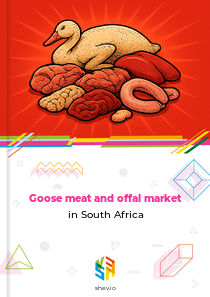







Earlier Report Observations
The market volume for goose meat and offal in South Africa declined from 546 tons in 2018 to 406 tons in 2022, before recovering to 496 tons in 2023. This contraction was primarily driven by the complete halt of imports after 2018 and a substantial increase in exports, which peaked at 106 tons in 2022. Domestic production remained stable, growing modestly from 501 tons to 514 tons over the same period.
The surge in exports aligns with South Africa's position as the leading exporter of frozen edible offal in Africa, a factor highlighted in 2023. Concurrently, consumer preferences shifted toward frozen meat, which was identified as the fastest-growing category in the meat market, likely supporting export-oriented production. On the domestic front, the chilled segment dominated the processed meat market, reflecting demand for fresh, minimally processed products, with major urban centers like Johannesburg and Cape Town as key consumption hubs.
Changing consumer trends, including a growing interest in organic and ethically sourced meat products, also influenced the market landscape. These shifts toward premium and sustainable options contributed to the evolving structure of demand, even as overall market volume fluctuated due to trade dynamics.
Table of content
- 1. Disclaimer
- 2. Terms of use of the report
- 3. Product codes in the statistical classifications used in the report
-
4. Key Market Indicators and Trends
-
4.1. Key Market Indicators
-
4.1.1. In kind
- 4.1.1.1. Production, 2018-2023
- 4.1.1.2. Imports, 2018-2025
- 4.1.1.3. Exports, 2018-2025
- 4.1.1.4. Market size, 2018-2023
-
4.1.1. In kind
- 4.2. Market Trends and Factors
-
4.1. Key Market Indicators
-
5. Production
-
5.1. Production in South Africa
- 5.1.1. Annual dynamics of production in South Africa in kind, 2018-2023, t
- 5.1.2. Annual dynamics of production in South Africa in value, 2018-2023, $ US
-
5.2. Global production by Country, 2018-2023
- 5.2.1. Annual dynamics of production by macroregions in kind, 2018-2023, t
- 5.2.2. Dynamics of production structure by macroregions in kind, 2018-2023
- 5.2.3. Annual dynamics of production by country in kind, 2018-2023, t
- 5.2.4. Structure of production by countries in kind, 2018-2023
- 5.2.5. Dynamics of peoduction structure by countries in kind, 2018-2023
-
5.1. Production in South Africa
-
6. Exports
-
6.1. Exports (Direct Data)
- 6.1.1. Exports - Total information
-
6.1.2. Exports in kind, t
- 6.1.2.1. Annual dynamics of product's exports from South Africa in kind, 2018-2025, t
- 6.1.2.2. Dynamics of product's exports in kind from South Africa by countries, 2018-2025, t
- 6.1.2.3. Structure of product's exports in kind by countries, 2018-2025
-
6.1.3. Exports in value, K $ US
- 6.1.3.1. Annual dynamics of product's exports from South Africa in value, 2018-2025, K $ US
- 6.1.3.2. Dynamics of product's exports in value from South Africa by countries, 2018-2025, K $ US
- 6.1.3.3. Structure of product's exports in value by countries, 2018-2025
-
6.1.4. Average price of product's exports, $ US/kg
- 6.1.4.1. Annual dynamics of average price of product's exports from South Africa, 2018-2025, $ US/kg
- 6.1.4.2. Dynamics of average price of product's exports from South Africa by countries, 2018-2025, $ US/kg
-
6.2. Exports (Mirror Data)
- 6.2.1. Exports - Total information
-
6.2.2. Exports in kind, t
- 6.2.2.1. Annual dynamics of product's exports from South Africa in kind, 2018-2025, t
- 6.2.2.2. Dynamics of product's exports in kind from South Africa by countries, 2018-2025, t
- 6.2.2.3. Structure of product's exports in kind by countries, 2018-2025
-
6.2.3. Exports in value, K $ US
- 6.2.3.1. Annual dynamics of product's exports from South Africa in value, 2018-2025, K $ US
- 6.2.3.2. Dynamics of product's exports in value from South Africa by countries, 2018-2025, K $ US
- 6.2.3.3. Structure of product's exports in value by countries, 2018-2025
-
6.2.4. Average price of product's exports, $ US/kg
- 6.2.4.1. Annual dynamics of average price of product's exports from South Africa, 2018-2025, $ US/kg
- 6.2.4.2. Dynamics of average price of product's exports from South Africa by countries, 2018-2025, $ US/kg
-
6.1. Exports (Direct Data)
-
7. Imports
-
7.1. Imports (Direct Data)
- 7.1.1. Imports - Total information
-
7.1.2. Imports in kind, t
- 7.1.2.1. Annual dynamics of product's imports to South Africa in kind, 2018-2025, t
- 7.1.2.2. Dynamics of product's imports in kind to South Africa by countries, 2018-2025, t
- 7.1.2.3. Structure of product's imports in kind by countries, 2018-2025
-
7.1.3. Imports in value, K $ US
- 7.1.3.1. Annual dynamics of product's imports to South Africa in value, 2018-2025, K $ US
- 7.1.3.2. Dynamics of product's imports in value to South Africa by countries, 2018-2025, K $ US
- 7.1.3.3. Structure of product's imports in value by countries, 2018-2025
-
7.1.4. Average price of product's imports, $ US/kg
- 7.1.4.1. Annual dynamics of average price of product's imports to South Africa, 2018-2025, $ US/kg
- 7.1.4.2. Dynamics of average price of product's imports to South Africa by countries, 2018-2025, $ US/kg
-
7.2. Imports (Mirror Data)
- 7.2.1. Imports - Total information
-
7.2.2. Imports in kind, t
- 7.2.2.1. Annual dynamics of product's imports to South Africa in kind, 2018-2025, t
- 7.2.2.2. Dynamics of product's imports in kind to South Africa by countries, 2018-2025, t
- 7.2.2.3. Structure of product's imports in kind by countries, 2018-2025
-
7.2.3. Imports in value, K $ US
- 7.2.3.1. Annual dynamics of product's imports to South Africa in value, 2018-2025, K $ US
- 7.2.3.2. Dynamics of product's imports in value to South Africa by countries, 2018-2025, K $ US
- 7.2.3.3. Structure of product's imports in value by countries, 2018-2025
-
7.2.4. Average price of product's imports, $ US/kg
- 7.2.4.1. Annual dynamics of average price of product's imports to South Africa, 2018-2025, $ US/kg
- 7.2.4.2. Dynamics of average price of product's imports to South Africa by countries, 2018-2025, $ US/kg
-
7.1. Imports (Direct Data)
-
8. Trade balance
-
8.1. Trade balance (Direct Data)
- 8.1.1. In kind, t
- 8.1.2. In value, K $ US
-
8.2. Trade balance (Mirror Data)
- 8.2.1. In kind, t
- 8.2.2. In value, K $ US
-
8.1. Trade balance (Direct Data)
-
9. Top buying and selling countries, 2018-2025
-
9.1. Direct Data
- 9.1.1. Import in Value by Countries-buyers
- 9.1.2. Export in Value by Countries-suppliers
-
9.2. Mirror Data
- 9.2.1. Import in Value by Countries-buyers
- 9.2.2. Export in Value by Countries-suppliers
-
9.1. Direct Data
Production goose meat and offal in South Africa
In kind, 2018-2021, t
From 2018 to 2021, South Africa ranked 19th globally in terms of goose meat and offal production volume.
Top producers of goose meat and offal, 2018-2021
World map of production of goose meat and offal, 2018-2021
South Africa's goose meat and offal production increased for the third consecutive year. In 2021, the country produced 510.6 tonnes, marking a slight gain of 0.6% compared to the previous year.
Annual dynamics of production in South Africa in kind, 2018-2021, t
| Parameter | 2019 | 2020 | 2021 | CAGR | |
|---|---|---|---|---|---|
| 1 | Change from last year | 0.8% | 0.5% | 0.6% | 0.6% |
Exports goose meat and offal from South Africa
Exports in kind, kg
Goose meat and offal exports from South Africa grew for the third year in a row. In 2021, exports reached 69 811 kg, up by 100.3% from the prior year. Between 2018 and 2021, exports surged by 841.4%, which translates to an annualized growth rate of 111.2%.
Annual dynamics of product's exports from South Africa in kind, 2018-2021, kg
| Parameter | 2019 | 2020 | 2021 | CAGR | |
|---|---|---|---|---|---|
| 1 | Change from last year | 136.1% | 99.0% | 100.3% | 111.2% |
Between 2018 and 2021, Lesotho was the primary destination for South Africa's goose meat and offal exports, accounting for 88.9% of total flows. The remaining share was distributed among several smaller markets.
Structure of product's exports in kind by countries, 2018-2021
World map of product's exports from South Africa in kind, 2018-2021
Exports in value, K $ US
Cross-border shipments of goose meat and offal from South Africa increased for the third consecutive year. In 2021, exports totaled 117.0 thousand US dollars, reflecting a significant improvement of 123.3% from a year earlier. From 2018 to 2021, exports rose by 518%, equating to an annualized rate of 83.5%.
Annual dynamics of product's exports from South Africa in value, 2018-2021, K $ US
| Parameter | 2019 | 2020 | 2021 | CAGR | |
|---|---|---|---|---|---|
| 1 | Change from last year | 123.1% | 24.0% | 123.3% | 83.5% |
From 2018 to 2021, the geographical pattern of exports in value terms was dominated by Lesotho, which held an 81.7% share of total flows. Other partners accounted for relatively minor shares.
Structure of product's exports in value by countries, 2018-2021
World map of product's exports from South Africa in value, 2018-2021
Imports goose meat and offal to South Africa
Imports in kind, kg
The market exhibited volatility during the observed period. Imports reached their lowest point in 2020 and peaked in 2018, with a 5 266 760-fold difference between these years. In 2021, South Africa imported 0.1 kg of goose meat and offal, showing a steep rise of 800.0% compared to the previous year. The largest decline occurred in 2019, at 100.0%.
Annual dynamics of product's imports to South Africa in kind, 2018-2021, kg
| Parameter | 2019 | 2020 | 2021 | CAGR | |
|---|---|---|---|---|---|
| 1 | Change from last year | (100.0%) | (100.0%) | 800.0% | (98.8%) |
Between 2018 and 2021, the import market was highly concentrated, with Brazil responsible for 100.0% of total imports in kind.
Structure of product's imports in kind by countries, 2018-2021
World map of product's imports to South Africa in kind, 2018-2021
Imports in value, K $ US
South Africa's goose meat and offal import volume declined for the third consecutive year. In 2021, imports amounted to 0.0 thousand US dollars, indicating a steep decline of 61.6% over the past year. From 2018 to 2021, imports decreased by 100%, equating to an annualized rate of 95.7%.
Annual dynamics of product's imports to South Africa in value, 2018-2021, K $ US
| Parameter | 2019 | 2020 | 2021 | CAGR | |
|---|---|---|---|---|---|
| 1 | Change from last year | (99.9%) | (74.6%) | (61.6%) | (95.7%) |
From 2018 to 2021, Brazil effectively dominated imports in value terms of goose meat and offal to South Africa, with a share of 99.9% of total flows.
Structure of product's imports in value by countries, 2018-2021
World map of product's imports to South Africa in value, 2018-2021
Related Reports
Goose meat and offal market in Asia
2026-03-27
Goose meat and offal market in Egypt
2026-03-27
Goose meat and offal market in Myanmar
2026-03-27
Goose meat and offal market in Africa
2026-03-27


Goat meat market in South Africa
2026-03-27

Pig offal market in South Africa
2026-03-30

Why Choose Us?
Only Verified Data
No Hidden Costs or Separate Fees
Smarter Subscription Pricing
Contact Our Team
Submit your inquiry using the form below — our team will get back to you within 24 hours.