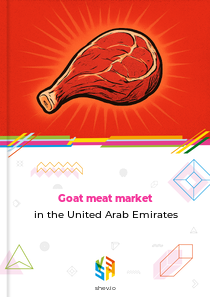







Earlier Report Observations
From 2018 to 2020, the goat meat market in the UAE saw steady volume growth, supported by federal and local government initiatives to develop livestock wealth. Programs included free veterinary services from Dubai Municipality and efforts by the Ministry of Climate Change and Environment to regulate commercial livestock use, enhance food security, and diversify the economy. This foundation was bolstered by a large existing herd of over 3.5 million heads of sheep, goats, and other animals in Abu Dhabi.
Market volume continued its upward trajectory, reaching 76,584 t in 2021 and 78,618 t in 2022, although market value temporarily dipped in 2021. By 2023, volume climbed to 79,576 t while value surged to $399.1 million. This period was characterized by shifting consumer preferences toward fresh, locally produced meat free of hormones and antibiotics, which increased demand. Heightened competition during Ramadan further energized the market, with significant price variations between local and imported products reflecting diverse supply sources.
The expansion from 2018 to 2023 was reinforced by the entry of specialized companies like Taiba Farms, which offered high-quality fresh and frozen meat products across the GCC region. Consistent government support for livestock development and the emergence of the sheep meat sector—which includes goat meat—as one of the fastest-growing segments in the UAE's edible meat market contributed to sustained growth through both domestic production and imports.
Table of content
- 1. Disclaimer
- 2. Terms of use of the report
- 3. Product codes in the statistical classifications used in the report
-
4. Key Market Indicators and Trends
-
4.1. Key Market Indicators
-
4.1.1. In kind
- 4.1.1.1. Production, 2018-2023
- 4.1.1.2. Imports, 2018-2024
- 4.1.1.3. Exports, 2018-2024
- 4.1.1.4. Market size, 2018-2023
-
4.1.2. In value
- 4.1.2.1. Production, 2018-2023
- 4.1.2.2. Imports, 2018-2024
- 4.1.2.3. Exports, 2018-2024
- 4.1.2.4. Market size, 2018-2023
-
4.1.1. In kind
- 4.2. Market Trends and Factors
-
4.1. Key Market Indicators
-
5. Production
-
5.1. Production in the United Arab Emirates
- 5.1.1. Annual dynamics of production in the United Arab Emirates in kind, 2018-2023, t
- 5.1.2. Annual dynamics of production in the United Arab Emirates in value, 2018-2023, $ US
-
5.2. Global production by Country, 2018-2023
- 5.2.1. Annual dynamics of production by macroregions in kind, 2018-2023, t
- 5.2.2. Dynamics of production structure by macroregions in kind, 2018-2023
- 5.2.3. Annual dynamics of production by country in kind, 2018-2023, t
- 5.2.4. Structure of production by countries in kind, 2018-2023
- 5.2.5. Dynamics of peoduction structure by countries in kind, 2018-2023
-
5.1. Production in the United Arab Emirates
-
6. Exports
-
6.1. Exports (Direct Data*)
- 6.1.1. Exports - Total information
-
6.1.2. Exports in kind, t
- 6.1.2.1. Annual dynamics of product's exports from the United Arab Emirates in kind, 2018-2024, t
- 6.1.2.2. Dynamics of product's exports in kind from the United Arab Emirates by countries, 2018-2024, t
- 6.1.2.3. Structure of product's exports in kind by countries, 2018-2024
-
6.1.3. Exports in value, M $ US
- 6.1.3.1. Annual dynamics of product's exports from the United Arab Emirates in value, 2018-2024, M $ US
- 6.1.3.2. Dynamics of product's exports in value from the United Arab Emirates by countries, 2018-2024, M $ US
- 6.1.3.3. Structure of product's exports in value by countries, 2018-2024
-
6.1.4. Average price of product's exports, $ US/t
- 6.1.4.1. Annual dynamics of average price of product's exports from the United Arab Emirates, 2018-2024, $ US/t
- 6.1.4.2. Dynamics of average price of product's exports from the United Arab Emirates by countries, 2018-2024, $ US/t
-
6.2. Exports (Mirror Data)
- 6.2.1. Exports - Total information
-
6.2.2. Exports in kind, t
- 6.2.2.1. Annual dynamics of product's exports from the United Arab Emirates in kind, 2018-2024, t
- 6.2.2.2. Dynamics of product's exports in kind from the United Arab Emirates by countries, 2018-2024, t
- 6.2.2.3. Structure of product's exports in kind by countries, 2018-2024
-
6.2.3. Exports in value, M $ US
- 6.2.3.1. Annual dynamics of product's exports from the United Arab Emirates in value, 2018-2024, M $ US
- 6.2.3.2. Dynamics of product's exports in value from the United Arab Emirates by countries, 2018-2024, M $ US
- 6.2.3.3. Structure of product's exports in value by countries, 2018-2024
-
6.2.4. Average price of product's exports, $ US/t
- 6.2.4.1. Annual dynamics of average price of product's exports from the United Arab Emirates, 2018-2024, $ US/t
- 6.2.4.2. Dynamics of average price of product's exports from the United Arab Emirates by countries, 2018-2024, $ US/t
-
6.1. Exports (Direct Data*)
-
7. Imports
-
7.1. Imports (Direct Data*)
- 7.1.1. Imports - Total information
-
7.1.2. Imports in kind, t
- 7.1.2.1. Annual dynamics of product's imports to the United Arab Emirates in kind, 2018-2024, t
- 7.1.2.2. Dynamics of product's imports in kind to the United Arab Emirates by countries, 2018-2024, t
- 7.1.2.3. Structure of product's imports in kind by countries, 2018-2024
-
7.1.3. Imports in value, M $ US
- 7.1.3.1. Annual dynamics of product's imports to the United Arab Emirates in value, 2018-2024, M $ US
- 7.1.3.2. Dynamics of product's imports in value to the United Arab Emirates by countries, 2018-2024, M $ US
- 7.1.3.3. Structure of product's imports in value by countries, 2018-2024
-
7.1.4. Average price of product's imports, $ US/t
- 7.1.4.1. Annual dynamics of average price of product's imports to the United Arab Emirates, 2018-2024, $ US/t
- 7.1.4.2. Dynamics of average price of product's imports to the United Arab Emirates by countries, 2018-2024, $ US/t
-
7.2. Imports (Mirror Data)
- 7.2.1. Imports - Total information
-
7.2.2. Imports in kind, t
- 7.2.2.1. Annual dynamics of product's imports to the United Arab Emirates in kind, 2018-2024, t
- 7.2.2.2. Dynamics of product's imports in kind to the United Arab Emirates by countries, 2018-2024, t
- 7.2.2.3. Structure of product's imports in kind by countries, 2018-2024
-
7.2.3. Imports in value, M $ US
- 7.2.3.1. Annual dynamics of product's imports to the United Arab Emirates in value, 2018-2024, M $ US
- 7.2.3.2. Dynamics of product's imports in value to the United Arab Emirates by countries, 2018-2024, M $ US
- 7.2.3.3. Structure of product's imports in value by countries, 2018-2024
-
7.2.4. Average price of product's imports, $ US/t
- 7.2.4.1. Annual dynamics of average price of product's imports to the United Arab Emirates, 2018-2024, $ US/t
- 7.2.4.2. Dynamics of average price of product's imports to the United Arab Emirates by countries, 2018-2024, $ US/t
-
7.1. Imports (Direct Data*)
-
8. Trade balance
-
8.1. Trade balance (Direct Data)
- 8.1.1. In kind, t
- 8.1.2. In value, M $ US
-
8.2. Trade balance (Mirror Data)
- 8.2.1. In kind, t
- 8.2.2. In value, M $ US
-
8.1. Trade balance (Direct Data)
-
9. Top buying and selling countries, 2018-2024
-
9.1. Direct Data
- 9.1.1. Import in Value by Countries-buyers
- 9.1.2. Export in Value by Countries-suppliers
-
9.2. Mirror Data
- 9.2.1. Import in Value by Countries-buyers
- 9.2.2. Export in Value by Countries-suppliers
-
9.1. Direct Data
Production goat meat in the United Arab Emirates
In kind, 2017-2020, t
From 2017 to 2020, the United Arab Emirates ranked 15th globally in goat meat production.
Top producers of goat meat, 2017-2020
World map of production of goat meat, 2017-2020
Goat meat production in the United Arab Emirates grew for the third consecutive year. In 2020, the country produced 60 386 tonnes of goat meat, marking a 3.5% increase from the previous year. Over the 2017-2020 period, production rose by 9.8%, with an average annual growth rate of 3.2%.
Annual dynamics of production in the United Arab Emirates in kind, 2017-2020, t
| Parameter | 2018 | 2019 | 2020 | CAGR | |
|---|---|---|---|---|---|
| 1 | Change from last year | 6.0% | 0.1% | 3.5% | 3.2% |
Exports goat meat from the United Arab Emirates
Exports in kind, t
Export volumes showed an unstable trend during this period. They reached their lowest point in 2017 and peaked in 2019, with a 4.6-fold difference between these years. In 2020, the United Arab Emirates exported 437 tonnes of goat meat, representing a sharp decline of 58.4% compared to 2019. The highest export volume was recorded in 2019 at 1 050 tonnes, while the largest percentage increase occurred in 2018 at 302.5%.
Annual dynamics of product's exports from the United Arab Emirates in kind, 2017-2020, t
| Parameter | 2018 | 2019 | 2020 | CAGR | |
|---|---|---|---|---|---|
| 1 | Change from last year | 302.5% | 13.8% | (58.4%) | 24.0% |
From 2017 to 2020, Oman was the primary buyer of goat meat from the United Arab Emirates, accounting for 77.4% of total exports in volume. The remaining exports were distributed among various other countries.
Structure of product's exports in kind by countries, 2017-2020
World map of product's exports from the United Arab Emirates in kind, 2017-2020
Exports in value, K $ US
Export values exhibited volatility throughout the timeframe. They hit a low in 2017 and a high in 2019, varying by 6.1 times. In 2020, the value of goat meat exports from the United Arab Emirates was 1 730 thousand US dollars, down 50.9% from 2019. The peak value was in 2019 at 3 526 thousand US dollars, and the largest percentage increase was in 2018 at 397.1%.
Annual dynamics of product's exports from the United Arab Emirates in value, 2017-2020, K $ US
| Parameter | 2018 | 2019 | 2020 | CAGR | |
|---|---|---|---|---|---|
| 1 | Change from last year | 397.1% | 23.5% | (50.9%) | 44.4% |
Throughout 2017-2020, Oman remained the leading buyer of goat meat from the United Arab Emirates in value terms, capturing 75.7% of total exports. Other trading partners held relatively smaller shares.
Structure of product's exports in value by countries, 2017-2020
World map of product's exports from the United Arab Emirates in value, 2017-2020
Imports goat meat to the United Arab Emirates
Imports in kind, t
After two years of growth, goat meat imports into the United Arab Emirates declined. In 2020, the country imported 14 290 tonnes of goat meat, a decrease of 14.4% from the previous year. Over the 2017-2020 period, imports fell by 9.5%, with an average annual decline of 3.3%. The highest import volume was in 2019 at 16 695 tonnes, and the largest increase was in 2018 at 4.2%.
Annual dynamics of product's imports to the United Arab Emirates in kind, 2017-2020, t
| Parameter | 2018 | 2019 | 2020 | CAGR | |
|---|---|---|---|---|---|
| 1 | Change from last year | 4.2% | 1.4% | (14.4%) | (3.3%) |
From 2017 to 2020, Ethiopia and Kenya were the dominant sources for goat meat imports into the United Arab Emirates, together making up 87.7% of total import volume. The rest was divided among smaller markets.
Structure of product's imports in kind by countries, 2017-2020
World map of product's imports to the United Arab Emirates in kind, 2017-2020
Imports in value, K $ US
Following a two-year rise, goat meat imports into the United Arab Emirates decreased. In 2020, imports amounted to 91 106 thousand US dollars, a gradual decline of 5.2% from the previous year. Between 2017 and 2020, imports increased by 4.4%, equivalent to an annualized rate of 1.4%. The peak value was in 2019 at 96 122 thousand US dollars, and the largest percentage increase was in 2018 at 8.6%.
Annual dynamics of product's imports to the United Arab Emirates in value, 2017-2020, K $ US
| Parameter | 2018 | 2019 | 2020 | CAGR | |
|---|---|---|---|---|---|
| 1 | Change from last year | 8.6% | 1.5% | (5.2%) | 1.4% |
Over 2017-2020, Ethiopia and Kenya consistently represented 90.3% of total goat meat import value into the United Arab Emirates, showing high market concentration with a long tail of minor suppliers.
Structure of product's imports in value by countries, 2017-2020
World map of product's imports to the United Arab Emirates in value, 2017-2020
Related Reports





Why Choose Us?
Only Verified Data
No Hidden Costs or Separate Fees
Smarter Subscription Pricing
Contact Our Team
Submit your inquiry using the form below — our team will get back to you within 24 hours.