






"Sub-Saharan Africa" region includes following countries:
 Cabo Verde
 Benin
Benin Gambia
 Ghana
Ghana Guinea
 Côte d'Ivoire
 Liberia
 Mali
Mali Mauritania
 Niger
Niger Nigeria
 Guinea-Bissau
 Saint Helena, Ascension and Tristan da Cunha
 Senegal
 Sierra Leone
 Togo
Togo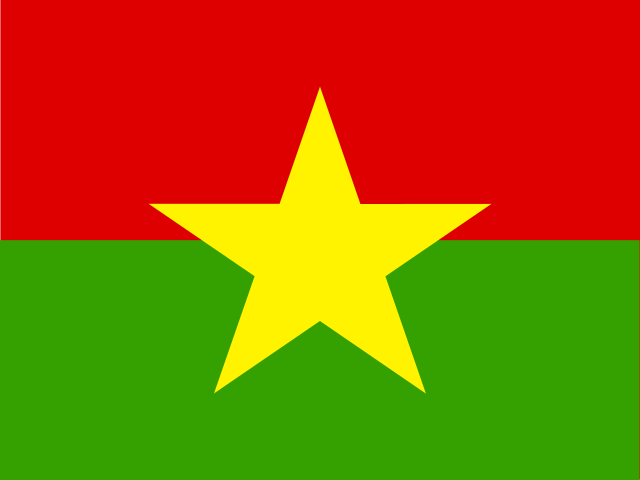 Burkina Faso
 British Indian Ocean Territory
 Burundi
 Comoros
 Mayotte
 Ethiopia
 Eritrea
 French Southern Territories
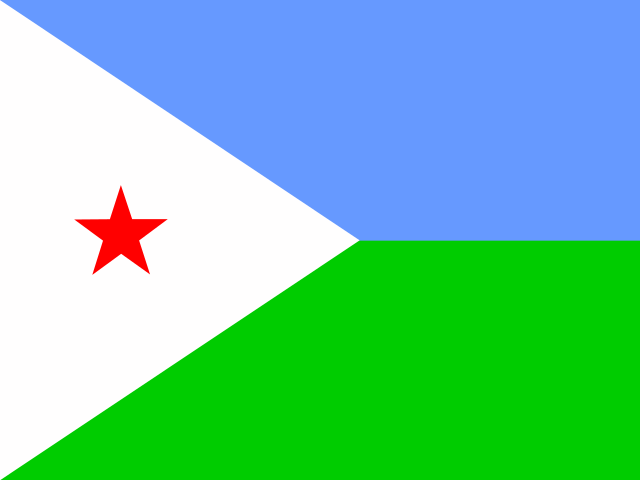 Djibouti
 Kenya
Kenya Madagascar
 Malawi
 Mauritius
 Mozambique
 Reunion
 Rwanda
 Seychelles
 Somalia
 Zimbabwe
 South Sudan
 Uganda
 Tanzania
 Zambia
 Angola
 Cameroon
 Central African Republic
 Chad
Chad Congo
Congo Democratic Republic of the Congo
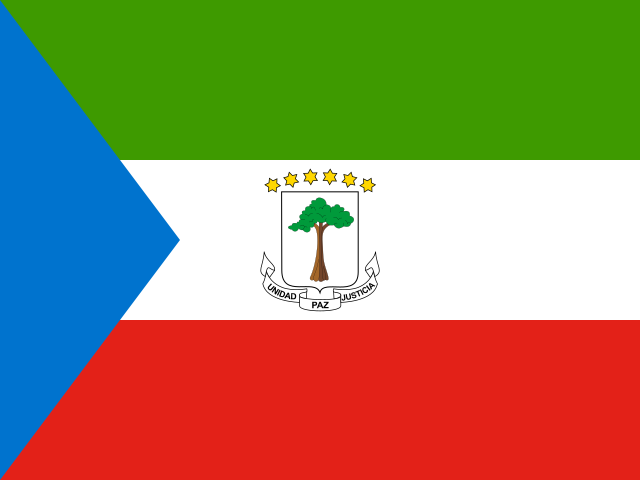 Equatorial Guinea
 Gabon
Gabon Sao Tome and Principe
 Botswana
 Lesotho
 Namibia
 South Africa
 Eswatini
Earlier Report Observations
The market for flour or powder of sago, roots or tubers in Sub-Saharan Africa entered a phase of strong growth starting in 2018. That year, the Kenyan government's launch of its 'Big 4' plan included a specific strategy to diversify and blend traditional flours with alternatives like sorghum, millet, cassava, and sweet potatoes. This policy initiative, aimed at enhancing food security and nutrition, provided a direct impetus for increased production and consumption of flours derived from roots and tubers.
This growth trajectory accelerated remarkably in 2020, with market volume surging by over 38% to nearly 6.8 million tons. The expansion continued through 2023, with annual increases adding roughly 1 to 1.2 million tons to the market each year. By the end of the period, the total market volume had reached 8.3 million tons, representing an increase of nearly 90% compared to 2018 levels, underscoring a significant and sustained expansion of the sector.
Table of content
- 1. Disclaimer
- 2. Terms of use of the report
- 3. Product codes in the statistical classifications used in the report
-
4. Key Market Indicators and Trends
-
4.1. Key Market Indicators
-
4.1.1. In kind
- 4.1.1.1. Production, 2018-2023
- 4.1.1.2. Imports, 2018-2024
- 4.1.1.3. Exports, 2018-2024
- 4.1.1.4. Market size, 2018-2023
-
4.1.1. In kind
- 4.2. Market Trends and Factors
-
4.1. Key Market Indicators
-
5. Production
-
5.1. Production in Sub-Saharan Africa
- 5.1.1. Annual dynamics of production in Sub-Saharan Africa in kind, 2018-2023, K t
-
5.2. Global production by Country, 2018-2023
- 5.2.1. Annual dynamics of production by macroregions in kind, 2018-2023, K t
- 5.2.2. Dynamics of production structure by macroregions in kind, 2018-2023
- 5.2.3. Annual dynamics of production by country in kind, 2018-2023, K t
- 5.2.4. Structure of production by countries in kind, 2018-2023
- 5.2.5. Dynamics of peoduction structure by countries in kind, 2018-2023
-
5.1. Production in Sub-Saharan Africa
-
6. Imports
-
6.1. Imports (Direct Data*)
- 6.1.1. Imports - Total information
-
6.1.2. Imports in kind, K t
- 6.1.2.1. Annual dynamics of product's imports to Cabo Verde in kind, 2018-2024, K t
- 6.1.2.2. Dynamics of product's imports in kind to Cabo Verde by countries, 2018-2024, K t
- 6.1.2.3. Structure of product's imports in kind by countries, 2018-2024
-
6.1.3. Imports in value, K $ US
- 6.1.3.1. Annual dynamics of product's imports to Cabo Verde in value, 2018-2024, K $ US
- 6.1.3.2. Dynamics of product's imports in value to Cabo Verde by countries, 2018-2024, K $ US
- 6.1.3.3. Structure of product's imports in value by countries, 2018-2024
-
6.1.4. Average price of product's imports, $ US/t
- 6.1.4.1. Annual dynamics of average price of product's imports to Cabo Verde, 2018-2024, $ US/t
- 6.1.4.2. Dynamics of average price of product's imports to Cabo Verde by countries, 2018-2024, $ US/t
-
6.2. Imports (Mirror Data)
- 6.2.1. Imports - Total information
-
6.2.2. Imports in kind, K t
- 6.2.2.1. Annual dynamics of product's imports to Cabo Verde in kind, 2018-2024, K t
- 6.2.2.2. Dynamics of product's imports in kind to Cabo Verde by countries, 2018-2024, K t
- 6.2.2.3. Structure of product's imports in kind by countries, 2018-2024
-
6.2.3. Imports in value, K $ US
- 6.2.3.1. Annual dynamics of product's imports to Cabo Verde in value, 2018-2024, K $ US
- 6.2.3.2. Dynamics of product's imports in value to Cabo Verde by countries, 2018-2024, K $ US
- 6.2.3.3. Structure of product's imports in value by countries, 2018-2024
-
6.2.4. Average price of product's imports, $ US/t
- 6.2.4.1. Annual dynamics of average price of product's imports to Cabo Verde, 2018-2024, $ US/t
- 6.2.4.2. Dynamics of average price of product's imports to Cabo Verde by countries, 2018-2024, $ US/t
-
6.1. Imports (Direct Data*)
-
7. Exports
-
7.1. Exports (Direct Data*)
- 7.1.1. Exports - Total information
-
7.1.2. Exports in kind, K t
- 7.1.2.1. Annual dynamics of product's exports from Cabo Verde in kind, 2018-2024, K t
- 7.1.2.2. Dynamics of product's exports in kind from Cabo Verde by countries, 2018-2024, K t
- 7.1.2.3. Structure of product's exports in kind by countries, 2018-2024
-
7.1.3. Exports in value, K $ US
- 7.1.3.1. Annual dynamics of product's exports from Cabo Verde in value, 2018-2024, K $ US
- 7.1.3.2. Dynamics of product's exports in value from Cabo Verde by countries, 2018-2024, K $ US
- 7.1.3.3. Structure of product's exports in value by countries, 2018-2024
-
7.1.4. Average price of product's exports, $ US/t
- 7.1.4.1. Annual dynamics of average price of product's exports from Cabo Verde, 2018-2024, $ US/t
- 7.1.4.2. Dynamics of average price of product's exports from Cabo Verde by countries, 2018-2024, $ US/t
-
7.2. Exports (Mirror Data)
- 7.2.1. Exports - Total information
-
7.2.2. Exports in kind, K t
- 7.2.2.1. Annual dynamics of product's exports from Cabo Verde in kind, 2018-2024, K t
- 7.2.2.2. Dynamics of product's exports in kind from Cabo Verde by countries, 2018-2024, K t
- 7.2.2.3. Structure of product's exports in kind by countries, 2018-2024
-
7.2.3. Exports in value, K $ US
- 7.2.3.1. Annual dynamics of product's exports from Cabo Verde in value, 2018-2024, K $ US
- 7.2.3.2. Dynamics of product's exports in value from Cabo Verde by countries, 2018-2024, K $ US
- 7.2.3.3. Structure of product's exports in value by countries, 2018-2024
-
7.2.4. Average price of product's exports, $ US/t
- 7.2.4.1. Annual dynamics of average price of product's exports from Cabo Verde, 2018-2024, $ US/t
- 7.2.4.2. Dynamics of average price of product's exports from Cabo Verde by countries, 2018-2024, $ US/t
-
7.1. Exports (Direct Data*)
-
8. Trade balance
-
8.1. Trade balance (Direct Data)
- 8.1.1. In kind, K t
- 8.1.2. In value, K $ US
-
8.2. Trade balance (Mirror Data)
- 8.2.1. In kind, K t
- 8.2.2. In value, K $ US
-
8.1. Trade balance (Direct Data)
-
9. Top buying and selling countries, 2018-2024
-
9.1. Direct Data
- 9.1.1. Import in Value by Countries-buyers
- 9.1.2. Export in Value by Countries-suppliers
-
9.2. Mirror Data
- 9.2.1. Import in Value by Countries-buyers
- 9.2.2. Export in Value by Countries-suppliers
-
9.1. Direct Data
Production flour or powder of sago, roots or tubers in Sub-Saharan Africa
In kind, 2017-2020, K t
Top producers of flour or powder of sago, roots or tubers, 2017-2020
World map of production of flour or powder of sago, roots or tubers, 2017-2020
Sub-Saharan Africa's production of flour or powder from sago, roots, or tubers has grown for the third year in a row. In 2020, the region produced 6 811 thousand tons, marking a significant 38.1% increase compared to the previous year. Looking at the period from 2017 to 2020, production rose by 61.2%, which translates to an average annual growth rate of 17.3%.
Annual dynamics of production in Sub-Saharan Africa in kind, 2017-2020, K t
| Parameter | 2018 | 2019 | 2020 | CAGR | |
|---|---|---|---|---|---|
| 1 | Change from last year | 3.9% | 12.3% | 38.1% | 17.3% |
In value, 2017-2020, M $ US
The value of flour or powder from sago, roots, or tubers produced in Sub-Saharan Africa has increased for the second consecutive year. In 2020, output was valued at 7 716 million US dollars, showing a sharp rise of 43.5% year-over-year. From 2017 to 2020, production grew by 57.8%, with a compound annual growth rate of 16.4%. The lowest value was recorded in 2018 at 4 409 million US dollars, which also saw the largest decline of 9.8%.
Annual dynamics of production in Sub-Saharan Africa in value, 2017-2020, M $ US
| Parameter | 2018 | 2019 | 2020 | CAGR | |
|---|---|---|---|---|---|
| 1 | Change from last year | (9.8%) | 21.9% | 43.5% | 16.4% |
Exports flour or powder of sago, roots or tubers from Sub-Saharan Africa
Exports in kind, t
Export volumes of flour or powder from sago, roots, or tubers from Sub-Saharan Africa have risen for the third year in a row. In 2020, exports reached 14 409 tons, representing a dramatic 53.5% increase compared to the previous year. Between 2017 and 2020, exports surged by 231.9%, equating to an annualized growth rate of 49.2%.
Annual dynamics of product's exports from Sub-Saharan Africa in kind, 2017-2020, t
| Parameter | 2018 | 2019 | 2020 | CAGR | |
|---|---|---|---|---|---|
| 1 | Change from last year | 97.8% | 9.3% | 53.5% | 49.2% |
From 2017 to 2020, exports of flour or powder from sago, roots, or tubers from Sub-Saharan Africa were not heavily concentrated. The United States accounted for 4.7% of exports in kind, France for 3.7%, and the United Kingdom for 2.9%, with these three countries together capturing just 11.3% of total flows.
Structure of product's exports in kind by countries, 2017-2020
World map of product's exports from Sub-Saharan Africa in kind, 2017-2020
Exports in value, K $ US
Cross-border shipments of flour or powder from sago, roots, or tubers from Sub-Saharan Africa have increased for the third consecutive year. In 2020, exports stood at 16 323 thousand US dollars, indicating a steep rise of 59.5% over the past year. Over the period from 2017 to 2020, exports grew by 225%, with a compound annual growth rate of 48.1%.
Annual dynamics of product's exports from Sub-Saharan Africa in value, 2017-2020, K $ US
| Parameter | 2018 | 2019 | 2020 | CAGR | |
|---|---|---|---|---|---|
| 1 | Change from last year | 71.7% | 18.7% | 59.5% | 48.1% |
From 2017 to 2020, the country breakdown of exports in value terms remained scattered. The United States accounted for 13.3% of exports in value terms, Italy for 11.9%, and France for 7.7%, with these three partners together making up just 32.9% of total flows, and no single country emerged as clearly dominant.
Structure of product's exports in value by countries, 2017-2020
World map of product's exports from Sub-Saharan Africa in value, 2017-2020
Imports flour or powder of sago, roots or tubers to Sub-Saharan Africa
Imports in kind, t
Import volumes of flour or powder from sago, roots, or tubers into Sub-Saharan Africa have declined for the third consecutive year. In 2020, the region imported 1 047 tons, reflecting a gradual fall of 4.7% year-over-year. Between 2017 and 2020, imports decreased by 89.9%, equating to an annualized decline rate of 53.5%.
Annual dynamics of product's imports to Sub-Saharan Africa in kind, 2017-2020, t
| Parameter | 2018 | 2019 | 2020 | CAGR | |
|---|---|---|---|---|---|
| 1 | Change from last year | (44.7%) | (80.9%) | (4.7%) | (53.5%) |
From 2017 to 2020, Turkey accounted for 19.2% of imports in kind, Portugal for 0.9%, and the United States for 0.7%, with these three countries together comprising 20.9% of total flows, representing the largest share of imports in kind.
Structure of product's imports in kind by countries, 2017-2020
World map of product's imports to Sub-Saharan Africa in kind, 2017-2020
Imports in value, K $ US
The value of flour or powder from sago, roots, or tubers imported into Sub-Saharan Africa has declined for the second consecutive year. In 2020, imports totaled 1 706 thousand US dollars, down by 27.9% compared to 2019. Between 2017 and 2020, imports decreased by 62.7%, equating to an annualized decline rate of 28.0%. The highest value was recorded in 2018 at 4 816 thousand US dollars, which also saw the largest increase of 5.2%. In 2019, imports experienced the largest decline of 50.9%.
Annual dynamics of product's imports to Sub-Saharan Africa in value, 2017-2020, K $ US
| Parameter | 2018 | 2019 | 2020 | CAGR | |
|---|---|---|---|---|---|
| 1 | Change from last year | 5.2% | (50.9%) | (27.9%) | (28.0%) |
An analysis of imports in value terms from 2017 to 2020 shows a broad distribution across many markets. Turkey accounted for 28.9% of imports in value terms, Portugal for 5.7%, and the United States for 2.8%, with these three countries together making up only 37.5% of total flows, while a significant 62.5% fell on other partners.
Structure of product's imports in value by countries, 2017-2020
World map of product's imports to Sub-Saharan Africa in value, 2017-2020
Related Reports


Wheat starch market in Sub-Saharan Africa
2026-03-28

Maize starch market in Sub-Saharan Africa
2026-03-28

Potato starch market in Sub-Saharan Africa
2026-03-28

Why Choose Us?
Only Verified Data
No Hidden Costs or Separate Fees
Smarter Subscription Pricing
Contact Our Team
Submit your inquiry using the form below — our team will get back to you within 24 hours.