






"Sub-Saharan Africa" region includes following countries:
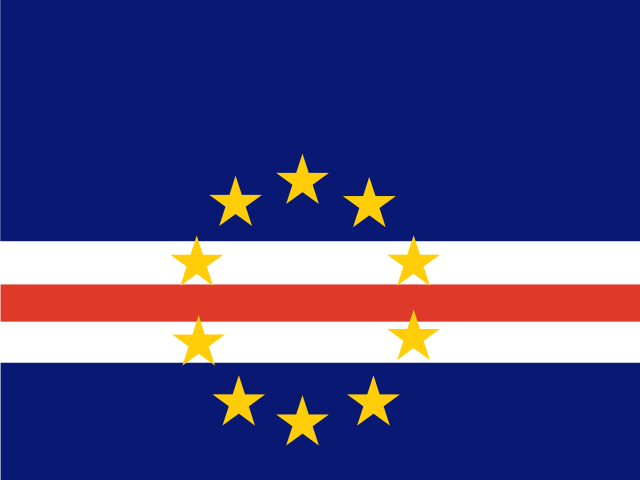 Cabo Verde
 Benin
Benin Gambia
 Ghana
Ghana Guinea
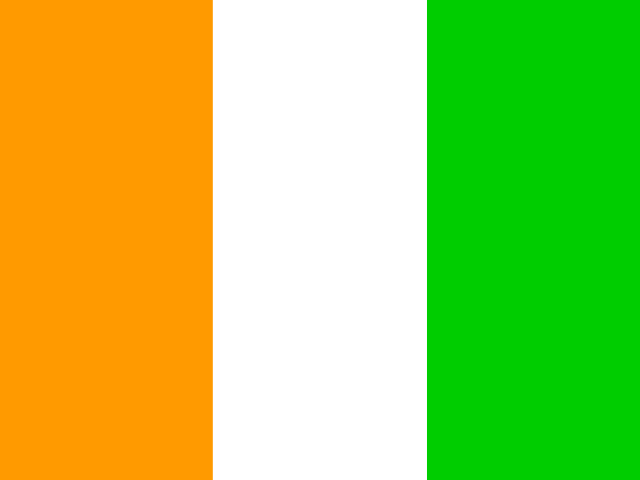 Côte d'Ivoire
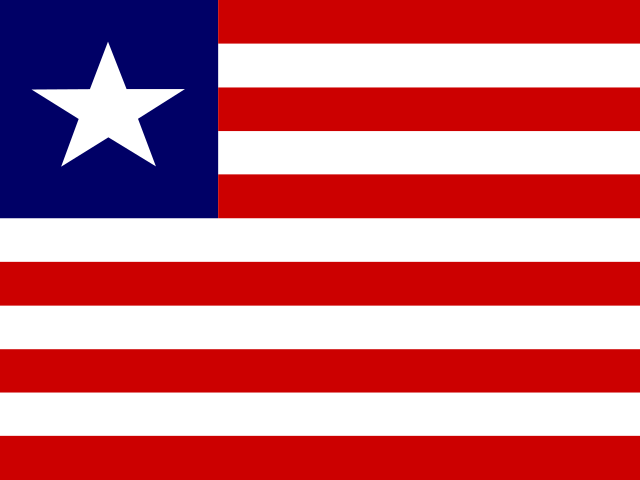 Liberia
 Mali
Mali Mauritania
 Niger
Niger Nigeria
 Guinea-Bissau
 Saint Helena, Ascension and Tristan da Cunha
 Senegal
 Sierra Leone
 Togo
Togo Burkina Faso
 British Indian Ocean Territory
 Burundi
 Comoros
 Mayotte
 Ethiopia
 Eritrea
 French Southern Territories
 Djibouti
 Kenya
Kenya Madagascar
 Malawi
 Mauritius
 Mozambique
 Reunion
 Rwanda
 Seychelles
 Somalia
 Zimbabwe
 South Sudan
 Uganda
 Tanzania
 Zambia
 Angola
 Cameroon
 Central African Republic
 Chad
Chad Congo
Congo Democratic Republic of the Congo
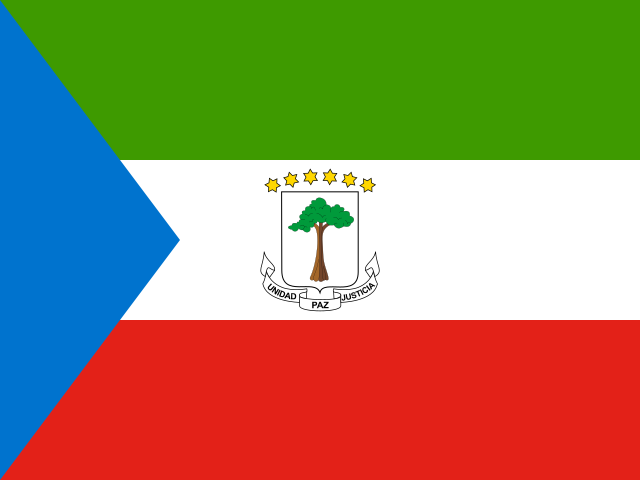 Equatorial Guinea
 Gabon
Gabon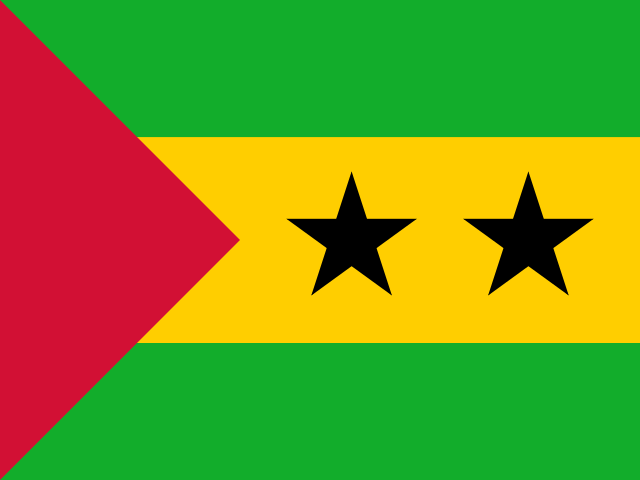 Sao Tome and Principe
 Botswana
 Lesotho
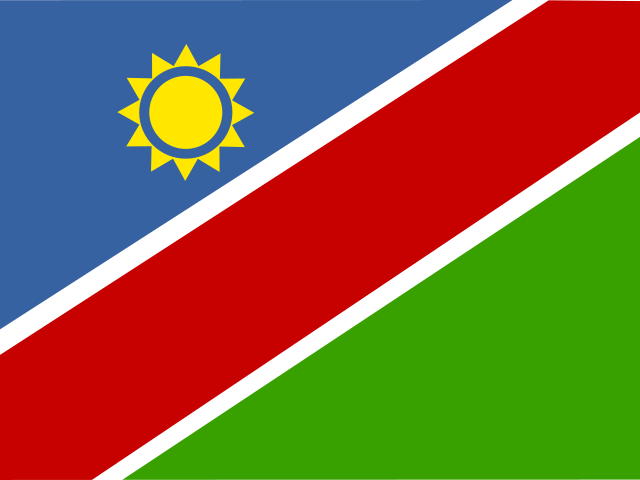 Namibia
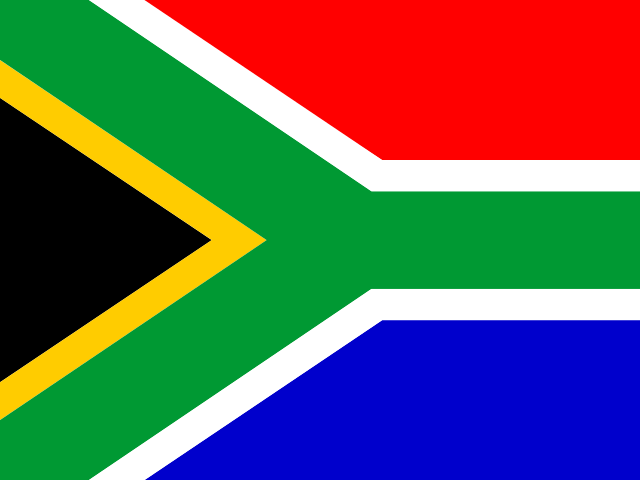 South Africa
 Eswatini
Earlier Report Observations
From 2018 to 2020, the ethyl alcohol market in Sub-Saharan Africa saw initial growth followed by a moderate contraction. The market volume increased to 763 million liters in 2019, supported by rising industrial and fuel demand as well as national policies promoting ethanol use in fuel blends, particularly in Nigeria and South Africa. The introduction of ethanol blending programs in key countries further stimulated consumption. In 2020, the COVID-19 pandemic disrupted general economic activity, leading to a slight volume decline to 737 million liters, although demand for sanitizing and disinfectant products provided a counterbalance and helped drive a significant increase in market value to 641 million USD. The period also saw increased investments in production capacity and the entry of new players.
Market volume dropped sharply to 639 million liters in 2021, primarily due to a substantial fall in imports. This coincided with regulatory changes that facilitated local production and distribution, including labeling and traceability rules, and the reinstatement of ethanol blending mandates such as South Africa's move to E10 and Nigeria's launch of an E10 mandate. In 2022, the market recovered to 668 million liters, aided by consolidated demand for industrial and fuel applications and adjustments in market access policies that improved local competitiveness.
The market contracted again to 624 million liters in 2023 despite increased production capacity through technological optimizations. Higher export volumes and ongoing import shifts affected domestic availability. Regulatory measures, including specific labeling and quality control requirements, continued to shape the market. In 2024, regulatory changes in key countries further promoted ethanol use in fuels and sanitary products, while premiumization trends in alcoholic beverages sustained demand for high-purity ethyl alcohol.
Table of content
- 1. Disclaimer
- 2. Terms of use of the report
- 3. Product codes in the statistical classifications used in the report
-
4. Key Market Indicators and Trends
-
4.1. Key Market Indicators
-
4.1.1. In kind
- 4.1.1.1. Production, 2018-2023
- 4.1.1.2. Imports, 2018-2024
- 4.1.1.3. Exports, 2018-2024
- 4.1.1.4. Market size, 2018-2023
-
4.1.2. In value
- 4.1.2.1. Production, 2018-2023
- 4.1.2.2. Imports, 2018-2024
- 4.1.2.3. Exports, 2018-2024
- 4.1.2.4. Market size, 2018-2023
-
4.1.1. In kind
- 4.2. Market Trends and Factors
-
4.1. Key Market Indicators
-
5. Production
-
5.1. Production in Sub-Saharan Africa
- 5.1.1. Annual dynamics of production in Sub-Saharan Africa in kind, 2018-2023, M l
-
5.2. Global production by Country, 2018-2023
- 5.2.1. Annual dynamics of production by macroregions in kind, 2018-2023, M l
- 5.2.2. Dynamics of production structure by macroregions in kind, 2018-2023
- 5.2.3. Annual dynamics of production by country in kind, 2018-2023, M l
- 5.2.4. Structure of production by countries in kind, 2018-2023
- 5.2.5. Dynamics of peoduction structure by countries in kind, 2018-2023
-
5.1. Production in Sub-Saharan Africa
-
6. Imports
-
6.1. Imports (Direct Data*)
- 6.1.1. Imports - Total information
-
6.1.2. Imports in kind, M l
- 6.1.2.1. Annual dynamics of product's imports to Cabo Verde in kind, 2018-2024, M l
- 6.1.2.2. Dynamics of product's imports in kind to Cabo Verde by countries, 2018-2024, M l
- 6.1.2.3. Structure of product's imports in kind by countries, 2018-2024
-
6.1.3. Imports in value, M $ US
- 6.1.3.1. Annual dynamics of product's imports to Cabo Verde in value, 2018-2024, M $ US
- 6.1.3.2. Dynamics of product's imports in value to Cabo Verde by countries, 2018-2024, M $ US
- 6.1.3.3. Structure of product's imports in value by countries, 2018-2024
-
6.1.4. Average price of product's imports, $ US/K l
- 6.1.4.1. Annual dynamics of average price of product's imports to Cabo Verde, 2018-2024, $ US/K l
- 6.1.4.2. Dynamics of average price of product's imports to Cabo Verde by countries, 2018-2024, $ US/K l
-
6.2. Imports (Mirror Data)
- 6.2.1. Imports - Total information
-
6.2.2. Imports in kind, M l
- 6.2.2.1. Annual dynamics of product's imports to Cabo Verde in kind, 2018-2024, M l
- 6.2.2.2. Dynamics of product's imports in kind to Cabo Verde by countries, 2018-2024, M l
- 6.2.2.3. Structure of product's imports in kind by countries, 2018-2024
-
6.2.3. Imports in value, M $ US
- 6.2.3.1. Annual dynamics of product's imports to Cabo Verde in value, 2018-2024, M $ US
- 6.2.3.2. Dynamics of product's imports in value to Cabo Verde by countries, 2018-2024, M $ US
- 6.2.3.3. Structure of product's imports in value by countries, 2018-2024
-
6.2.4. Average price of product's imports, $ US/K l
- 6.2.4.1. Annual dynamics of average price of product's imports to Cabo Verde, 2018-2024, $ US/K l
- 6.2.4.2. Dynamics of average price of product's imports to Cabo Verde by countries, 2018-2024, $ US/K l
-
6.1. Imports (Direct Data*)
-
7. Exports
-
7.1. Exports (Direct Data*)
- 7.1.1. Exports - Total information
-
7.1.2. Exports in kind, M l
- 7.1.2.1. Annual dynamics of product's exports from Cabo Verde in kind, 2018-2024, M l
- 7.1.2.2. Dynamics of product's exports in kind from Cabo Verde by countries, 2018-2024, M l
- 7.1.2.3. Structure of product's exports in kind by countries, 2018-2024
-
7.1.3. Exports in value, M $ US
- 7.1.3.1. Annual dynamics of product's exports from Cabo Verde in value, 2018-2024, M $ US
- 7.1.3.2. Dynamics of product's exports in value from Cabo Verde by countries, 2018-2024, M $ US
- 7.1.3.3. Structure of product's exports in value by countries, 2018-2024
-
7.1.4. Average price of product's exports, $ US/K l
- 7.1.4.1. Annual dynamics of average price of product's exports from Cabo Verde, 2018-2024, $ US/K l
- 7.1.4.2. Dynamics of average price of product's exports from Cabo Verde by countries, 2018-2024, $ US/K l
-
7.2. Exports (Mirror Data)
- 7.2.1. Exports - Total information
-
7.2.2. Exports in kind, M l
- 7.2.2.1. Annual dynamics of product's exports from Cabo Verde in kind, 2018-2024, M l
- 7.2.2.2. Dynamics of product's exports in kind from Cabo Verde by countries, 2018-2024, M l
- 7.2.2.3. Structure of product's exports in kind by countries, 2018-2024
-
7.2.3. Exports in value, M $ US
- 7.2.3.1. Annual dynamics of product's exports from Cabo Verde in value, 2018-2024, M $ US
- 7.2.3.2. Dynamics of product's exports in value from Cabo Verde by countries, 2018-2024, M $ US
- 7.2.3.3. Structure of product's exports in value by countries, 2018-2024
-
7.2.4. Average price of product's exports, $ US/K l
- 7.2.4.1. Annual dynamics of average price of product's exports from Cabo Verde, 2018-2024, $ US/K l
- 7.2.4.2. Dynamics of average price of product's exports from Cabo Verde by countries, 2018-2024, $ US/K l
-
7.1. Exports (Direct Data*)
-
8. Trade balance
-
8.1. Trade balance (Direct Data)
- 8.1.1. In kind, M l
- 8.1.2. In value, M $ US
-
8.2. Trade balance (Mirror Data)
- 8.2.1. In kind, M l
- 8.2.2. In value, M $ US
-
8.1. Trade balance (Direct Data)
-
9. Top buying and selling countries, 2018-2024
-
9.1. Direct Data
- 9.1.1. Import in Value by Countries-buyers
- 9.1.2. Export in Value by Countries-suppliers
-
9.2. Mirror Data
- 9.2.1. Import in Value by Countries-buyers
- 9.2.2. Export in Value by Countries-suppliers
-
9.1. Direct Data
Production ethyl alcohol in Sub-Saharan Africa
In kind, 2017-2020, M l
Top producers of ethyl alcohol, 2017-2020
World map of production of ethyl alcohol, 2017-2020
In Sub-Saharan Africa, ethyl alcohol production reached 453.4 million liters in 2020, representing a 6.7% decrease from the previous year. Looking at the period from 2017 to 2020, production declined by 4.5%, which translates to an average annual decrease of 1.5%. The highest production level was recorded in 2019 at 486.1 million liters, with the largest year-on-year increase of 3.6% also occurring that year.
Annual dynamics of production in Sub-Saharan Africa in kind, 2017-2020, M l
| Parameter | 2018 | 2019 | 2020 | CAGR | |
|---|---|---|---|---|---|
| 1 | Change from last year | (1.2%) | 3.6% | (6.7%) | (1.5%) |
In value, 2017-2020, M $ US
Following two years of growth, ethyl alcohol production in Sub-Saharan Africa experienced a downturn. In 2020, the output was valued at 330.2 million US dollars, marking a 2.0% decrease compared to 2019. Over the 2017-2020 period, production increased by 11.2%, averaging an annual growth rate of 3.6%. The peak value was recorded in 2019 at 337.2 million US dollars, while the largest increase of 6.7% occurred in 2018.
Annual dynamics of production in Sub-Saharan Africa in value, 2017-2020, M $ US
| Parameter | 2018 | 2019 | 2020 | CAGR | |
|---|---|---|---|---|---|
| 1 | Change from last year | 6.7% | 6.3% | (2.0%) | 3.6% |
Exports ethyl alcohol from Sub-Saharan Africa
Exports in kind, M l
Ethyl alcohol exports from Sub-Saharan Africa declined for the third consecutive year. In 2020, exports totaled 280.5 million liters, reflecting a 9.4% drop from the previous year. From 2017 to 2020, exports decreased by 16.3%, with a compound annual growth rate of -5.8%.
Annual dynamics of product's exports from Sub-Saharan Africa in kind, 2017-2020, M l
| Parameter | 2018 | 2019 | 2020 | CAGR | |
|---|---|---|---|---|---|
| 1 | Change from last year | (0.2%) | (7.4%) | (9.4%) | (5.8%) |
Between 2017 and 2020, ethyl alcohol exports from Sub-Saharan Africa were distributed across a diverse range of partner countries. The United Arab Emirates accounted for 11.0% of exports, Singapore for 8.6%, and the United States for 7.1%. Together, these three countries represented just 26.8% of total export flows.
Structure of product's exports in kind by countries, 2017-2020
World map of product's exports from Sub-Saharan Africa in kind, 2017-2020
Exports in value, M $ US
Ethyl alcohol shipments from Sub-Saharan Africa declined for the second year in a row. In 2020, exports were valued at 204.3 million US dollars, showing a modest decrease of 4.9% compared to the previous year. Over the 2017-2020 period, exports fell by 2.6%, with an average annual decline of 0.9%. The highest value was recorded in 2018 at 226.0 million US dollars, which also saw the largest increase of 7.8%. The most significant decline occurred in 2019 with a 5.0% drop.
Annual dynamics of product's exports from Sub-Saharan Africa in value, 2017-2020, M $ US
| Parameter | 2018 | 2019 | 2020 | CAGR | |
|---|---|---|---|---|---|
| 1 | Change from last year | 7.8% | (5.0%) | (4.9%) | (0.9%) |
The structure of ethyl alcohol exports by value from 2017 to 2020 reveals a diversified partner base. The United Arab Emirates accounted for 8.0% of export value, Singapore for 6.2%, and the United States for 5.7%. Combined, these three markets represented only 19.9% of total flows, while the remaining 80.1% was distributed among numerous smaller markets.
Structure of product's exports in value by countries, 2017-2020
World map of product's exports from Sub-Saharan Africa in value, 2017-2020
Imports ethyl alcohol to Sub-Saharan Africa
Imports in kind, M l
After two years of growth, ethyl alcohol imports into Sub-Saharan Africa declined. In 2020, imports stood at 384.7 million liters, reflecting a sharp decrease of 34.4% from the previous year. Between 2017 and 2020, imports fell by 22.5%, averaging an annual decline of 8.1%. The peak import volume was recorded in 2019 at 586.9 million liters, while the largest increase of 14.1% occurred in 2018.
Annual dynamics of product's imports to Sub-Saharan Africa in kind, 2017-2020, M l
| Parameter | 2018 | 2019 | 2020 | CAGR | |
|---|---|---|---|---|---|
| 1 | Change from last year | 14.1% | 3.6% | (34.4%) | (8.1%) |
Analysis of ethyl alcohol imports by volume from 2017 to 2020 shows a broad distribution across multiple markets. The United States accounted for 21.9% of imports, India for 13.1%, and Pakistan for 8.8%. Together, these three countries represented 43.8% of total import flows, with the remaining 56.2% coming from various other partners.
Structure of product's imports in kind by countries, 2017-2020
World map of product's imports to Sub-Saharan Africa in kind, 2017-2020
Imports in value, M $ US
In 2020, Sub-Saharan Africa's ethyl alcohol imports were valued at 515.1 million US dollars, representing a substantial increase of 16.4% compared to the previous year. Between 2017 and 2020, imports grew by 26.2%, averaging an annual increase of 8.1%. The only decline during this period occurred in 2019 with a 1.2% decrease.
Annual dynamics of product's imports to Sub-Saharan Africa in value, 2017-2020, M $ US
| Parameter | 2018 | 2019 | 2020 | CAGR | |
|---|---|---|---|---|---|
| 1 | Change from last year | 9.8% | (1.2%) | 16.4% | 8.1% |
From 2017 to 2020, the United States dominated ethyl alcohol imports by value with a 29.6% share, followed by India at 13.7% and Pakistan at 8.4%. Together, these three countries accounted for 51.6% of total import value during this period.
Structure of product's imports in value by countries, 2017-2020
World map of product's imports to Sub-Saharan Africa in value, 2017-2020
Related Reports

Ethyl alcohol market in Europe
2026-03-29
Ethyl alcohol market in Southern Europe
2026-03-29
2026-03-29

Grape wine market in Sub-Saharan Africa
2026-03-29


Why Choose Us?
Only Verified Data
No Hidden Costs or Separate Fees
Smarter Subscription Pricing
Contact Our Team
Submit your inquiry using the form below — our team will get back to you within 24 hours.