






"Sub-Saharan Africa" region includes following countries:
 Cabo Verde
 Benin
Benin Gambia
 Ghana
Ghana Guinea
 Côte d'Ivoire
 Liberia
 Mali
Mali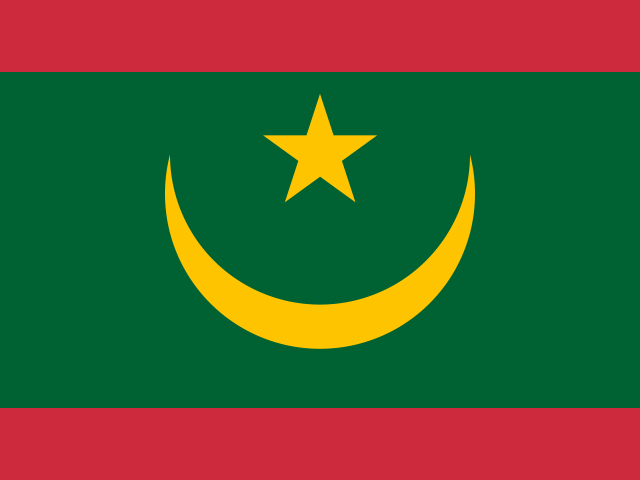 Mauritania
 Niger
Niger Nigeria
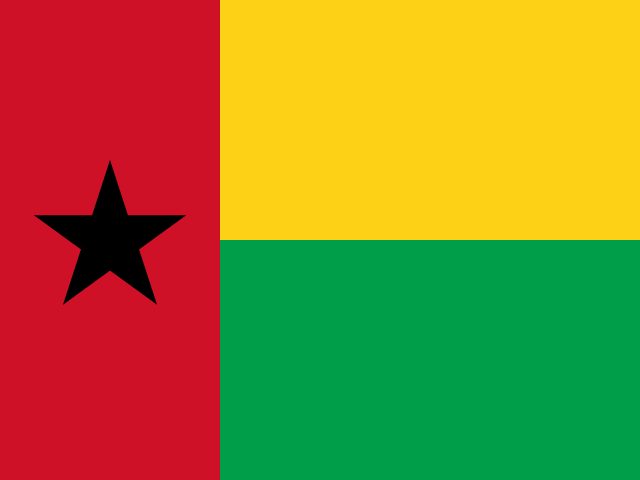 Guinea-Bissau
 Saint Helena, Ascension and Tristan da Cunha
 Senegal
 Sierra Leone
 Togo
Togo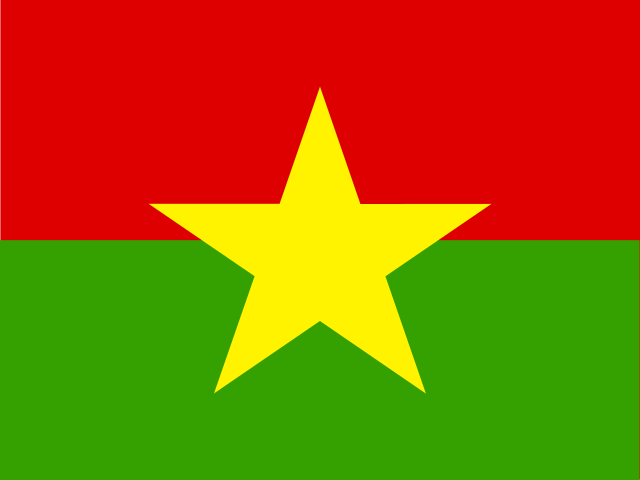 Burkina Faso
 British Indian Ocean Territory
 Burundi
 Comoros
 Mayotte
 Ethiopia
 Eritrea
 French Southern Territories
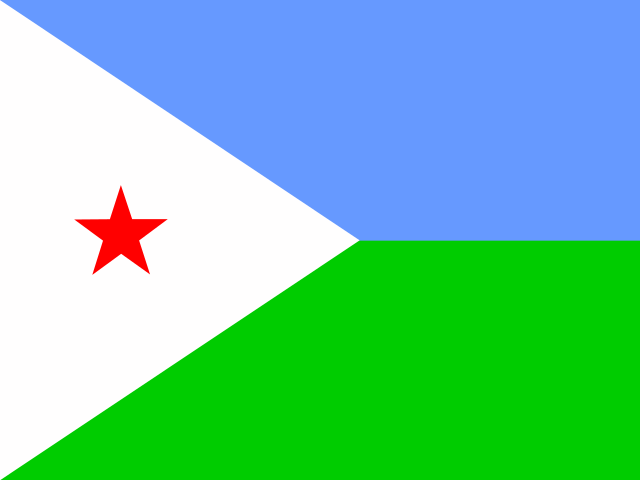 Djibouti
 Kenya
Kenya Madagascar
 Malawi
 Mauritius
 Mozambique
 Reunion
 Rwanda
 Seychelles
 Somalia
 Zimbabwe
 South Sudan
 Uganda
 Tanzania
 Zambia
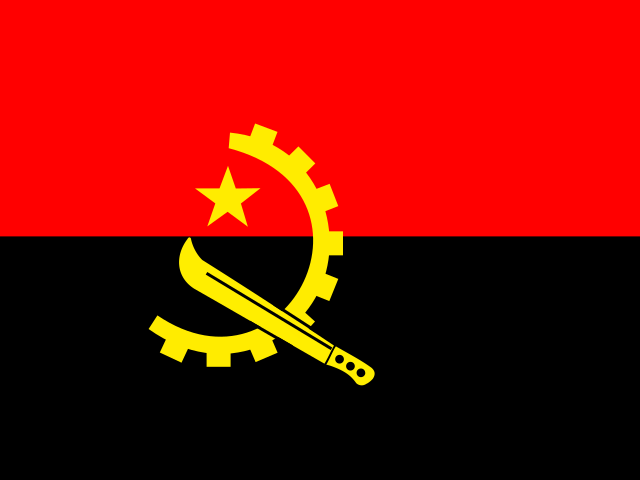 Angola
 Cameroon
 Central African Republic
 Chad
Chad Congo
Congo Democratic Republic of the Congo
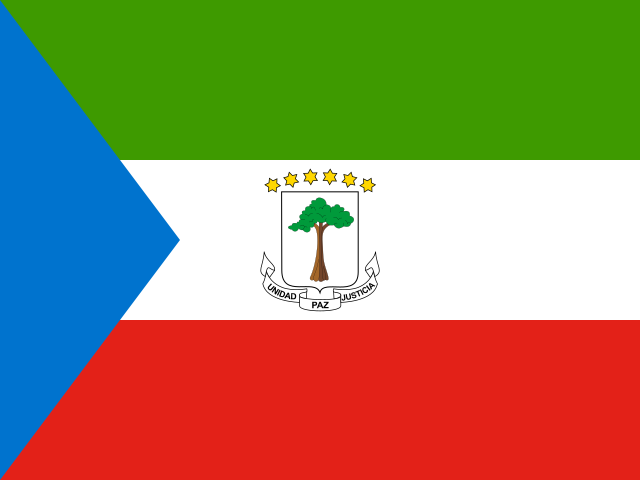 Equatorial Guinea
 Gabon
Gabon Sao Tome and Principe
 Botswana
 Lesotho
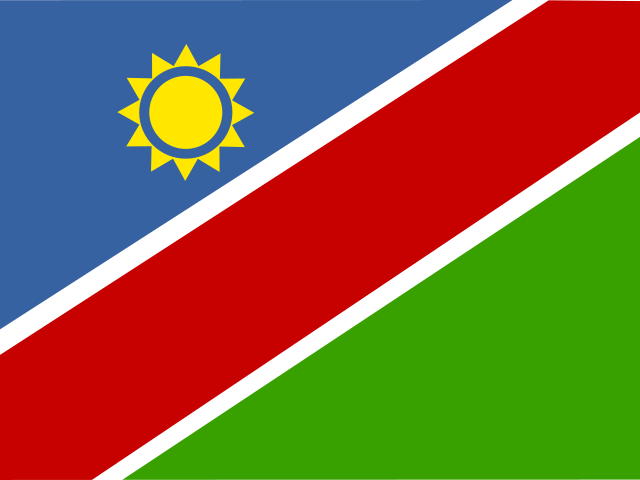 Namibia
 South Africa
 Eswatini
Earlier Report Observations
From 2018 to 2020, the market volume for fresh or chilled beans in Sub-Saharan Africa showed variability, starting at 205.9 thousand tons in 2018. This initial level was supported by strong progress in grain and legume production across the region, fueled by agricultural policies and investments that expanded cultivated area and output. In 2019, market volume declined to 190.2 thousand tons, even as smallholder farmers cultivated over four million hectares of beans with financial and technical backing from pan-African and international organizations. By 2020, growing demand for sustainable and plant-based foods, particularly for drought-resistant Bambara beans, helped stimulate a recovery to 193.7 thousand tons, aided by support from government agencies, agri-tech firms, and NGOs.
The market dipped again in 2021 to 183.8 thousand tons, despite consumer trends shifting toward animal-free diets and increasing demand for beans rich in plant-based proteins and micronutrients. A key factor in 2022 was the reliance on air logistics for exporting fresh beans to Europe, which limited export growth and contributed to higher domestic availability, pushing market volume up to 188.4 thousand tons. Additionally, Morocco’s expansion of its green bean production season through greenhouse cultivation influenced regional supply dynamics. In 2023, fertilizer and seed subsidy policies in Kenya and Nigeria lowered production costs and encouraged acreage expansion, supporting a further rise in market volume to 197.1 thousand tons. Simultaneously, the Pan-African Bean Research Alliance continued to develop biofortified varieties rich in iron and zinc to combat malnutrition, directly impacting food security in the region.
In 2024, the bean market continues to be shaped by several factors, including the growth of the Bambara bean segment driven by plant-based protein demand, technological advances in processing and marketing, and international training programs. Export of fresh beans remains dependent on air logistics and cold chain challenges, while agricultural policies in Ethiopia that favor drought-resistant crops may indirectly benefit bean cultivation.
Table of content
- 1. Disclaimer
- 2. Terms of use of the report
- 3. Product codes in the statistical classifications used in the report
-
4. Key Market Indicators and Trends
-
4.1. Key Market Indicators
-
4.1.1. In kind
- 4.1.1.1. Production, 2018-2023
- 4.1.1.2. Imports, 2018-2024
- 4.1.1.3. Exports, 2018-2024
- 4.1.1.4. Market size, 2018-2023
-
4.1.2. In value
- 4.1.2.1. Production, 2018-2023
- 4.1.2.2. Imports, 2018-2024
- 4.1.2.3. Exports, 2018-2024
- 4.1.2.4. Market size, 2018-2023
-
4.1.1. In kind
- 4.2. Market Trends and Factors
-
4.1. Key Market Indicators
-
5. Production
-
5.1. Production in Sub-Saharan Africa
- 5.1.1. Annual dynamics of production in Sub-Saharan Africa in kind, 2018-2023, K t
-
5.2. Global production by Country, 2018-2023
- 5.2.1. Annual dynamics of production by macroregions in kind, 2018-2023, K t
- 5.2.2. Dynamics of production structure by macroregions in kind, 2018-2023
- 5.2.3. Annual dynamics of production by country in kind, 2018-2023, K t
- 5.2.4. Structure of production by countries in kind, 2018-2023
- 5.2.5. Dynamics of peoduction structure by countries in kind, 2018-2023
-
5.1. Production in Sub-Saharan Africa
-
6. Imports
-
6.1. Imports (Direct Data*)
- 6.1.1. Imports - Total information
-
6.1.2. Imports in kind, t
- 6.1.2.1. Annual dynamics of product's imports to Cabo Verde in kind, 2018-2024, t
- 6.1.2.2. Dynamics of product's imports in kind to Cabo Verde by countries, 2018-2024, t
- 6.1.2.3. Structure of product's imports in kind by countries, 2018-2024
-
6.1.3. Imports in value, M $ US
- 6.1.3.1. Annual dynamics of product's imports to Cabo Verde in value, 2018-2024, M $ US
- 6.1.3.2. Dynamics of product's imports in value to Cabo Verde by countries, 2018-2024, M $ US
- 6.1.3.3. Structure of product's imports in value by countries, 2018-2024
-
6.1.4. Average price of product's imports, $ US/t
- 6.1.4.1. Annual dynamics of average price of product's imports to Cabo Verde, 2018-2024, $ US/t
- 6.1.4.2. Dynamics of average price of product's imports to Cabo Verde by countries, 2018-2024, $ US/t
-
6.2. Imports (Mirror Data)
- 6.2.1. Imports - Total information
-
6.2.2. Imports in kind, t
- 6.2.2.1. Annual dynamics of product's imports to Cabo Verde in kind, 2018-2024, t
- 6.2.2.2. Dynamics of product's imports in kind to Cabo Verde by countries, 2018-2024, t
- 6.2.2.3. Structure of product's imports in kind by countries, 2018-2024
-
6.2.3. Imports in value, M $ US
- 6.2.3.1. Annual dynamics of product's imports to Cabo Verde in value, 2018-2024, M $ US
- 6.2.3.2. Dynamics of product's imports in value to Cabo Verde by countries, 2018-2024, M $ US
- 6.2.3.3. Structure of product's imports in value by countries, 2018-2024
-
6.2.4. Average price of product's imports, $ US/t
- 6.2.4.1. Annual dynamics of average price of product's imports to Cabo Verde, 2018-2024, $ US/t
- 6.2.4.2. Dynamics of average price of product's imports to Cabo Verde by countries, 2018-2024, $ US/t
-
6.1. Imports (Direct Data*)
-
7. Exports
-
7.1. Exports (Direct Data*)
- 7.1.1. Exports - Total information
-
7.1.2. Exports in kind, t
- 7.1.2.1. Annual dynamics of product's exports from Cabo Verde in kind, 2018-2024, t
- 7.1.2.2. Dynamics of product's exports in kind from Cabo Verde by countries, 2018-2024, t
- 7.1.2.3. Structure of product's exports in kind by countries, 2018-2024
-
7.1.3. Exports in value, M $ US
- 7.1.3.1. Annual dynamics of product's exports from Cabo Verde in value, 2018-2024, M $ US
- 7.1.3.2. Dynamics of product's exports in value from Cabo Verde by countries, 2018-2024, M $ US
- 7.1.3.3. Structure of product's exports in value by countries, 2018-2024
-
7.1.4. Average price of product's exports, $ US/t
- 7.1.4.1. Annual dynamics of average price of product's exports from Cabo Verde, 2018-2024, $ US/t
- 7.1.4.2. Dynamics of average price of product's exports from Cabo Verde by countries, 2018-2024, $ US/t
-
7.2. Exports (Mirror Data)
- 7.2.1. Exports - Total information
-
7.2.2. Exports in kind, t
- 7.2.2.1. Annual dynamics of product's exports from Cabo Verde in kind, 2018-2024, t
- 7.2.2.2. Dynamics of product's exports in kind from Cabo Verde by countries, 2018-2024, t
- 7.2.2.3. Structure of product's exports in kind by countries, 2018-2024
-
7.2.3. Exports in value, M $ US
- 7.2.3.1. Annual dynamics of product's exports from Cabo Verde in value, 2018-2024, M $ US
- 7.2.3.2. Dynamics of product's exports in value from Cabo Verde by countries, 2018-2024, M $ US
- 7.2.3.3. Structure of product's exports in value by countries, 2018-2024
-
7.2.4. Average price of product's exports, $ US/t
- 7.2.4.1. Annual dynamics of average price of product's exports from Cabo Verde, 2018-2024, $ US/t
- 7.2.4.2. Dynamics of average price of product's exports from Cabo Verde by countries, 2018-2024, $ US/t
-
7.1. Exports (Direct Data*)
-
8. Trade balance
-
8.1. Trade balance (Direct Data)
- 8.1.1. In kind, t
- 8.1.2. In value, M $ US
-
8.2. Trade balance (Mirror Data)
- 8.2.1. In kind, t
- 8.2.2. In value, M $ US
-
8.1. Trade balance (Direct Data)
-
9. Top buying and selling countries, 2018-2024
-
9.1. Direct Data
- 9.1.1. Import in Value by Countries-buyers
- 9.1.2. Export in Value by Countries-suppliers
-
9.2. Mirror Data
- 9.2.1. Import in Value by Countries-buyers
- 9.2.2. Export in Value by Countries-suppliers
-
9.1. Direct Data
Production beans in Sub-Saharan Africa
In kind, 2017-2020, K t
Top producers of beans, 2017-2020
World map of production of beans, 2017-2020
In Sub-Saharan Africa, bean production reached 225.4 thousand tonnes in 2020, marking a modest 3.0% increase from the previous year. Over the 2017-2020 period, production grew by 4.2%, with an average annual growth rate of 1.4%. The highest production level was recorded in 2018 at 233.8 thousand tonnes, which saw an 8.1% increase. In contrast, 2019 experienced the largest decline of 6.4%.
Annual dynamics of production in Sub-Saharan Africa in kind, 2017-2020, K t
| Parameter | 2018 | 2019 | 2020 | CAGR | |
|---|---|---|---|---|---|
| 1 | Change from last year | 8.1% | (6.4%) | 3.0% | 1.4% |
In value, 2017-2020, M $ US
The value of bean output in Sub-Saharan Africa was $429.1 million in 2020, up 3.0% from 2019. The lowest value occurred in 2019 at $416.5 million, while the peak was in 2018 at $440.9 million. The largest decrease of 5.5% took place in 2019, whereas 2018 saw the biggest increase of 4.7%.
Annual dynamics of production in Sub-Saharan Africa in value, 2017-2020, M $ US
| Parameter | 2018 | 2019 | 2020 | CAGR | |
|---|---|---|---|---|---|
| 1 | Change from last year | 4.7% | (5.5%) | 3.0% | 0.6% |
Exports beans from Sub-Saharan Africa
Exports in kind, t
In 2020, Sub-Saharan Africa exported 42 598 tonnes of beans, a 1.8% decrease from the previous year. From 2017 to 2020, exports rose by 4.2%, with a compound annual growth rate of 1.4%. The lowest export volume was in 2018 at 38 396 tonnes, which saw a 6.1% decline. The highest volume was in 2019 at 43 364 tonnes, representing a 12.9% increase.
Annual dynamics of product's exports from Sub-Saharan Africa in kind, 2017-2020, t
| Parameter | 2018 | 2019 | 2020 | CAGR | |
|---|---|---|---|---|---|
| 1 | Change from last year | (6.1%) | 12.9% | (1.8%) | 1.4% |
Between 2017 and 2020, export destinations for beans from Sub-Saharan Africa were quite diversified. The Netherlands accounted for 24.4% of exports, the United Kingdom for 11.2%, and France for 10.1%, together making up 45.7% of total flows. The remaining 54.3% was distributed among numerous smaller markets.
Structure of product's exports in kind by countries, 2017-2020
World map of product's exports from Sub-Saharan Africa in kind, 2017-2020
Exports in value, K $ US
Sub-Saharan Africa's bean exports were valued at $81.087 million in 2020, a slight 1.7% drop from 2019. The lowest value was recorded in 2018 at $72.398 million, with a 9.0% decline. The highest value occurred in 2019 at $82.504 million, showing a 14.0% increase.
Annual dynamics of product's exports from Sub-Saharan Africa in value, 2017-2020, K $ US
| Parameter | 2018 | 2019 | 2020 | CAGR | |
|---|---|---|---|---|---|
| 1 | Change from last year | (9.0%) | 14.0% | (1.7%) | 0.6% |
From 2017 to 2020, three key markets—the Netherlands, the United Kingdom, and France—collectively represented 74.4% of the total export value of beans from Sub-Saharan Africa.
Structure of product's exports in value by countries, 2017-2020
World map of product's exports from Sub-Saharan Africa in value, 2017-2020
Imports beans to Sub-Saharan Africa
Imports in kind, t
In 2020, Sub-Saharan Africa imported 10 904 tonnes of beans, a sharp 25.7% year-on-year reduction. Over the 2017-2020 period, imports fell by 36.7%, with an average annual decline of 14.1%. The lowest import volume was in 2018 at 10 471 tonnes, which experienced a 39.2% decrease. In 2019, imports rose by 40.1%.
Annual dynamics of product's imports to Sub-Saharan Africa in kind, 2017-2020, t
| Parameter | 2018 | 2019 | 2020 | CAGR | |
|---|---|---|---|---|---|
| 1 | Change from last year | (39.2%) | 40.1% | (25.7%) | (14.1%) |
During 2017-2020, the main sources for bean imports to Sub-Saharan Africa were the United Arab Emirates with 2.0% of imports, China with 1.8%, and Turkey with 0.6%. Together, these three countries accounted for 4.4% of total import flows.
Structure of product's imports in kind by countries, 2017-2020
World map of product's imports to Sub-Saharan Africa in kind, 2017-2020
Imports in value, K $ US
Bean imports to Sub-Saharan Africa declined for the third consecutive year in 2020, with a value of $6.100 million, down 8.6% from 2019. Between 2017 and 2020, imports decreased by 41.4%, equivalent to an annualized rate of 16.3%.
Annual dynamics of product's imports to Sub-Saharan Africa in value, 2017-2020, K $ US
| Parameter | 2018 | 2019 | 2020 | CAGR | |
|---|---|---|---|---|---|
| 1 | Change from last year | (26.6%) | (12.6%) | (8.6%) | (16.3%) |
Data from 2017 to 2020 show that bean imports to Sub-Saharan Africa in value terms were not heavily concentrated. The United Arab Emirates contributed 1.9% of imports, China 1.7%, and Egypt 1.5%, together making up just 5.0% of total flows.
Structure of product's imports in value by countries, 2017-2020
World map of product's imports to Sub-Saharan Africa in value, 2017-2020
Related Reports

Beans market in Papua New Guinea
2026-03-27
2026-03-27
2026-03-27
2026-03-27

Peas market in Sub-Saharan Africa
2026-03-27

Sweet potatoe market in Sub-Saharan Africa
2026-03-28


Dried mushrooms market in Sub-Saharan Africa
2026-03-27
Why Choose Us?
Only Verified Data
No Hidden Costs or Separate Fees
Smarter Subscription Pricing
Contact Our Team
Submit your inquiry using the form below — our team will get back to you within 24 hours.