Yogurt, kiwi and strawberries drive Greek food export growth in Europe
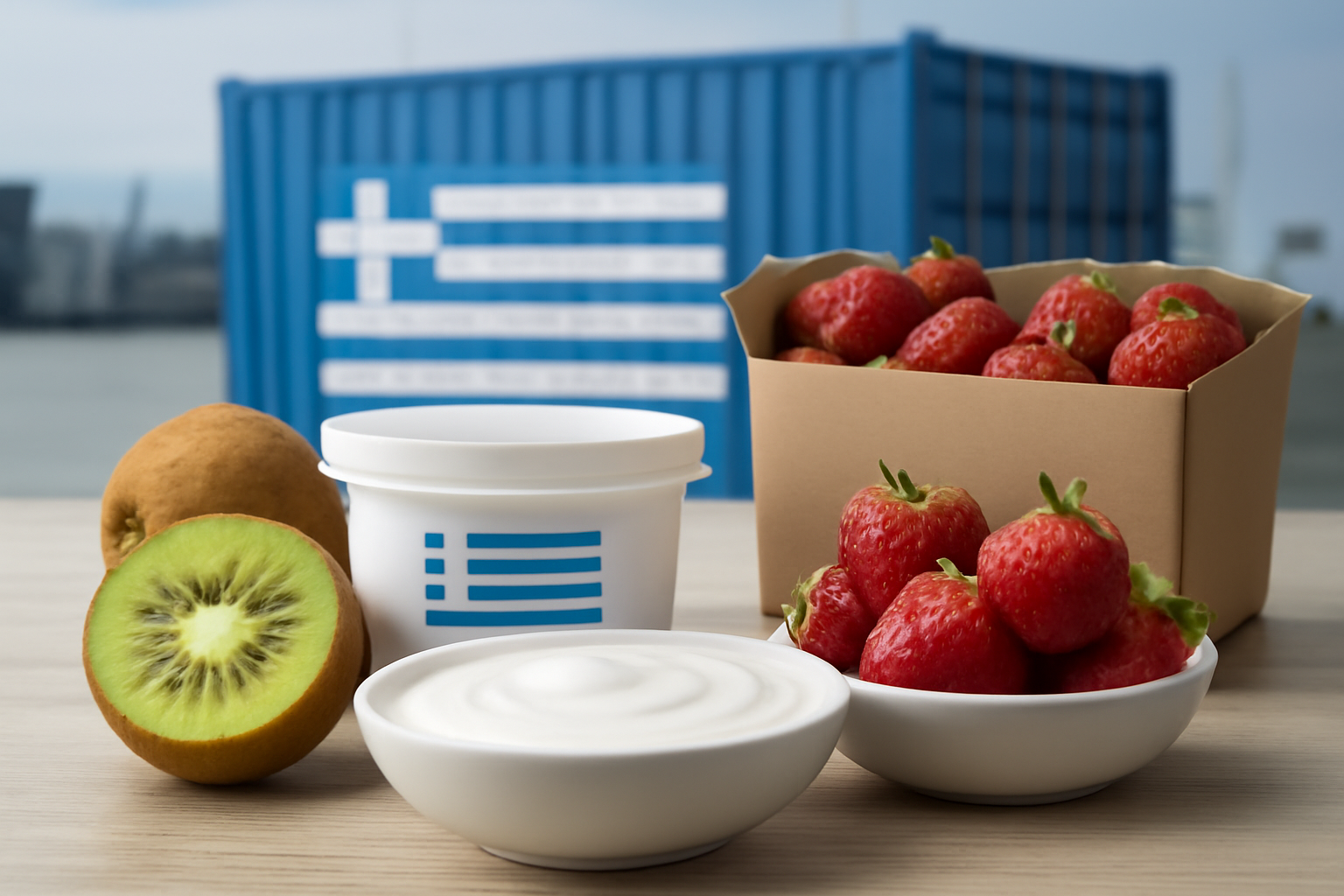
Yogurt, kiwi and strawberries generated three-quarters of the increase in Greek food exports and two-thirds of the sector’s market-share gain in Europe. Each product followed a different route, combining scale, geographic expansion and stronger pricing.
Food offsets weakness in other export sectors
Yogurt, kiwi and strawberries have become the principal engines of growth for Greek food exports, strengthening the country’s position in European markets even as its wider export performance slows. According to in.gr, citing the National Bank of Greece’s latest Business Trends report, the three products accounted for three-quarters of the increase in food exports and two-thirds of the sector’s market-share gain in Europe.
Greek exports grew by only 0.2% in inflation-adjusted terms during the first five months of 2026, roughly one-tenth of their average annual growth rate over the preceding three years. Europe contributed 0.9 percentage points to the result, while food added 1.8 percentage points and offset weaker performance in minerals, textiles and olive oil. Greece increased or maintained its share in seven of nine geographic regions and nine of 11 sectors. Its share of European exports rose from 0.56% a year earlier to 0.59%.
Yogurt combines larger volumes with premium pricing
Yogurt’s expansion has been concentrated in a limited number of mature markets in Western and Southern Europe. Export volume has more than tripled over the past six years, while Greece’s share of European yogurt exports has risen from 7% to 20%. Despite that increase in scale, Greek yogurt retains a price advantage of about 30% over European competitors, according to the report.
The figures indicate that producers have expanded output without surrendering the product’s differentiated market position. The next commercial challenge is to protect that premium as volumes continue to grow and competition for shelf space intensifies. For processors and distributors, the model depends less on entering many additional countries than on consolidating demand and maintaining value in established markets.
Kiwi broadens access while strawberries gain on two fronts
Kiwi has followed a different path. Greek suppliers are expanding their geographic reach and reducing dependence on Italy, which appears to have served as an intermediary trading hub. Greece’s share of European kiwi exports increased from 24% in 2019 to 30%. However, this growth still relies on a relatively low price, leaving exporters with the task of turning broader direct market access into higher commercial value.
Strawberries combine geographic expansion with a narrowing price gap against European competitors. Greece’s share rose from 30% to 60% in Eastern Europe and from 2% to 10% in Western Europe. Germany is the standout Western market, where Greek strawberries have secured a 21% share relative to European competitors. Replicating that performance elsewhere in Western Europe, while raising prices further in Eastern Europe, is the next test. The three products show that Greece’s food-export growth does not rest on one formula: yogurt needs to preserve its premium, kiwi needs stronger value capture, and strawberries need to extend their German success to more markets.