West Kalimantan speeds ISPO certification as palm oil market requirements tighten
West Kalimantan is accelerating ISPO certification to protect market access for its growing palm oil industry. The province had 119 certified plantation companies and two certified farmer organizations as of June 2026, against an industry spanning 2.34 million hectares.
Certification drive targets market access
West Kalimantan is seeking to accelerate Indonesian Sustainable Palm Oil certification for plantation companies and growers as international buyers impose stricter sustainability and traceability requirements. Rino Anteno Tengo, acting head of the provincial Plantation and Livestock Agency, described ISPO certification as a strategic response to increasingly demanding global markets, according to Indonesia's ANTARA news agency.
The initiative affects one of Indonesia's largest palm oil-producing provinces. West Kalimantan's planted area reached 2.34 million hectares in 2025, while combined crude palm oil and palm kernel production totaled 7.99 million tonnes. Provincial authorities expect CPO output to continue rising as plantation acreage expands, increasing the need for governance systems capable of supporting sales in international markets.
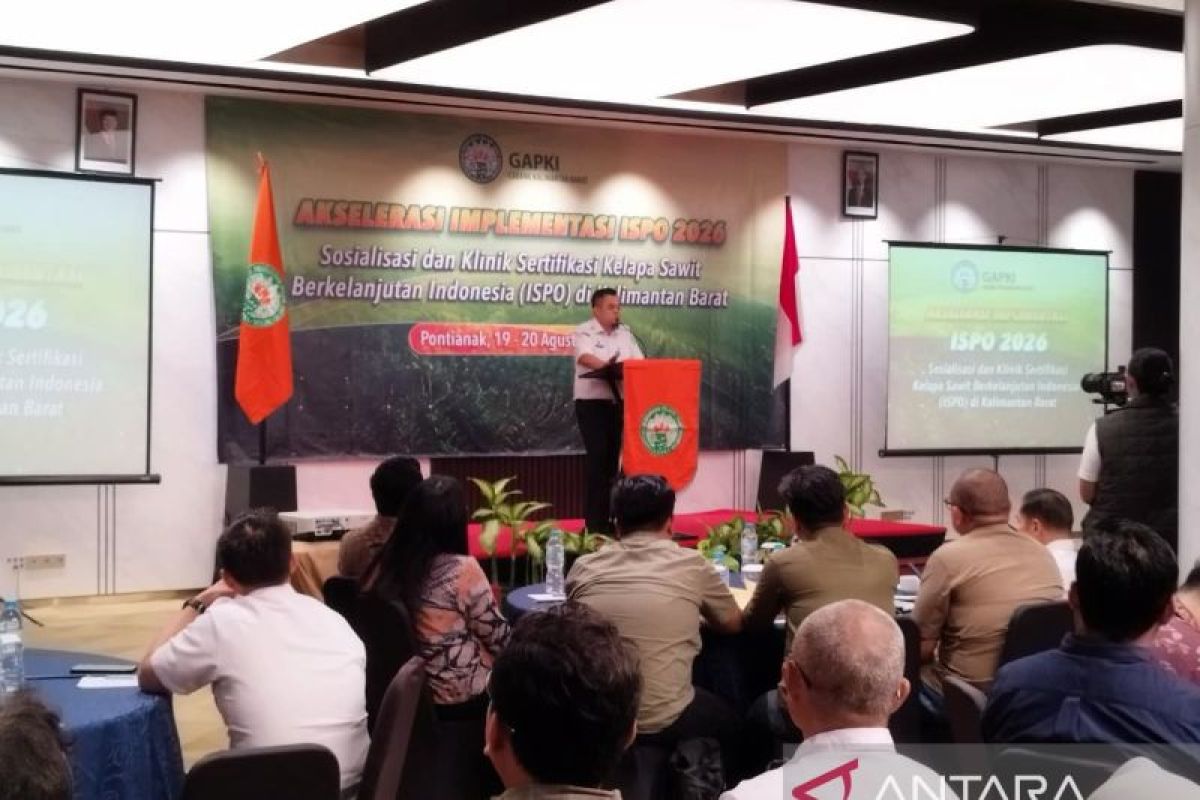
At an ISPO information and advisory event organized in Pontianak by the West Kalimantan branch of the Indonesian Palm Oil Association, known as GAPKI, Rino said certification should help the industry answer environmental concerns associated with Indonesian palm oil and compete in a tightening global market.
Traceability presents a smallholder challenge
Supply-chain transparency is central to the provincial effort. Companies need traceability records to support claims under applicable market rules, including the European Union Deforestation Regulation. The regulation requires operators to verify that covered products placed on the EU market do not originate from deforested land.
Independent smallholders face a particular risk because limited documentation and traceability can exclude their production from global supply chains. The province therefore wants certification support to cover not only plantation companies but also farmers operating around company concessions. Assistance is expected to focus on documentation, labor and environmental standards, and the readiness of partner growers.
Certification remains uneven. Provincial agency data cited by ANTARA show that 119 plantation companies in West Kalimantan held ISPO certificates as of June 2026. Only two farmer organizations had obtained certification: Koperasi Persada Engkersik Lestari and Aliansi Petani Kelapa Sawit Keling Kumang, both in Sekadau Regency. Authorities said that level remained well below their objective for a sustainable provincial palm oil sector.
New rules extend ISPO along the value chain
Indonesia's central government strengthened the framework through Presidential Regulation No. 16 of 2025 on the ISPO certification system and Agriculture Ministry Regulation No. 33 of 2025. The revised system expands certification beyond plantations and mills to downstream industry and palm oil-based bioenergy businesses, bringing a larger part of the value chain within its scope.
The updated principles add transparency requirements and reinforce reporting to the agriculture minister, including audit and surveillance results and the handling of complaints and appeals. Agriculture Ministry Regulation No. 33 of 2025 also provides administrative sanctions for businesses that fail to meet certification obligations. Measures range from written warnings and administrative fines to temporary suspension of operations.
Certified growers may qualify for incentives and priority access to financing. Provincial officials are consequently presenting ISPO as both a compliance obligation and a commercial tool. Faster implementation will require coordination among local government, plantation companies, growers, development partners, non-governmental organizations and the Directorate General of Plantations, particularly where smallholder records and traceability remain incomplete.