Weak yen helps Japanese A5 wagyu expand into US supermarkets
Japanese A5 wagyu is moving into US supermarkets as the weak yen improves its price competitiveness. The expansion takes the premium beef beyond specialist sales channels and exposes it to a broader American customer base.
A5 wagyu reaches a broader US market
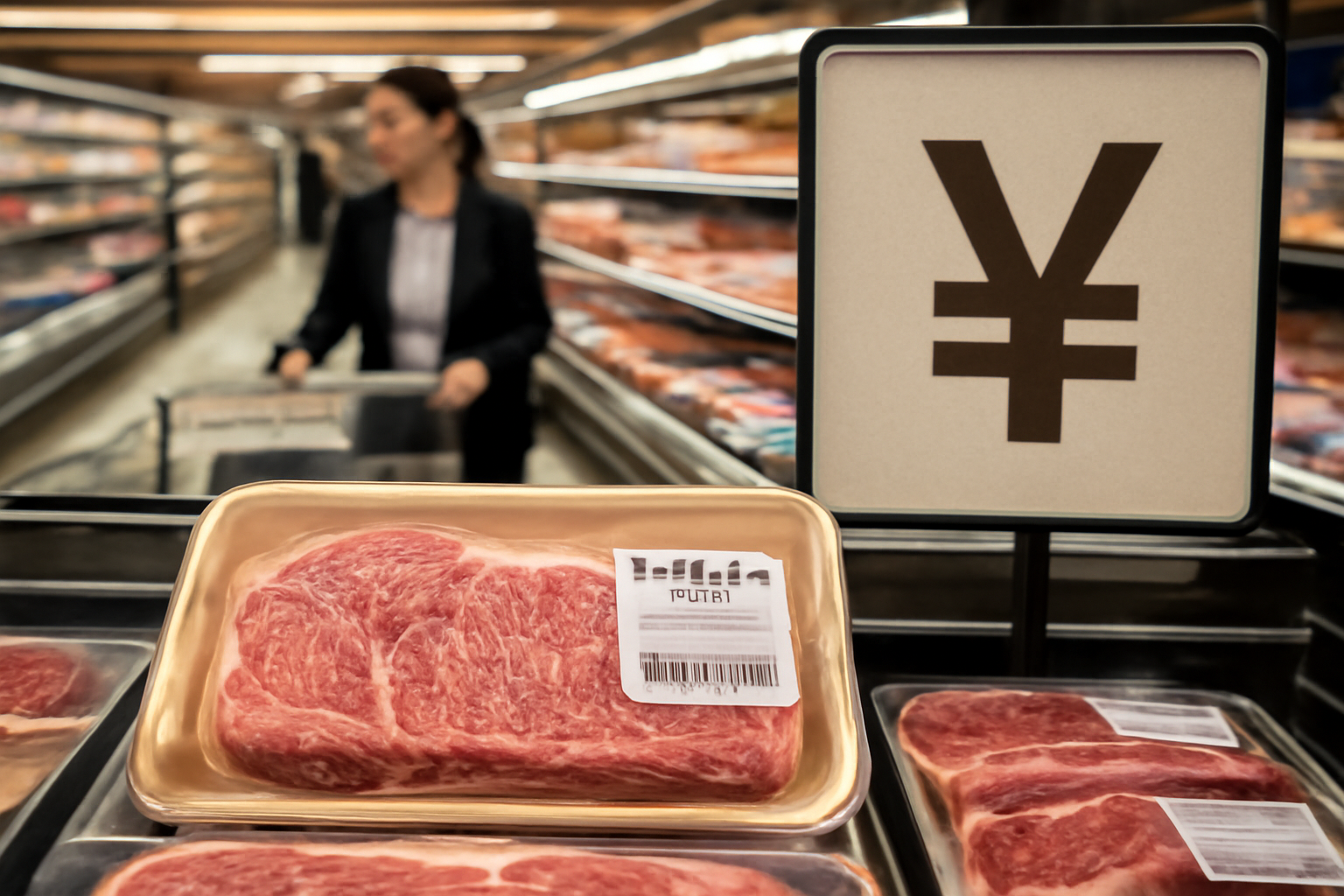
Japanese A5 wagyu is gaining ground in the United States, with the premium beef appearing in American supermarkets rather than remaining confined to specialist channels. The development gives more consumers direct access to a product traditionally associated with high-end restaurants, specialist butchers and premium food retailers.
The available source material describes the spread of Japanese wagyu in the US market as rapid. It does not identify the supermarket operators involved, the states where the product is being sold or the volume entering retail distribution. It also provides no sales, shipment or market-share figures. The significance therefore lies in the reported change in channel: supermarket availability can place A5 wagyu in front of a much larger audience than specialist distribution alone.
Weak yen changes the price equation
The weak yen is identified as the main factor improving the price competitiveness of Japanese wagyu in the United States. Currency depreciation can reduce the dollar-denominated cost of Japanese products when yen prices are converted for overseas buyers. For importers and retailers, that creates more room to offer A5 beef at prices that can work in a supermarket environment while retaining its premium positioning.
This does not make A5 wagyu a mass-market substitute for conventional beef. Its defining commercial proposition remains quality and exclusivity, and the source material provides no evidence that it has approached mainstream beef price levels. The weaker currency instead narrows part of the price gap and may make an occasional premium purchase accessible to more consumers. That distinction matters for retailers deciding how much shelf space, inventory and promotional support to allocate to the category.
Retail expansion creates opportunities and risks
For Japanese producers and US importers, supermarket distribution offers a route to higher visibility and a wider customer base. It may also reduce dependence on restaurants and specialist outlets. Retailers gain a differentiated premium product, while consumers can evaluate the beef directly in a familiar shopping setting rather than encountering it only on restaurant menus.
The move also creates execution challenges. A5 wagyu requires clear merchandising because customers must understand why it carries a premium and how it differs from other beef sold under the wagyu name. Supermarkets must manage inventory carefully when handling a high-value, perishable product. The supplied material does not state whether retailers are selling whole cuts, smaller portions or other formats, leaving the precise retail strategy unclear.
Currency remains central to competitiveness
The expansion demonstrates how exchange rates can influence the reach of a premium food product. A weak yen supports Japanese exporters, but the advantage depends on currency conditions and on how much of the benefit importers and retailers pass through to buyers. Freight, handling, cold-chain requirements and retail margins still shape the final shelf price, although the available material gives no figures for these costs.
For industry participants, the next indicators will be whether supermarket placement is sustained, whether distribution expands geographically and whether repeat purchases follow initial consumer interest. No timetable or expansion targets are provided. Even so, the reported arrival of A5 wagyu in US supermarkets marks a broader commercial test for Japanese premium beef outside its established specialist market.