Volga District Produces Over 44% of Russia’s Juice in January-July 2026
Companies in Russia’s Volga Federal District produced more than 195 million liters of fruit and vegetable juice in January-July 2026. The region accounted for over 44% of national output, highlighting the geographic concentration of Russian juice processing.
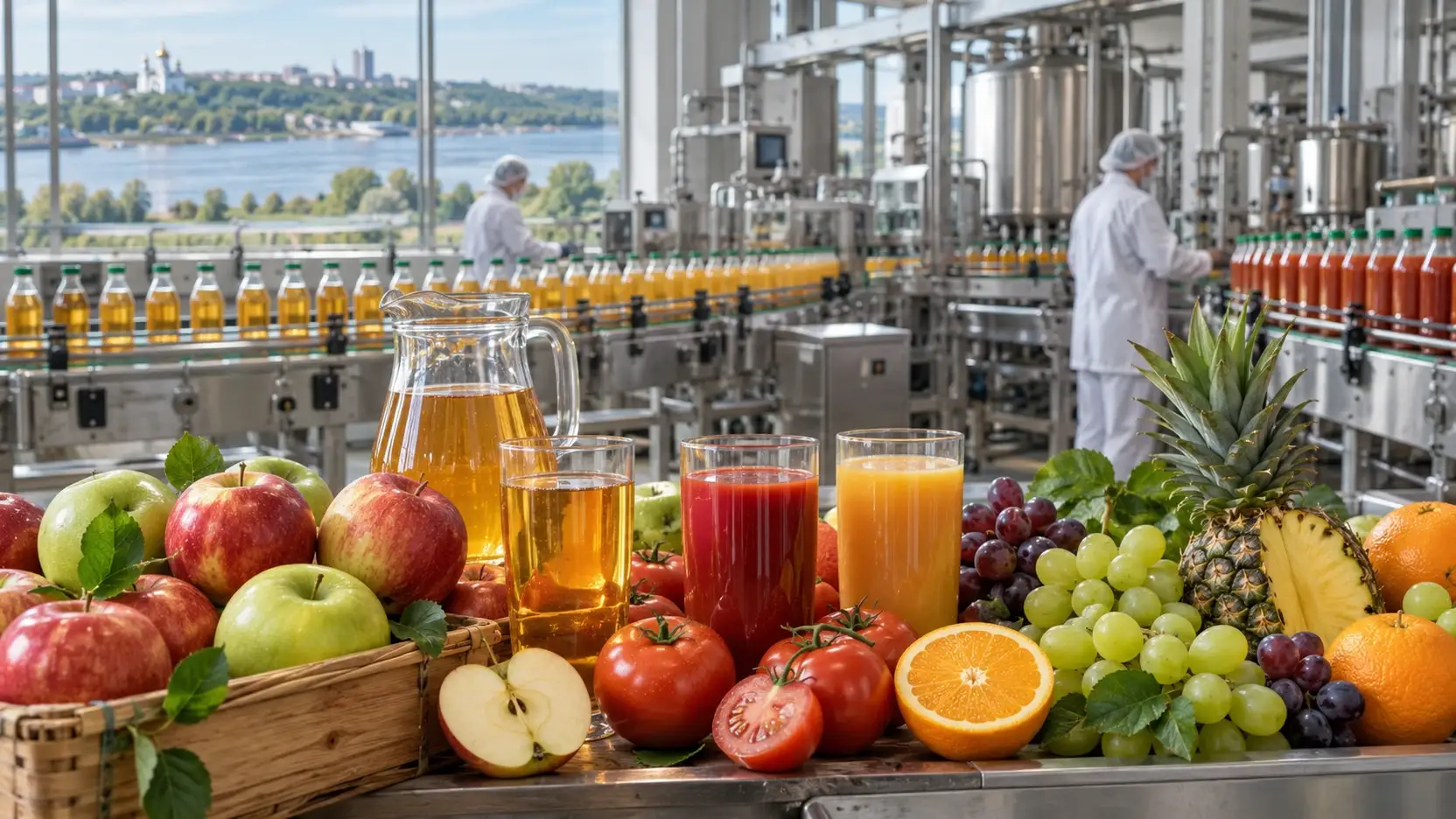
Volga district leads Russian juice production
Companies in the Volga Federal District produced more than 195 million liters of fruit and vegetable juice during the first seven months of 2026, according to Sterlegrad. That volume represented over 44% of Russia’s total juice output for January-July.
The figures place the district at the center of the country’s juice-processing industry. Almost half of reported national production was concentrated in one of Russia’s federal districts, making its factories important to processors, packaging suppliers, distributors and retail buyers operating across the domestic market.
Concentration shapes the supply chain
A regional share above 44% means that changes in production across the Volga district can have consequences beyond its local consumer market. Production schedules, maintenance stoppages and access to fruit and vegetable inputs in the district can influence the availability of finished juice elsewhere in Russia.
The figure also shows why buyers need to monitor capacity utilization and logistics in the region. When more than 195 million liters are produced by one district within seven months, transport links connecting its plants with other Russian regions become a material part of the national supply chain. The reported data do not identify individual producers or provide a breakdown by type of juice, plant or destination.
Product mix remains unclear
The total combines fruit and vegetable juices, but the available report does not specify how output was divided between the two categories. It also does not state whether the volume consisted entirely of finished consumer products or included different product formats. This limits comparisons between producers and prevents a detailed assessment of which juice segments drove the district’s share.
No corresponding figures for previous periods were provided, so the data do not establish whether production increased or decreased year on year. They nevertheless provide a clear snapshot of regional concentration in January-July 2026: the Volga Federal District supplied more than 195 million liters and accounted for over 44% of Russian production.
Implications for market participants
For beverage manufacturers and investors, the concentration indicates where a substantial part of Russia’s operational juice-processing base is located. Suppliers of ingredients, containers and processing equipment can use the regional share as an indicator of industrial demand, although company-level information would be required before making capacity or investment decisions.
Distributors and retailers also face exposure to the district’s production and transport conditions. A concentrated manufacturing base can support large-scale procurement, but it can also increase dependence on a limited geographic area. More detailed data on plants, raw materials, inventories and sales destinations would be needed to measure that risk. Based on the published figures alone, the central fact is that the Volga district was responsible for more than two-fifths of all Russian fruit and vegetable juice output during the first seven months of 2026.