Vietnam targets 10 million tonnes of meat by 2030 in livestock overhaul
Vietnam plans to modernise its large livestock sector through stronger biosecurity, digital systems and advanced breeding technology. By 2030, the country expects meat output to exceed 10 million tonnes, egg production to surpass 25 billion units and milk production to reach about 1.6 million tonnes.
Large livestock industry enters restructuring phase
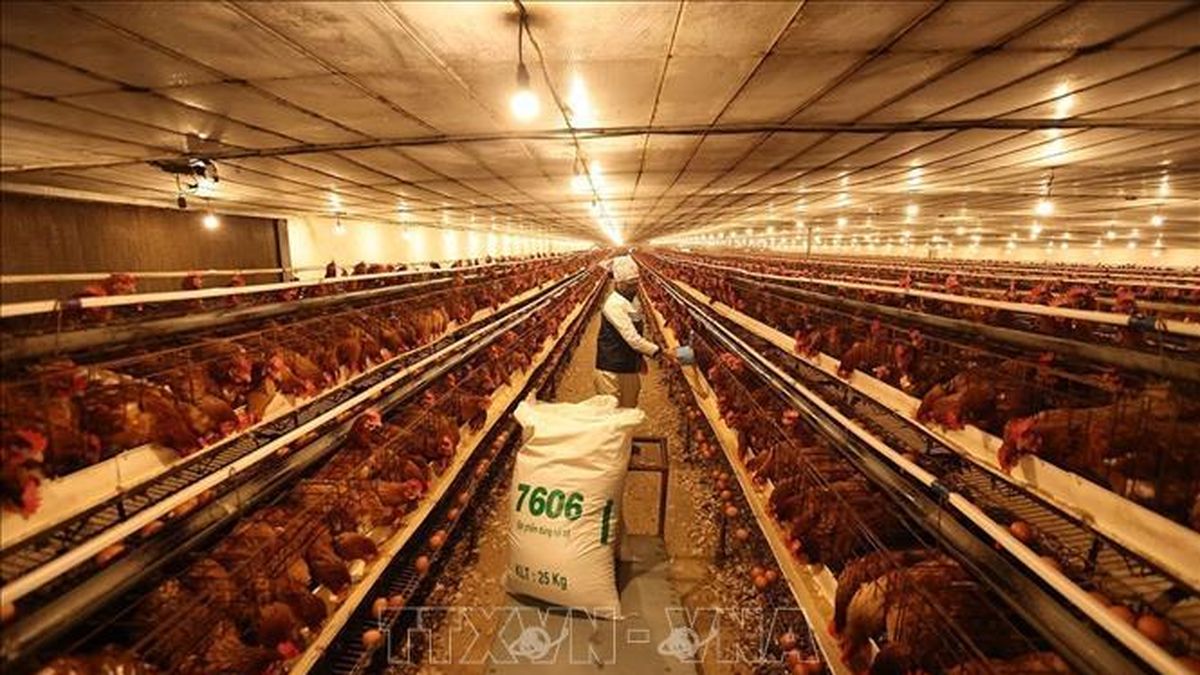
Vietnam is preparing to restructure its livestock industry during 2026-2030, using science, digital technology and tighter biosecurity to move from traditional farming toward larger and more modern production. The country already ranks among the world’s major livestock producers, with the fifth-largest pig herd and ninth-largest poultry flock, according to Vietnam News Agency’s Báo Tin Tức.
The government’s targets illustrate the intended scale of the expansion. By 2030, total meat production is expected to exceed 10 million tonnes, egg output to surpass 25 billion units and milk production to reach about 1.6 million tonnes. Growth is expected to rely less on increasing animal numbers and more on productivity, disease control, automation and better coordination across breeding, feed, farming, slaughter and processing.
Disease losses put biosecurity at the centre
African swine fever has made disease prevention a central commercial issue. Nguyễn Văn Điệp, chief executive of AVAC Vietnam, said the virus has forced the destruction of more than 7 million pigs in Vietnam since it appeared in 2019, causing losses measured in tens of trillions of Vietnamese dong. There is no specific treatment, making vaccination the industry’s preferred proactive tool for controlling the disease.
Commercial vaccine production still requires stable cell-culture systems for manufacturing at scale, a safe and effective master virus strain, and sufficient data for regulatory assessment. Nguyễn Văn Minh, deputy chief executive of BAF Vietnam, said farm design has consequently shifted away from a narrow focus on maximum productivity. Operators increasingly treat farms as integrated risk-management systems in which technology monitors biological threats and turns some former cost centres, including waste management, into potential sources of value.
Technology drive meets dependence on imported feed
The modernisation programme includes genome-based selection and gene editing to develop productive, disease-resistant breeds. Authorities also want large livestock databases, artificial intelligence for disease diagnosis and greater automation. Circular farming, waste recycling and feed additives that reduce greenhouse-gas emissions are expected to support Vietnam’s Net Zero direction while improving farm efficiency.
Major constraints remain. Phạm Kim Đăng, deputy head of the Department of Livestock Production and Animal Health, said the industry depends heavily on imported feed materials, has a fragmented production structure and lacks strong value-chain links. Vietnam therefore plans to strengthen domestic breeding technology, develop more sustainable feed production, establish internationally recognised disease-free zones, expand advanced slaughter and processing capacity, and introduce digital systems across the sector. Consumer demand is also shifting toward traceability, food safety, animal welfare and environmental performance. Officials expect demand for meat, eggs and milk to continue growing through 2030, while production gradually moves away from red meat and raises poultry’s share. For producers and processors, access to technology, biosecure supply chains and certified production zones will determine who can serve both the domestic market and deeper international integration.