Vietnam’s Meat Imports Reach Nearly $2.17 Billion as Low-Cost Supply Expands
Vietnam imported nearly $2.17 billion of meat and meat products in the first nine months of 2026, up 24.8% year on year. Low-priced poultry, pork and buffalo meat are gaining ground across retail and food-service channels, increasing pressure on domestic livestock producers.
Import spending rises 24.8%
Vietnam spent nearly $2.17 billion on imports of meat and meat products during the first nine months of 2026, an increase of 24.8% from the same period a year earlier, according to Customs Department statistics cited by VietNamNet. The total covers poultry, pork, buffalo meat, fresh and frozen beef, as well as edible offal from poultry, pigs, buffalo and cattle.
September imports alone exceeded $251.7 million, rising 16.2% from August 2026. The monthly increase indicates that imported supply continued to expand toward the end of the nine-month period rather than being concentrated earlier in the year. For processors, retailers and institutional kitchens, the inflow provides a larger pool of competitively priced raw material. For domestic livestock farms, it brings stronger competition in market segments where buyers are highly sensitive to price.
Imported pork averages $1,712 per tonne
Price data updated through the end of August show that imported pork averaged $1,712 per tonne, equivalent to about 45,000 dong per kilogram. Imported poultry averaged approximately 27,800 dong per kilogram, while imported buffalo meat was priced at about 116,500 dong per kilogram. VietNamNet reported that these products were commonly offered at prices 20-50% below comparable domestic goods.
The gap is especially visible in pork. The average import price of about 45,000 dong per kilogram was below Vietnam’s live-hog price of 54,000-58,000 dong per kilogram. These figures cover different stages of the supply chain and are therefore not directly equivalent, but they illustrate the cost pressure facing local pork suppliers before slaughtering, processing and distribution expenses are added.
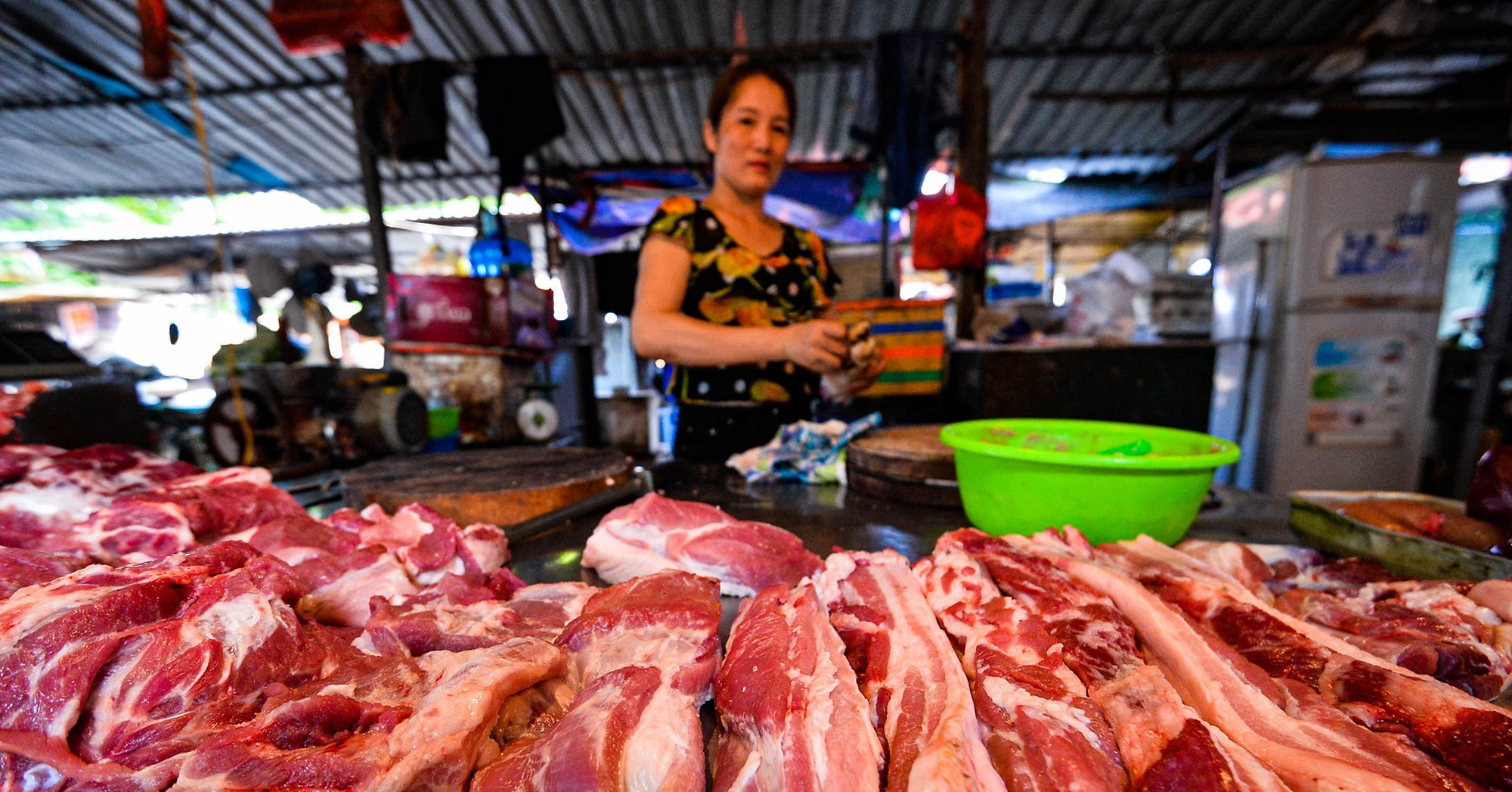
Low-priced imported meat is sold through social media, supermarket chains and collective kitchens, and has also appeared at roadside outlets. That broad distribution means imported products compete not only in industrial processing or food service but also in consumer-facing channels. Buyers can select lower-cost cuts, while domestic suppliers must defend their position through freshness, traceability, quality and shorter delivery chains.
Product mix supports demand
A representative of the Vietnam Animal Husbandry Association attributed the increase mainly to the substantial price advantage of imported meat. Product composition also matters. Poultry thighs, necks, wings, feet, intestines and gizzards may be treated as lower-value products or by-products in some exporting countries and can therefore be sold cheaply abroad. In Vietnam, however, these cuts are popular with consumers, giving exporters a market for products that command less value elsewhere.
Large livestock industries in some supplying countries also produce pork at lower cost and on a larger scale. Vietnam, by contrast, imports much of the raw material used in animal feed, keeping domestic production costs relatively high. Local pork consequently has limited scope to compete with imports solely on price, particularly when overseas suppliers can distribute different parts of an animal to the markets where each cut receives the strongest demand.
The figures do not identify individual supplying countries or volumes by product, so the respective contributions of poultry, pork, buffalo meat and beef cannot be quantified from the available data. Still, the 24.8% increase in import value and the reported retail discount show that imported meat is becoming a more significant competitive factor. Domestic producers, processors and distributors will need to watch both import prices and channel penetration as they plan procurement, production and sales.