Vietnam's feed-ingredient market splits as global wheat prices diverge by region
Vinanet reports that Vietnam's animal feed and raw-material market moved in sharply different directions in June 2026. On world markets, wheat prices rose in Russia and Argentina but fell in the EU, the United States and Australia, complicating cost planning for feed buyers.
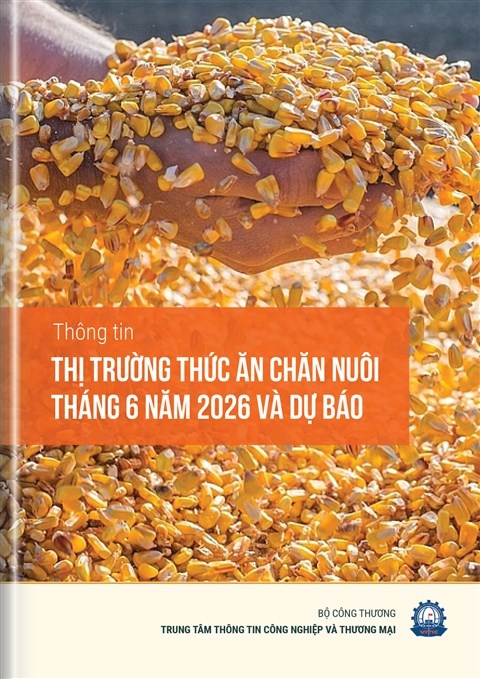
A market pulling in two directions
Vietnam's market for animal feed and feed raw materials moved in sharply different directions in June 2026, according to vinanet.vn. The publication describes a strong divergence across both international and domestic segments, with price signals for key ingredients no longer moving in step.
For importers and feed manufacturers, that split is the central issue. When the world's main grain origins send opposing price signals, the cost of assembling a feed ration depends heavily on where each ingredient is sourced. A single global benchmark is a poor guide in such conditions.
Wheat: up in some origins, down in others
The clearest example is wheat, a core energy component in many feed formulas. Vinanet reports that international wheat prices moved in opposite directions depending on the exporting region. Prices rose in Russia and Argentina, while they fell in the European Union, the United States and Australia.
That pattern matters for buyers in Vietnam and across Asia. Russia is one of the world's largest wheat exporters, so firmer prices there influence the cost of a major share of traded supply. At the same time, softer values in the EU, the US and Australia give buyers alternative origins to weigh against the firmer Black Sea and South American markets.
- Higher: Russia, Argentina
- Lower: European Union, United States, Australia
What it means for feed buyers
The practical consequence of a region-by-region split is that sourcing decisions carry more weight than usual. Feed producers that can switch between origins are positioned to capture the lower-priced supply from the EU, the US or Australia, while those tied to specific suppliers face the firmer Russian and Argentine markets.
Wheat is only one input. Feed rations also draw on maize, soybean meal and other raw materials, and the direction of those markets shapes the final cost of production. Vinanet frames June 2026 as a month of pronounced divergence rather than a uniform trend, which means blended feed costs will vary by formulation and by the geography of each buyer's supply chain.
A fragmented outlook
Vinanet's account points to a fragmented rather than a single-direction market for the month. For exporters, the divergence opens competitive space: origins with falling prices become more attractive to price-sensitive Asian buyers, while higher-priced origins may lean on quality, logistics or established trade relationships to hold market share.
For Vietnam specifically, a large and growing livestock and aquaculture sector makes the country a significant destination for feed grains and protein meals. Any sustained gap between rising and falling origins feeds directly into domestic feed costs and, over time, into the economics of meat, egg and farmed-seafood production. The picture Vinanet draws for June 2026 is one where the source of each tonne matters as much as the headline price.