Vietnam’s agricultural, forestry and seafood exports rise 7% to $49.31 billion
Vietnam’s agricultural, forestry and seafood exports reached an estimated $49.31 billion in the first eight months of 2026, up 7% year on year. Fruit and vegetables, seafood and livestock products recorded strong growth, while rice, coffee and rubber export revenue declined.
Exports reach $49.31 billion
Vietnam’s agricultural, forestry and seafood exports reached an estimated $49.31 billion in the first eight months of 2026, an increase of 7% from the same period of 2025, according to information from the Ministry of Agriculture and Environment reported by Vietnam.vn.
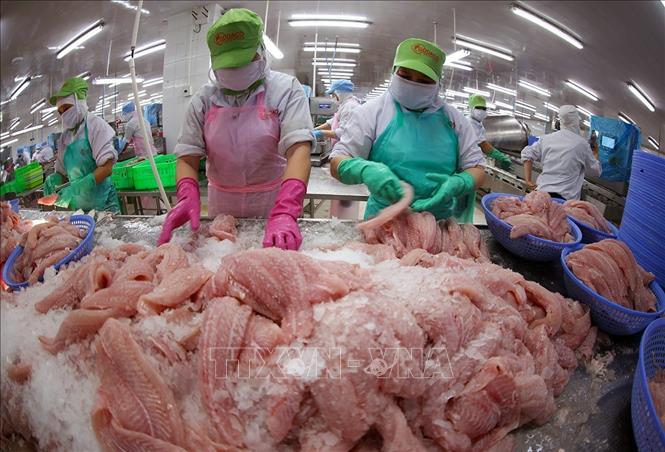
Agricultural commodities generated $25.66 billion, up 2.7%. Forestry product exports increased 5.4% to $12.57 billion, while seafood rose 10.9% to $7.94 billion. Livestock products were the fastest-growing broad category, climbing 30% to $511.9 million, although they remained a relatively small part of total exports.
Fruit and vegetables lead product growth
Fruit and vegetable exports posted the strongest increase among the highlighted commodities, rising 24.9% to $6.02 billion. Pepper revenue advanced 9.6% to $1.24 billion, while cashew exports increased 2% to $3.35 billion.
The drivers differed by product. Cashew shipment volume fell 1.7%, but the average export price increased 3.7% to $7,058 per tonne, allowing revenue to rise. Pepper followed the opposite pattern: its average export price declined 4.3%, but a 14.5% increase in volume lifted export value by 9.6%.
Coffee, rubber, tea, rice, cassava and cassava products all recorded lower export revenue. Rice experienced the largest decline, falling 11.9% to $2.86 billion as shipment volume decreased 6.3% and the average export price dropped 6%.
Coffee volume increased 13.1%, but a 19.7% fall in the average export price pushed revenue down 9.1%. Rubber exports declined 16.1% by volume; an 11.9% increase in the average price was insufficient to prevent export value from falling 6.2%. Tea volume contracted 10.2%, but a 9.1% price increase limited the decline in revenue to 2%. Export earnings from cassava and related products fell 2.5%.
Asia remains the dominant destination
Asia accounted for 45.5% of Vietnam’s principal agricultural, forestry and seafood exports, followed by the Americas with 21.5% and Europe with 13.4%. Africa represented 2.3% and Oceania 1.5%. Export value to Asia rose 11.3%, while shipments to Oceania increased 16.4%. Growth was more limited in the Americas at 0.6% and Europe at 1.7%, while exports to Africa fell 18.3%.
China was Vietnam’s largest individual market with a 22.7% share, ahead of the United States at 19.1% and Japan at 6.8%. The figures show that the overall increase remained closely tied to Asian demand, even as Vietnam maintained substantial sales in the Americas and Europe.
Imports grow faster than exports
Imports of agricultural, forestry and seafood products totaled an estimated $35.06 billion in the eight-month period, up 8.1% year on year. However, August imports fell 9.9% from the previous month and 7.4% from a year earlier, indicating slower momentum.
The United States supplied 10.2% of Vietnam’s imports in the sector, followed by China with 9.7% and Cambodia with 7.2%. Import value from the three suppliers increased by 22.4%, 8% and 21.7%, respectively. Based on the reported totals, Vietnam retained a sizable sector trade surplus, although import growth exceeded the pace of export growth.