US meat exports stay resilient as China beef and Mexico pork barriers persist
US meat exports remain resilient as some trade barriers are resolved, National Hog Farmer reports. Beef shipments to China remain minimal because of plant suspensions and uncertainty over residue testing, while Mexico’s restrictions on pork variety meat weighed on June volumes.
Exports withstand uneven market access
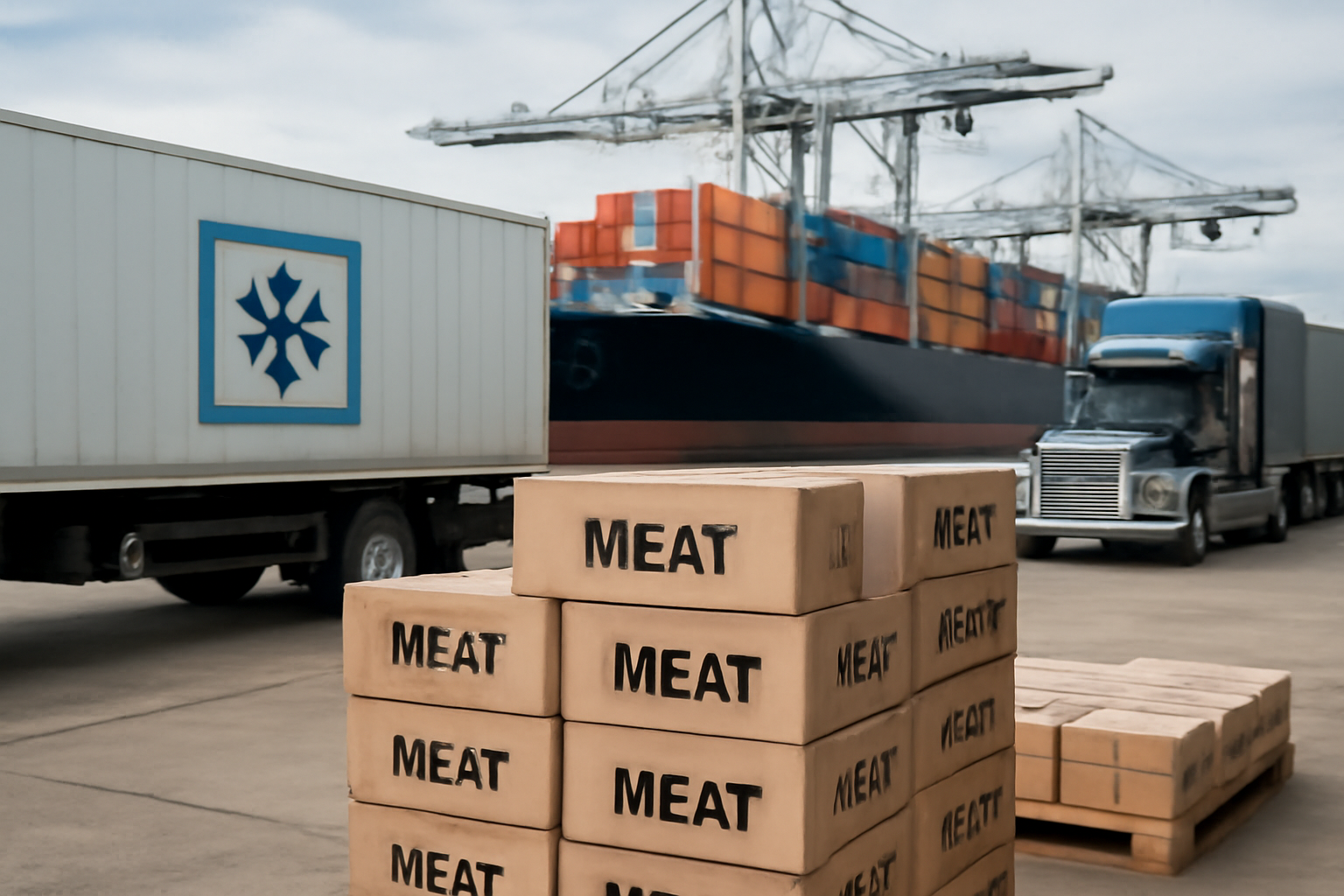
US meat exports are holding up as some trade barriers are resolved, but access to two important markets remains uneven. National Hog Farmer reports that beef exports to China are still minimal because plant suspensions remain in place and exporters face uncertainty over residue-testing requirements. Restrictions imposed by Mexico on pork variety meat also affected June volumes.
The two constraints operate differently. In China, suspended plants directly limit the number of US facilities able to serve the market, while uncertainty over residue testing complicates commercial planning for eligible suppliers. In Mexico, the reported restrictions apply to pork variety meat and have already appeared in monthly shipment performance. Neither issue means that all US meat exports have stopped, but both narrow the channels available to processors and traders.
China uncertainty limits beef business
Minimal beef shipments to China leave US plants with fewer options for placing product in that market. A plant suspension is not simply a paperwork problem: it can exclude output from a specific facility even when other establishments remain eligible. For processors, market access therefore depends on both national trade conditions and the approval status of individual plants.
Residue-testing uncertainty adds another layer of risk. Without clarity over how testing requirements will be applied, exporters may find it harder to schedule production, assemble compliant consignments and commit to delivery terms. Importers also face uncertainty over which suppliers can complete shipments reliably. The result is a cautious trading environment even where demand may exist.
For the wider US beef sector, restricted access to China can change how processors allocate cuts and manage inventories. Product intended for Chinese buyers may need to be redirected to other customers or retained in domestic channels. National Hog Farmer’s description of exports as resilient indicates that the broader trade base continues to absorb meat, but minimal China volumes remain a constraint rather than a resolved issue.
Mexico restrictions hit pork variety meat
Mexico’s restrictions on US pork variety meat affected June export volumes, according to National Hog Farmer. Variety meat is a distinct part of carcass merchandising, and access to overseas buyers helps processors find outlets for products that may have different demand profiles in the domestic market. A restriction can therefore matter beyond the volume directly blocked.
Lower access can pressure the value processors recover across the carcass and force traders to seek alternative destinations. It can also disrupt established purchasing schedules for Mexican importers and downstream users. The commercial effect depends on how long the restrictions remain and how quickly suppliers can redirect affected products, details that were not provided in the source material.
Resolution remains the key variable
The overall picture is one of resilience alongside unresolved market-specific barriers. Progress in removing trade obstacles supports US exporters, but the China and Mexico cases show that formal market access alone does not guarantee normal flows. Plant eligibility, testing rules and product-specific restrictions can each determine whether a shipment is commercially feasible.
Processors, exporters and importers will be watching for the reinstatement of suspended US beef plants in China, clearer residue-testing conditions and changes to Mexico’s treatment of pork variety meat. Until those issues are settled, companies must plan around limited beef business with China and weaker pork variety-meat volumes linked to Mexico, while relying on other outlets to sustain overall export performance.