US-EU Trade Deal Strengthens Protection and Market Access for European Wine Exports
A trade agreement between the United States and the European Union strengthens the protection of European wine designations and secures their access to the US market, according to reporter.gr. The United States is the largest wine-importing market, making the terms significant for European exporters and American importers alike.
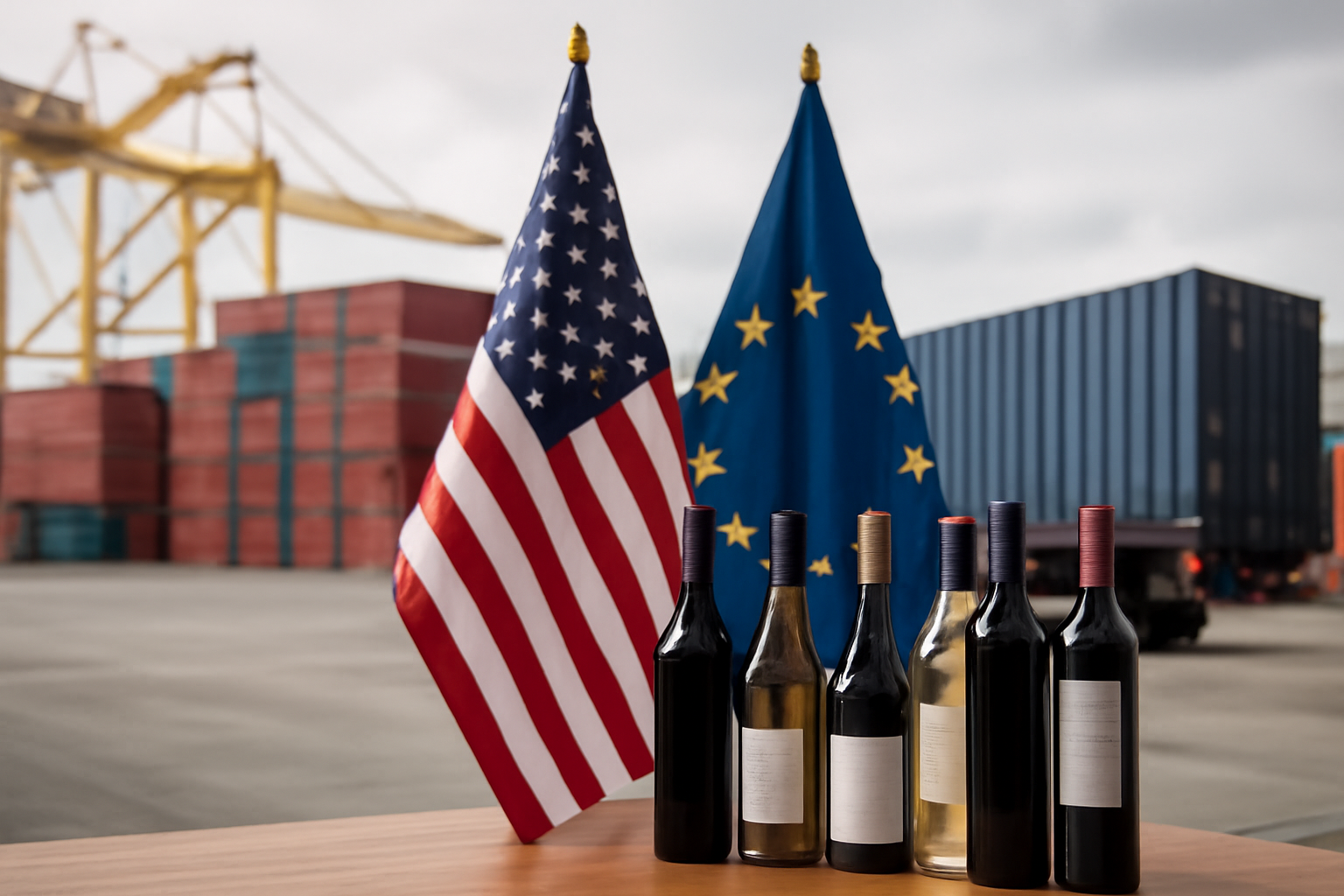
Trade Agreement Favors European Wine
A trade agreement between the United States and the European Union strengthens the protection of European wine designations and secures their placement on the US market, according to reporter.gr. The United States is described as the largest wine-importing market, a status that gives the arrangement direct commercial weight for producers across the bloc.
For European exporters, the two pillars of the deal are protection and access. Protection concerns the names under which wines are sold, while access concerns the ability to keep shipping into a market that absorbs more imported wine than any other. Together, according to reporter.gr, the measures are framed as favorable to European wine exports to the United States.
Why Designations Matter for Trade
Wine is sold and priced in large part on the strength of its origin. European producers rely on designations that tie a wine to a defined region and set of production rules. When those names are protected in a destination market, exporters can defend the price premium attached to origin and reduce the risk of imitation products competing under similar labels.
The reinforcement of that protection in the United States, as reported by reporter.gr, addresses a long-standing concern for European sellers: that the value built into a regional name can be eroded abroad if the name is not legally recognized. Securing recognition in the destination market supports both the volume and the value of shipments.
The Weight of the US Market
The importance of the agreement rests on the size of the buyer. With the United States positioned as the largest wine-importing market, according to reporter.gr, terms that guarantee access carry disproportionate significance for European suppliers. A change in conditions in a smaller market affects a slice of exports; a change in the largest importing market affects the reference point for the entire trade.
For American importers and distributors, the practical effect is continuity of supply from European sources, sold under names that are now more firmly protected. For European exporters, the arrangement reduces uncertainty over whether their leading overseas outlet remains open on stable terms.
What Exporters and Importers Should Watch
The core facts reported by reporter.gr are that the US-EU trade agreement enhances the protection of European wine designations and secures their availability on the US market, and that the United States is the largest wine-importing market. These points define the immediate takeaway for the trade.
- Protection of European wine designations is strengthened in the United States.
- Access for European wine to the US market is secured under the agreement.
- The United States is the largest wine-importing market, amplifying the value of both measures.
For market analysts, the agreement is best read as a stabilizing factor for one of the most valuable wine-trade corridors. Exporters gain clearer legal ground for the names that command premium prices, and importers gain assurance that supply will continue to flow. The reporter.gr account does not detail volumes, tariff levels or a timeline, so the operational specifics that determine the scale of the benefit remain to be confirmed as the agreement is implemented.
Until those details are published, the direction is clear even if the magnitude is not: the terms are presented as favorable to European wine exports and to the exporters who depend on the US market to sustain both the reach and the pricing power of their brands.