US Coal Decline Deepens Despite Trump Campaign to Revive the Industry
The long retreat of coal as a power generation fuel in the United States is deepening even as Donald Trump runs a high-profile campaign to revive the industry. Plant operators are continuing to retire coal-fired capacity, a decision set on utility balance sheets rather than in Washington. Each closure permanently removes a block of domestic thermal coal demand.
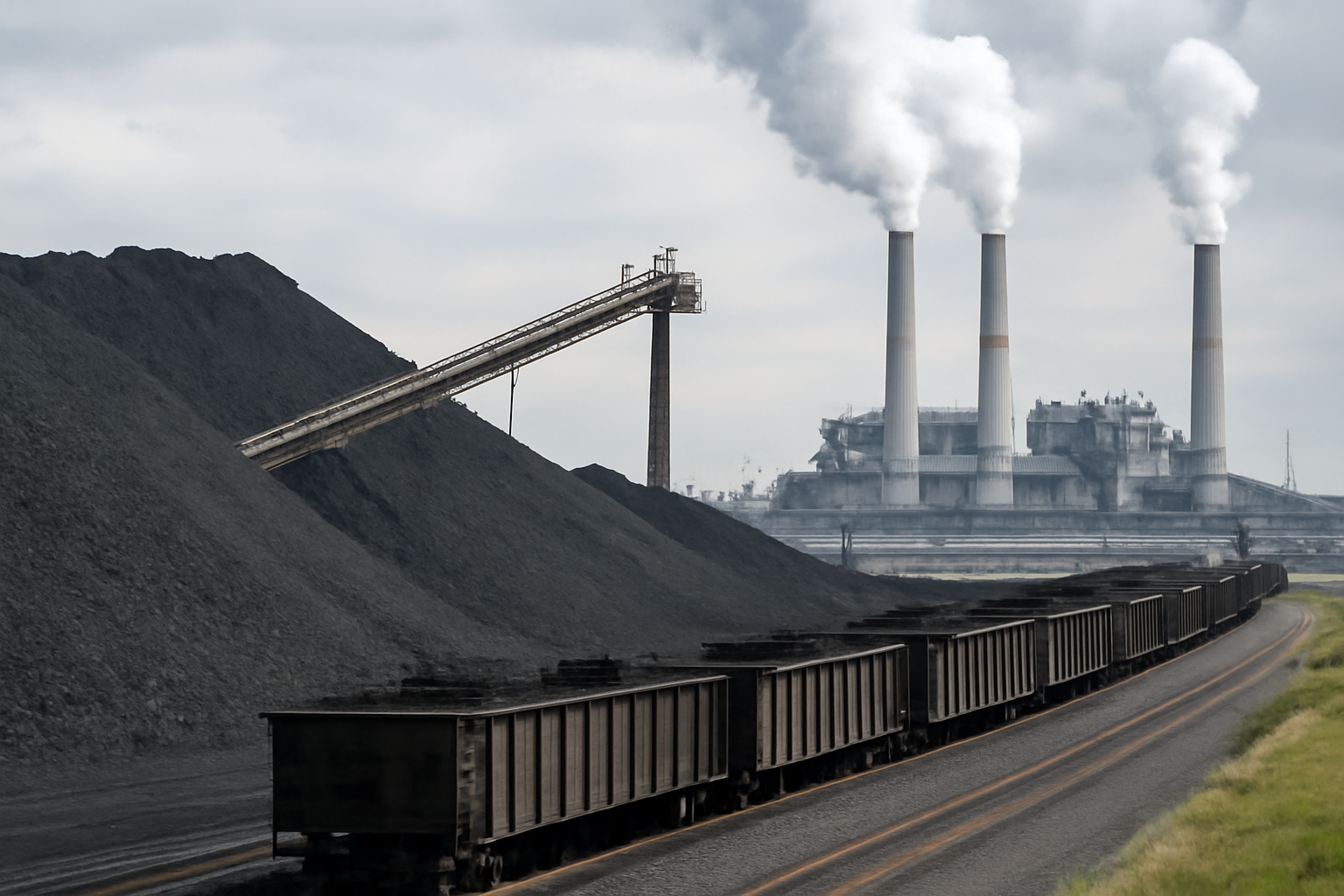
The long decline of coal as a fuel for power generation in the United States is deepening despite a high-profile campaign by Donald Trump to revive the industry, as plant operators continue to retire coal-fired capacity.
A retreat that predates the campaign
The reporting frames the shift as a long decline rather than a sudden break. Coal has been losing ground in the US generation mix across successive political cycles, and that process is described as deepening now — after, not before, the White House made reviving the fuel an explicit priority.
Trump has made the return of coal a visible part of his energy agenda, and the account notes the prominence of that campaign. It also notes that the prominence has not so far changed the direction of the generating fleet.
The distinction matters for anyone valuing coal assets. A cyclical dip can be traded. A decline driven by the physical shrinking of the burning fleet cannot be reversed by sentiment, because the equipment that consumes the fuel is being taken out of service.
Retirements sit with plant operators
The decisive actor identified in the reporting is the plant operator. Utilities and independent power producers decide when a coal unit closes, and those decisions are made against maintenance backlogs, compliance spending, fuel supply contracts and the cost of alternative generation — not in the federal policy debate.
Retirement is close to irreversible in practice. When a coal unit is shut, boilers and turbines are decommissioned, ash-handling systems are dismantled, rail and barge logistics are unwound and trained operating staff move on. Restoring equivalent capacity means a new-build decision with a multi-year construction timeline and financing underwritten against decades of future coal burn.
What it means for coal producers
Domestic thermal coal demand is a function of how many coal units remain in service and how hard they are run. Every retirement removes a fixed block of annual consumption from the domestic market and shortens the list of customers a mine can supply.
The effect is uneven across the producer base. Mines close to surviving plants, with favourable freight, keep a defensible position. Producers whose output was matched to a plant that closes must place replacement volume, either at other domestic units or in seaborne markets, where they compete with established exporters serving Asian buyers.
Utilities still running coal units gain leverage in supply negotiations as the pool of alternative buyers narrows. Railroads, barge operators and port terminals carrying coal-dependent volumes face the same erosion of their contracted base, one plant closure at a time.
What the available account does not specify
The reporting available at this stage sets out the direction of travel but not the underlying figures. Several details remain unquantified:
- the number of coal units slated for retirement and their combined capacity;
- the timetable over which those closures take effect;
- the specific federal measures taken in support of the industry and their current legal status.
Until operators publish unit-level retirement schedules and regulators confirm the treatment of the plants still running, the trajectory described — continued erosion of coal's role in US power generation, moving against the policy push — is the working assumption for producers, traders and utilities planning fuel procurement.