US beef price surge puts Japan’s ¥500 gyudon bowls under pressure
Shrinking US cattle supplies and a weaker yen are raising Japan’s beef import costs. Competition from China for US and Australian cuts is increasing pressure on low-priced gyudon chains and other restaurant operators.
Import prices climb as US cattle supply contracts
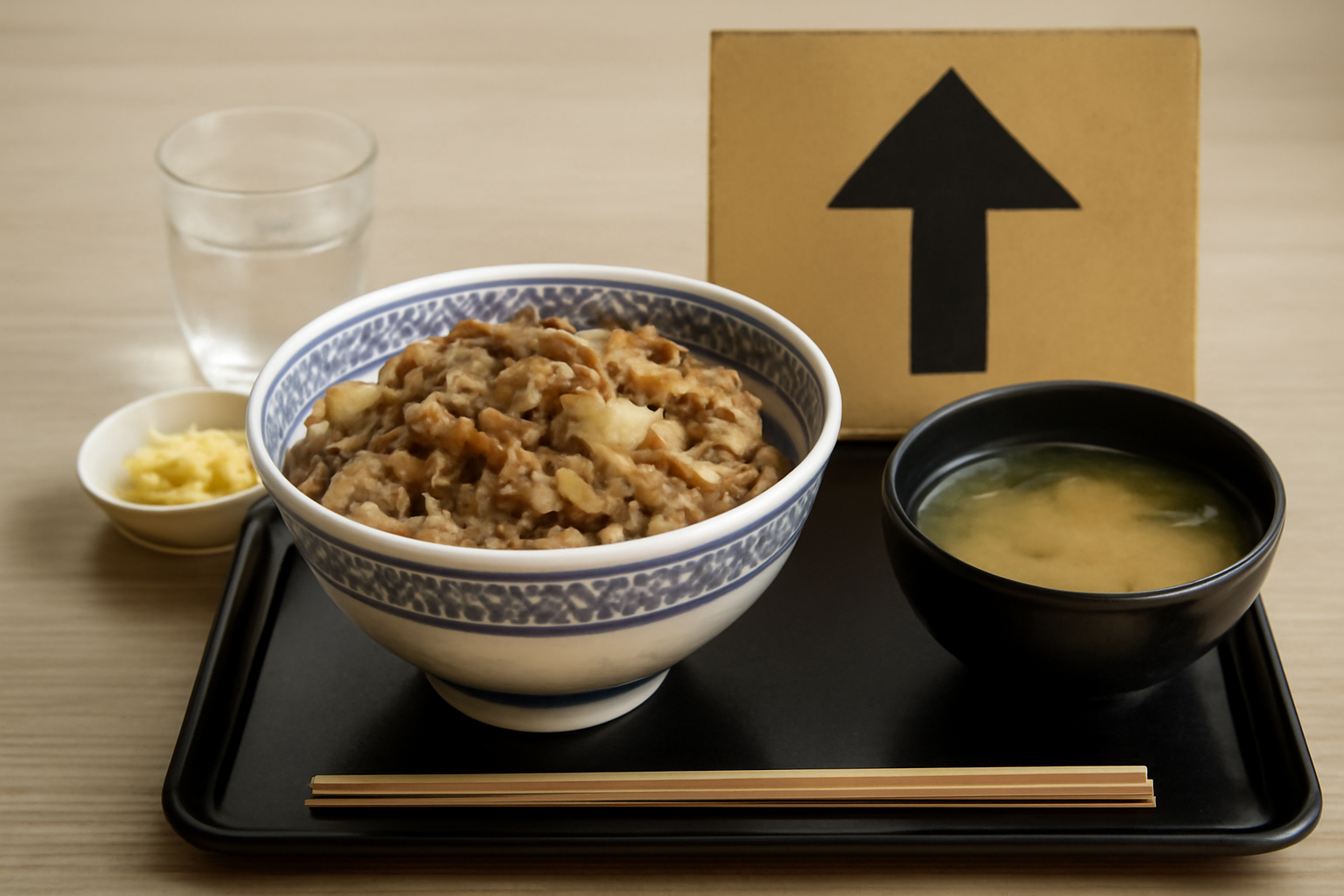
Japan’s restaurant industry is losing access to the inexpensive imported beef that has supported gyudon, yakiniku, hamburgers and other mass-market dishes. PRESIDENT Online reported that Japan’s imported beef prices rose 27% year on year in June, citing the Ministry of Agriculture, Forestry and Fisheries. The Nikkei reported that the price of US short plate, the belly cut commonly used for gyudon, was about 40% above its fiscal 2025 level.
The weaker yen has increased purchasing costs, but the underlying supply problem originates in the United States. Drought across major cattle-producing regions from 2020 to 2022 reduced pasture and hay availability, prompting producers to cut breeding cow numbers. Because rebuilding a cattle herd takes several years, the resulting shortage cannot be reversed as quickly as a contraction in pork or poultry production.
US cattle inventory fell to 86.2 million head in 2026, its lowest level in about 75 years, according to data cited by PRESIDENT Online from the US Department of Agriculture’s Economic Research Service. Restrictions on US imports of live cattle from Mexico following the spread of New World screwworm have added another constraint. Some US processors also reduced shifts or closed plants after margins deteriorated; during some weeks in 2025, losses exceeded $200 per animal processed.
Japan’s import volumes fall while alternative supply tightens
Japanese customs data cited by PRESIDENT Online show total beef imports falling to 496,000 tonnes in 2025, about 18% or 110,000 tonnes below 2020. Imports from the United States dropped more sharply, declining 30% to 178,000 tonnes. Supply of premium and restaurant cuts has also contracted: combined US tenderloin, sirloin and rib-eye roll imports fell from 8,685 tonnes in 2020 to 2,900 tonnes in 2025.
Australia, Japan’s largest beef supplier, offers only limited relief because buyers elsewhere are competing for the same product. China introduced country-specific beef import quotas in 2026, with an additional 55% tariff applying after a supplier’s quota is exceeded. Chinese importers accelerated purchases, and PRESIDENT Online reported that Australia’s quota had already been exhausted in June.
Competition could intensify following a May 2026 US-China agreement on renewing and adding registrations for US beef export facilities. A broad resumption of Chinese purchases would put Japan in direct competition for short plate, which is used in both gyudon and Chinese hot pot. It would also increase pressure on Australian supply at a time when global availability is already constrained.
Low-price restaurants have few domestic options
Japanese production cannot quickly replace lost imports. Domestic farmers face expensive feed, labour shortages, a weak yen and higher calf prices. Japan produced 333,000 tonnes of beef in 2020 and about 340,000 tonnes in 2025, while exports rose from about 4,800 tonnes to 11,800 tonnes. The increase in exports means the small production gain did not translate into a comparable rise in supply for domestic consumers.
Restaurants are responding with price increases, smaller portions, alternative cuts and menus less dependent on beef. PRESIDENT Online said gyudon operators are blending short plate with neighbouring belly cuts, while diversification into curry and oil noodles also reduces exposure. Pressure is visible across the sector: Tokyo Shoko Research recorded 57 yakiniku restaurant bankruptcies in fiscal 2025, a second consecutive record. Steak Gusto ended its monthly all-you-can-eat steak event after May 29, 2026. US beef production is not expected to enter a sustained recovery before 2028, leaving importers and restaurant chains exposed to high prices and competition for several more years.