Uruguay reaches record milk output as global dairy demand loses momentum
Uruguay delivered a record 2.212 billion litres of milk to processors in 2025, while dairy export revenue increased 13%. The expansion strengthens supply for overseas markets, but weaker demand and prices in the second half exposed Uruguay’s dependence on whole milk powder and a small group of buyers.
Milk deliveries reach historic high
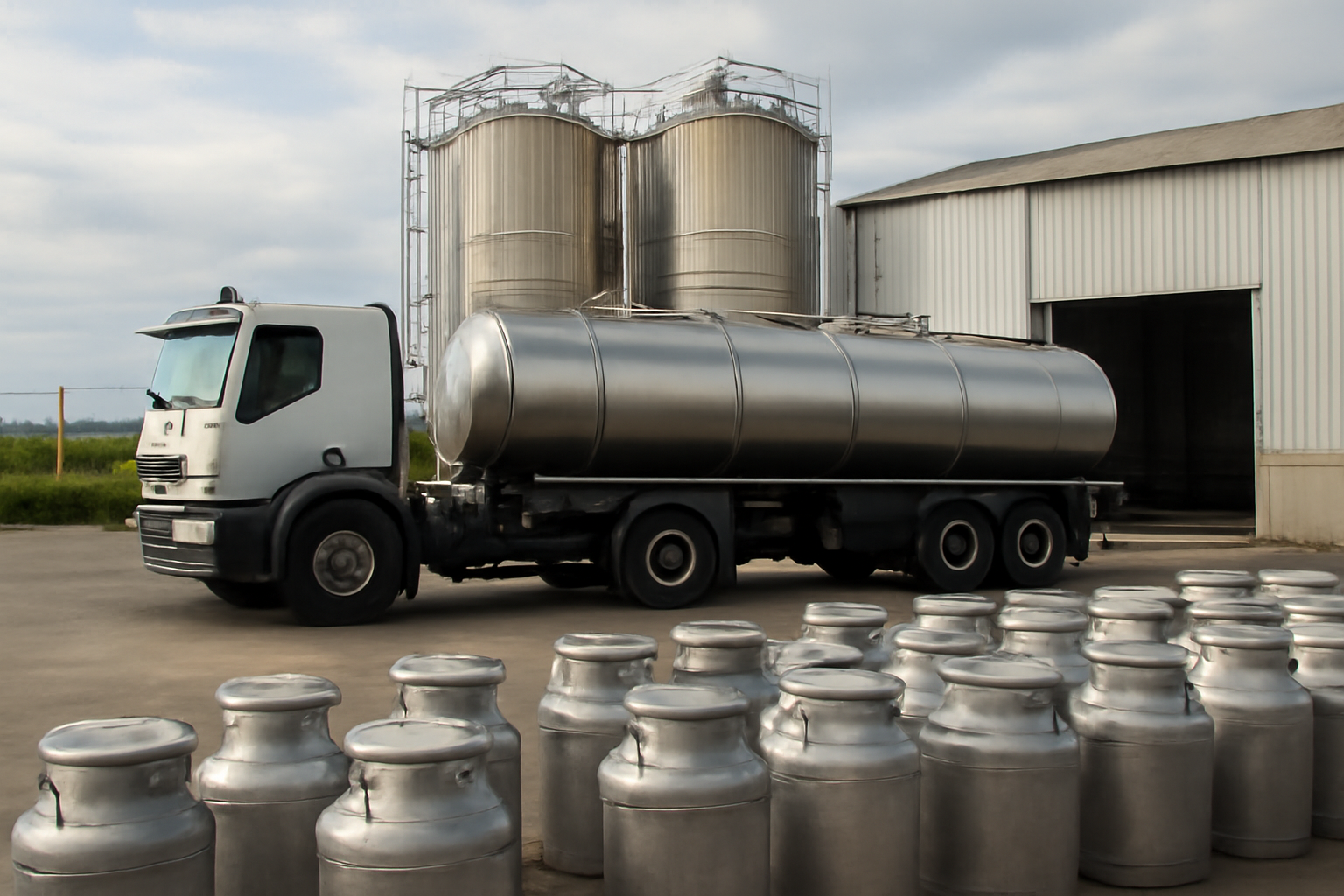
Uruguay’s dairy industry recorded its highest milk intake in 2025, giving processors more raw material just as the international market began showing signs of weaker demand. The National Milk Institute, INALE, reported that deliveries to processing plants reached 2.212 billion litres, up 8.4% from the previous year. Milk solids increased faster, rising 9.7% to 172 million kilograms.
The result followed a recovery that began in the spring of 2024. Uruguay’s Ministry of Livestock, Agriculture and Fisheries linked the improvement to favourable weather and attractive farmgate milk prices. The ministry nevertheless identified persistent pressure from a declining number of dairy farms, adjustments in dedicated dairy land and the need for further productivity gains.
Processing remains concentrated. According to INALE, Conaprole, Estancias del Lago, Lactalis and Alimentos Fray Bentos received 91% of the milk delivered during 2025. Cooperatives accounted for 75% of industry intake. This concentration means changes in production, plant ownership or processing capacity can quickly affect farm access and the composition of Uruguay’s dairy exports.
Exports rise but remain concentrated
Uruguay sent 74% of the milk used in marketed dairy products to export channels, measured in milk equivalent, while the domestic market absorbed 26%. INALE put dairy export revenue at US$965 million, 13% above the previous year’s US$854 million. El País, using INALE and customs data, reported a slightly different full-year total of US$962.7 million.
Whole milk powder remained the industry’s central product, accounting for 69% of export revenue. Shipments reached 168,449 tonnes, 6% more than in 2024, while revenue increased 19% to US$671.2 million. Butter generated US$74.9 million, up 6%, although its export volume declined 9%. Cheese revenue fell 13% to US$91.2 million as volume dropped 15%, while skim milk powder revenue slipped 1% to US$54.8 million and volume contracted 9%, according to El País.
Higher unit values supported earnings. The average export price of butter rose 17% to US$6,809 per tonne. Whole milk powder increased 12% to US$3,854 per tonne, skim milk powder gained 10% to US$3,019 and cheese rose 2% to US$5,133. Algeria received 36% of Uruguay’s dairy exports and Brazil 26%, followed by Mauritania and Chile with 3% each and Russia with 2%.
Demand signals complicate the outlook
The global backdrop became less supportive as 2025 progressed. The ministry reported that international dairy prices rose between January and May but moved lower from June as milk production accelerated in major producing regions. Demand failed to match the additional supply because slower economic growth constrained low- and middle-income consumers in several major markets.
China’s dairy imports recovered 3.5% by volume and 13% by value during the first ten months of 2025 after a sharp decline in 2024. However, year-on-year monthly figures indicated renewed demand weakness from June. OECD and FAO projections still point to annual global fresh-dairy demand growth of about 1%, led by income and population growth in South and Southeast Asia.
For Uruguay, the immediate issue is therefore not the ability to produce milk but the price and destination available for the additional output. Its strong position in Algeria and Brazil provides established outlets, while growing African demand supports the whole milk powder trade. Yet the dominance of one product and two markets leaves export earnings sensitive to purchasing cycles, currency conditions and international powder prices.