UAE Returns More Than 200 Refrigerated Containers of Iranian Produce
The UAE has returned more than 200 refrigerated containers carrying about 4,000 tonnes of Iranian fruit and vegetables, valued at nearly $3 million. No official reason has been disclosed, while the perishable cargo remains near Abu Musa Island in the Persian Gulf.
More than 200 containers returned
The United Arab Emirates has returned more than 200 40-foot refrigerated containers carrying Iranian fruit and vegetables, leaving about 4,000 tonnes of perishable produce awaiting a decision in the Persian Gulf near Abu Musa Island. The cargo is valued at nearly $3 million, according to Reza Nourani, head of Iran’s National Agricultural Products Union.
Nabz Gheymat reported the development on 29 Shahrivar 1405. The shipment included various fruits, vegetables and fresh produce, but the available report does not provide a complete product list for the individual containers. It also remains unclear whether all the containers were rejected at the same location and time or returned in several stages.
No official reason for the rejection has been announced by the UAE authorities. The report does not identify a particular product, documentation problem, pest finding or food-safety violation. Any claim that the shipment was returned for a specific sanitary or phytosanitary reason would therefore go beyond the information currently available.
Time pressure on perishable cargo
The unresolved status creates an immediate commercial risk because the containers hold fresh produce with a limited shelf life. Refrigeration can slow deterioration, but it cannot indefinitely preserve appearance, remaining storage life or saleability. Each additional delay may also increase shipping, cold-storage, handling and potential return costs.
Nourani called for the cargo’s status to be resolved quickly, warning that exporters’ and producers’ capital could turn into spoiled goods if the uncertainty continues. The National Agricultural Products Union said it was ready to cooperate with relevant authorities and proposed a joint working group to establish why the containers were returned and determine their next destination.
The consequences extend beyond the shipment’s stated value. Producers, packing businesses, exporters, logistics companies and buyers are exposed to the disruption. Even if the original disagreement is eventually resolved, time lost during the return journey cannot be recovered for products whose commercial value depends heavily on freshness.
Dubai market had continued receiving Iranian produce
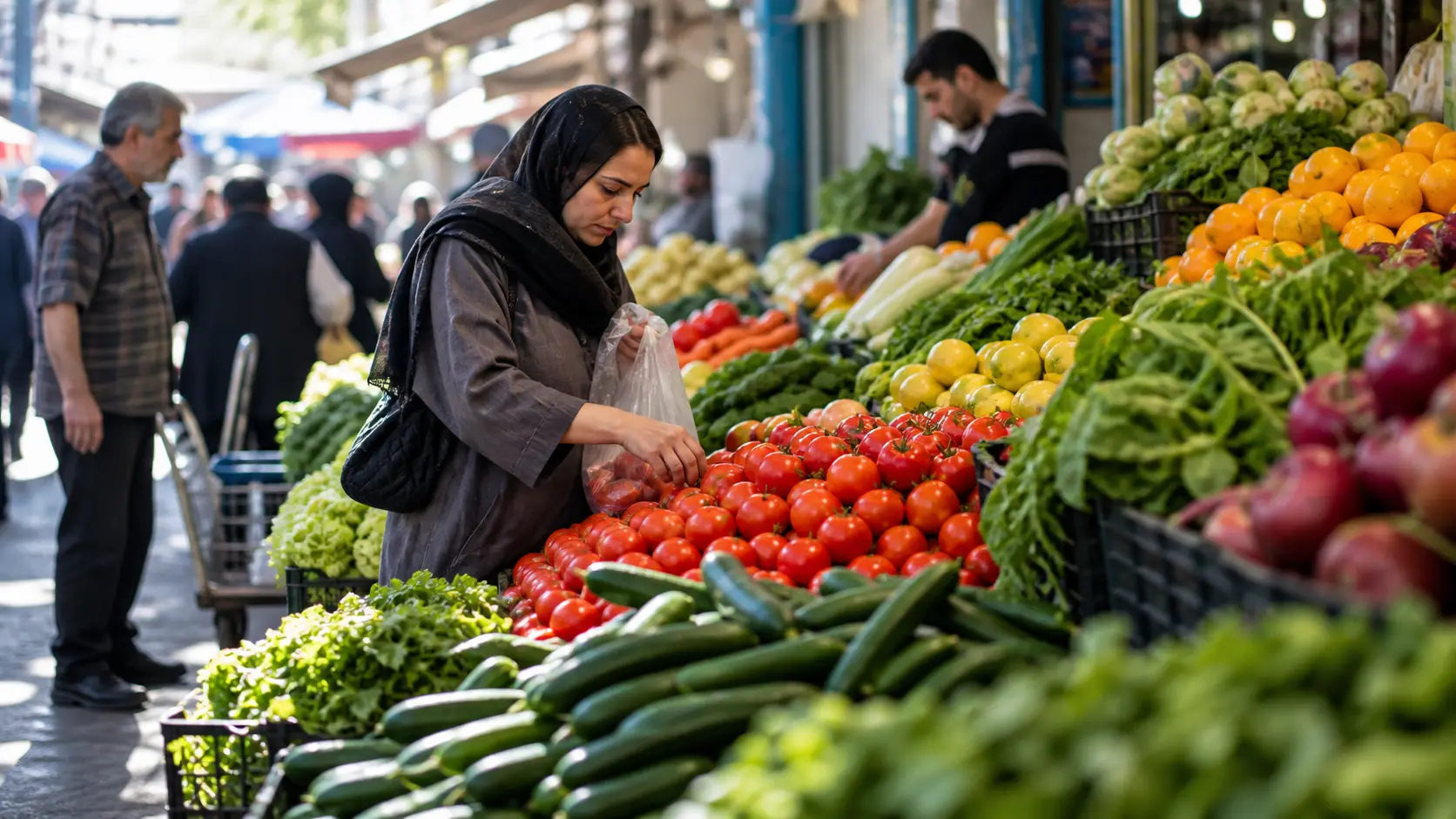
The incident follows recent evidence that Iranian produce was still present in Dubai’s Al Aweer fruit and vegetable market. A market report dated 15 Shahrivar 1405 recorded Iranian watermelon, cauliflower, tomatoes, zucchini, eggplant and broccoli, while market data through 17 Shahrivar continued to list several products of Iranian origin.
Those observations do not prove that any of the listed products were aboard the returned containers. They do, however, show that the rejection occurred against a background of continuing Iranian supply to Dubai rather than a previously confirmed halt to all agricultural trade. Products from Iran compete in Al Aweer alongside supplies from India, Egypt, Oman, Pakistan, Turkey, Jordan, Ecuador and other origins.
The UAE maintains sanitary, phytosanitary and food-safety controls for imported fresh produce, including plant-health certification and border inspection. Those rules allow authorities to reject non-compliant consignments, but their existence does not establish why this particular shipment was refused. An explanation from the UAE side remains essential for exporters seeking to determine whether the problem concerns compliance, documentation or another issue.
Price impact depends on the cargo’s destination
The shipment could be returned to Iran, redirected to another market or accepted again if the dispute is resolved. The current information does not establish that all 4,000 tonnes have entered, or will enter, Iran’s domestic market. Any price effect will depend on the products involved, their condition, the speed of redistribution and the availability of alternative buyers.
Rapid domestic sale could add supply pressure to particular categories, while prolonged delays could instead leave part of the cargo commercially damaged. Until the containers’ condition and final destination are known, there is no basis for predicting a specific rise or fall in Iranian fruit and vegetable prices. The immediate priority for market participants is a formal explanation and a decision before further shelf life is lost.