Turkey forecasts 50% rebound in barley output to 9 million tonnes
Turkey expects barley production to rise by 50% to 9 million tonnes in 2026 after drought reduced last year’s crop to 6 million tonnes. Better rainfall and higher procurement prices could ease feed costs and reduce pressure on import requirements.
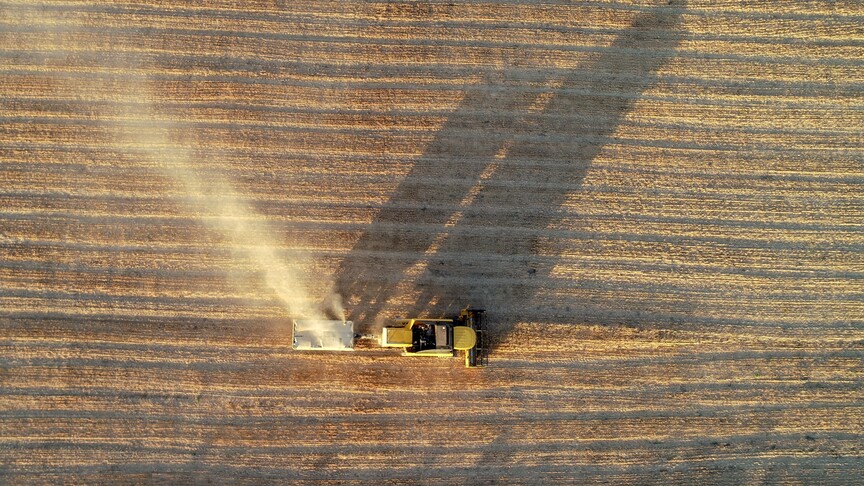
Favourable weather supports production recovery
Turkey’s barley production is forecast to increase by 50% to 9 million tonnes in 2026, recovering from a drought-hit crop of 6 million tonnes last year, according to Anadolu Agency, citing an analysis prepared by the Ministry of Agriculture and Forestry. The projected gain amounts to 3 million tonnes and would reverse the sharp contraction recorded in the previous harvest.
Last year, Turkish barley output fell by 25.9% from the preceding year as drought reduced both planted area and average yield per decare. Conditions have improved in the 2025-2026 production season: rainfall in the main barley-growing regions has been above both normal levels and the previous year, while extreme heat events have not been observed. Field inspections also found that crops were developing healthily.
The recovery remains a forecast rather than a completed harvest, leaving final output dependent on weather through the rest of the growing cycle. However, the ministry’s assessment indicates substantial production potential for 2026. Konya, with 3.1 million decares planted last year, is the country’s largest barley-growing province by area, followed by Ankara with approximately 2.5 million decares.
Additional grain could ease pressure on feed users
Barley is a strategic input for Turkey’s livestock industry because it is one of the country’s principal feed grains. Feed accounted for 85.9% of domestic barley consumption in the 2024-2025 period. A 3-million-tonne increase in supply would therefore primarily benefit livestock farms and compound-feed producers, with greater domestic availability offering scope to reduce roughage and concentrate-feed costs at farm level.
The larger crop could also reduce the need to cover domestic shortages with imported barley, although the ministry analysis cited by Anadolu Agency did not provide an import forecast. The effect on market prices will depend on the realised harvest, feed demand and public procurement. Barley also serves the food industry, but feed users are likely to absorb the largest share of any additional production.
Procurement price rises to 12,750 lira per tonne
Turkey’s Grain Board raised its 2026 barley procurement price to 12,750 lira per tonne from 11,000 lira last year, an increase of approximately 15.9%. The higher price strengthens nominal revenue support for growers as production recovers, although the source did not provide information on input-cost inflation or expected farm margins.
Barley is included among the crops supported under Turkey’s production-planning system. Producers can receive basic support, planned-production support and production-development support. The ministry also provides additional water-restriction assistance in designated basins where groundwater is insufficient and water availability is constrained. Globally, barley production in the 2025-2026 season is estimated at 154.2 million tonnes from approximately 44.4 million hectares, placing Turkey’s projected crop at close to 6% of the stated world total.