Turkey’s 2026 Walnut Harvest Begins With Uneven Regional Outlook and Wide Price Gaps
Turkey’s walnut harvest has begun with production expectations varying sharply by region after frost reduced the 2025 crop. DÜNYA reports projected output of about 2,000 tonnes in Niksar and 45,000-50,000 tonnes in Kahramanmaraş, while quoted prices range from 135 to around 300 lira per kilogram.
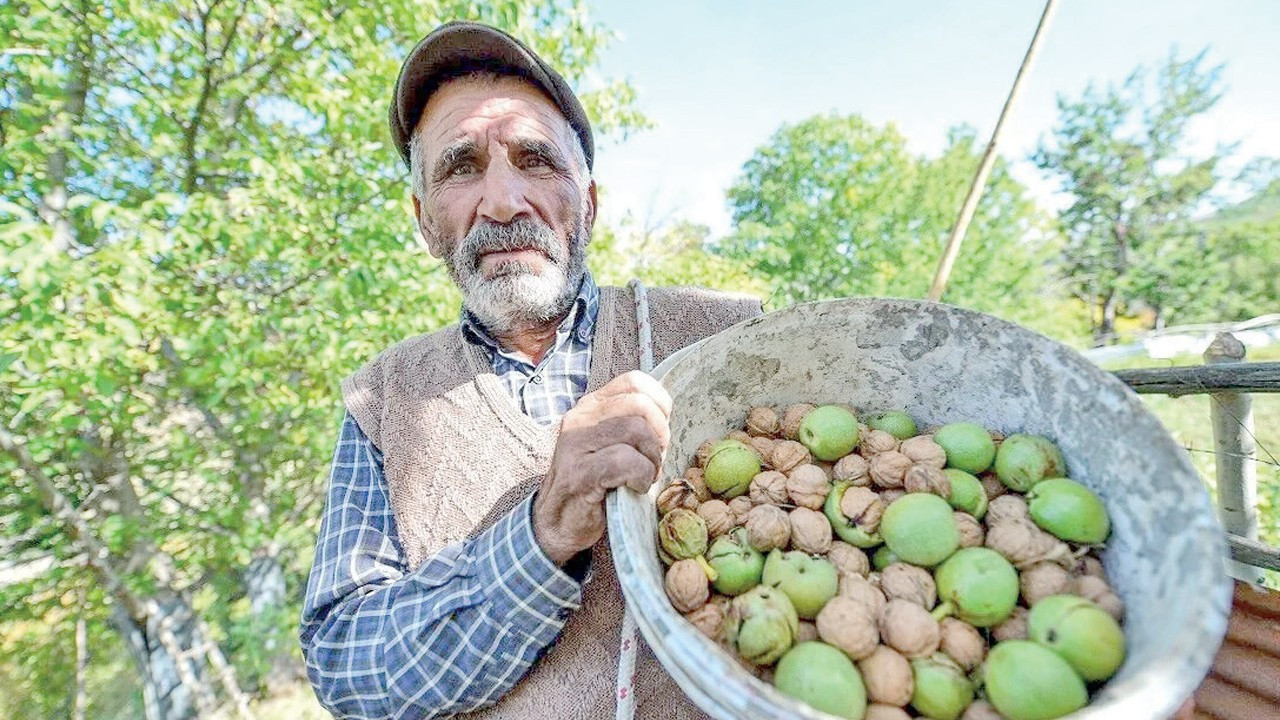
Harvest follows a frost-hit season
Turkey’s 2026 walnut harvest has begun with regional production prospects diverging and the market watching whether the new crop can ease domestic supply pressure. The season follows a sharp contraction in 2025, when frost and other weather conditions damaged orchards in several producing areas.
According to Turkish Statistical Institute data cited by DÜNYA, national walnut production fell by 38.2% year on year in 2025. Output declined from 426,000 tonnes in 2024 to approximately 263,000 tonnes. The reduction interrupted a longer period of expansion: data from the Ministry of Agriculture and Forestry’s TEPGE institute show that walnut-growing area increased by 156% between 2014 and 2024, while production rose by 135%.
Regional forecasts point in different directions
Early reports from producing regions do not present a uniform recovery. In Niksar, a district of Tokat province known for its geographically indicated walnut, the 2026 crop is expected to reach about 2,000 tonnes. Local producers say yields and quality are better this season in orchards that suffered from adverse weather last year.
Kahramanmaraş has a much larger projected crop of around 45,000-50,000 tonnes. Harvesting will continue across production areas during October, making realized volumes and commercial quality central to the market outlook. Growers’ immediate concern is whether the crop can be sold at prices that reflect its value after the previous season’s frost losses.
Consumption keeps the market dependent on imports
Expansion of orchards has not eliminated Turkey’s supply deficit because domestic walnut consumption remains high. TEPGE data put total consumption at 427,000 tonnes in the 2023/24 season, equivalent to 5 kilograms per person. The country’s self-sufficiency ratio was calculated at 80%, indicating a continuing role for imported walnuts in balancing the market.
A separate assessment by the Walnut Producers Association, based on USDA data, forecasts Turkish production at about 47,000 tonnes in 2025/26 and domestic consumption near 137,000 tonnes. It expects imports to cover a substantial part of the shortfall. These figures differ markedly from the national production and consumption series cited above, so market participants need to consider the respective datasets when assessing supply. Under either measure, however, the available figures point to an import requirement.
Prices vary by origin, quality and sales volume
Initial price indications show a wide regional range. In Niksar, the expected 2026 price is 200-250 lira per kilogram. New-crop Maraş walnuts are selling at around 300 lira per kilogram in Kahramanmaraş, while a wholesale listing in Uşak offered in-shell walnuts at 135 lira per kilogram.
DÜNYA notes that prices vary according to variety, quality, size and transaction volume. That makes direct comparisons between the regional quotations difficult, but the range illustrates how origin and product specifications shape the domestic market. As harvesting advances, actual output, grading results and buyer demand will determine whether prices converge or remain segmented. The final size of the 2026 crop will also influence how much Turkey must rely on imports to meet consumption after last year’s losses.