Tunisia’s power outages expose grid fragility as heat hits farms and businesses
Repeated power cuts during an exceptional heatwave have exposed Tunisia’s limited generation reserve, aging grid and dependence on natural gas. Poultry farms, food businesses and industrial workshops reported losses as temperatures exceeded 48°C in several governorates.
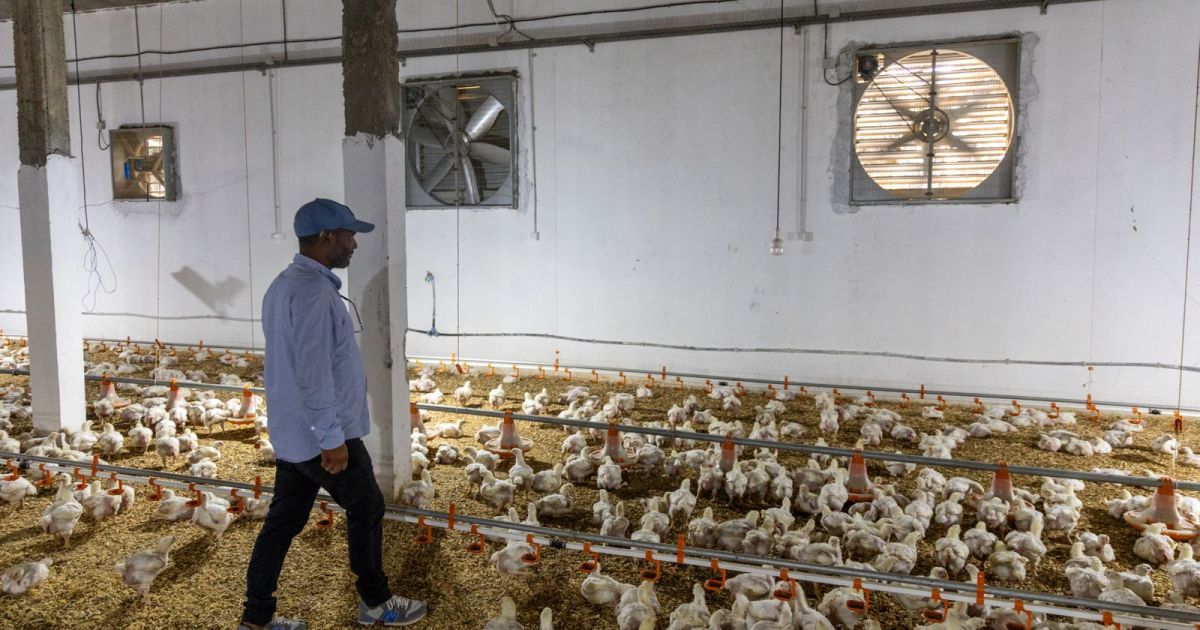
Heatwave turns power cuts into a farm crisis
Repeated electricity outages during an exceptional heatwave have exposed weaknesses in Tunisia’s power system, disrupting poultry farms, shops, restaurants, bakeries and industrial workshops. Al Jazeera reported that temperatures exceeded 48°C in several governorates as intensive air-conditioner use pushed electricity consumption to record levels. The Tunisian Company of Electricity and Gas, known as STEG, said the cuts were intended to protect the national grid from a complete collapse.
The consequences were particularly severe for modern poultry farms, where ventilation, temperature control and the distribution of water and feed depend almost entirely on electricity. Poultry farmer Moncef Mechergui said he lost more than 90% of a flock of about 10,000 chickens at his farm in Bizerte after an outage stopped ventilation, cooling, water and feed systems. Veterinarian Hamza Bouchrit told Al Jazeera that fast-growing broilers produce substantial heat and require continuous ventilation, making even a short interruption dangerous during periods of extreme temperature. No official nationwide estimate of agricultural losses has been published, but industry representatives identified Bizerte and Zaghouan among the hardest-hit governorates.
Demand is outpacing available capacity
Energy expert Charfeddine Yacoubi said the heatwave was the immediate trigger rather than the sole cause of the crisis. Record temperatures in mid-July lifted peak demand beyond the country’s available production capacity, while deteriorating generation and transmission infrastructure and delayed maintenance made the network more vulnerable. The Tunisian Observatory of Energy and Mines says electricity demand has been growing faster than generation capacity for several years. Major capacity additions have not been recorded since 2022, reducing the reserve margin available during summer peaks.
Electricity production nevertheless increased by 6% year on year in the first five months of 2026 to 7,506 GWh, according to observatory data. Output for the domestic market rose by 4%, but electricity imports still covered about 9% of domestic requirements. STEG accounted for 91% of national generation, while renewable energy supplied only 9%, despite government plans to expand it. Tunisia also generates about 92% of its electricity from natural gas. Declining domestic gas production has increased reliance on imports, particularly from Algeria, linking power-system security more closely to fuel availability and import costs.
Debt constrains investment as compensation claims rise
STEG’s financial position limits its ability to add plants, modernize the grid and complete new projects. Its debt reached 7.36 billion Tunisian dinars ($2.49 billion) by June 2026, while unpaid receivables stood at about 6.06 billion dinars ($2.05 billion). The combination of heavy debt and uncollected bills leaves less room for the generation, transmission and distribution investment needed to manage rising peak demand.
The outages also damaged household appliances and disrupted refrigeration and continuous production at commercial premises. Dozens of residents visited STEG offices during the height of the crisis to seek compensation. Director-General Fayçal Trifa said the company would compensate eligible customers under established procedures, including submission of an appliance purchase invoice or a repair invoice documenting the fault and its cost. Specialists cited by Al Jazeera said reducing the risk of recurring shortages will require faster construction of generation projects, rehabilitation of transmission and distribution networks, improvement of STEG’s finances, accelerated solar and wind development, and measures to moderate consumption during peak periods.