Thailand Secures Agreement to Supply 10,000 Tonnes of Bananas to Japan
Thai exporters and Japanese buyers have signed an agreement covering 10,000 tonnes of Thai fragrant bananas. The initiative aims to improve production and quality control while building Thailand’s long-term position in Japan’s import market.
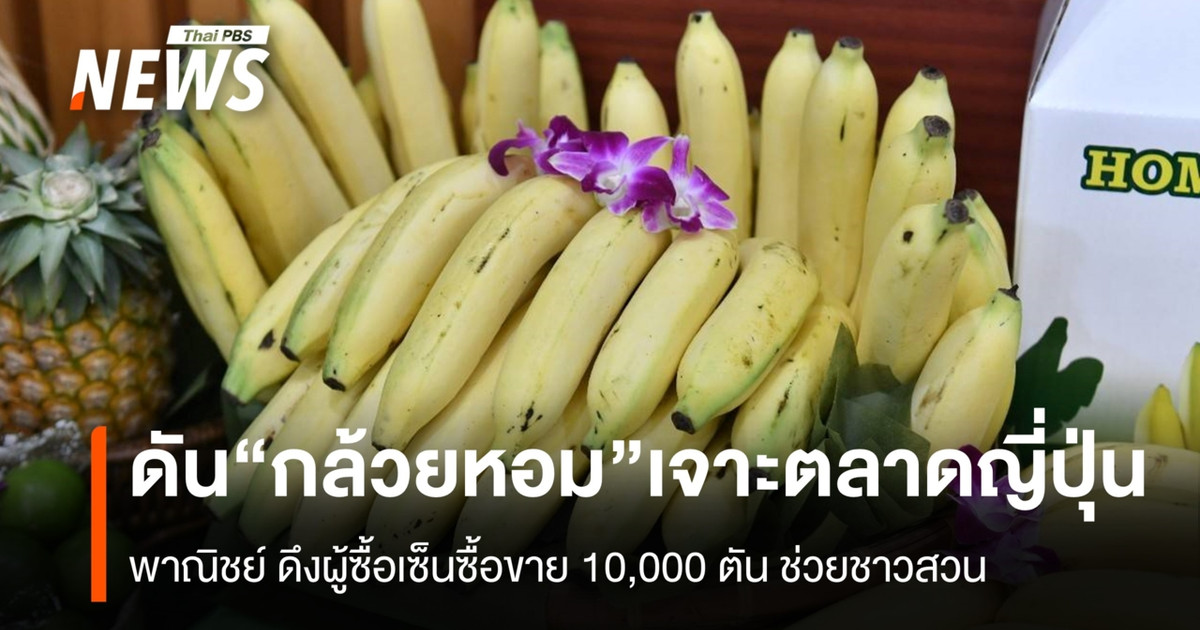
Exporters and buyers sign 10,000-tonne agreement
Thai exporters and Japanese buyers have signed a memorandum of understanding covering the sale of 10,000 tonnes of Thai fragrant bananas to Japan, Thai PBS reported on August 30, 2026. The agreement followed trade negotiations involving a Japanese buyer delegation, Thai businesses and farmers.
Thailand’s Department of International Trade Promotion organized the negotiations and signing under its 2026 project to develop Thai agricultural products and increase their value in the Japanese market. Surintr Sunthornsan, deputy director-general of the department, said the initiative was designed to promote Thailand’s banana industry in Japan.
The report did not identify the participating companies or specify the value, delivery schedule, contract duration or pricing mechanism. The memorandum nevertheless provides a defined volume around which exporters, growers and logistics providers can organize production and shipments.
Quality control will determine market access
Japan continues to require large volumes of imported bananas, while Thailand has the capacity to produce the fruit, according to the department. Its program connects that demand with efforts to improve the capabilities of Thai farmers and agricultural businesses.
The work includes transferring knowledge on cultivation, quality control and management across the supply chain. These measures are intended to help Thai output meet Japanese buyers’ requirements consistently. For exporters, the challenge extends beyond producing sufficient volume: fruit must arrive with the required appearance, maturity and quality after handling and transport.
Thai authorities see fragrant bananas as a product with potential in premium segments because of their quality and taste. A premium position could distinguish Thai supplies in a market with sustained import demand, but establishing it will depend on uniform standards across farms, packing operations and export channels.
Deal offers a base for longer-term expansion
The department described the agreement as a concrete result of cooperation between the Thai and Japanese private sectors. It expects the arrangement to strengthen the Thai banana value chain, raise the value of exports and expand Thailand’s share of Japan’s agricultural market. Farmers and other businesses could benefit if the initial volume leads to recurring orders.
The 10,000-tonne commitment is therefore both a sales opportunity and a test of execution. Thai suppliers will need to coordinate production, grading, packing and delivery so that quality remains stable across the agreed volume. Japanese buyers, meanwhile, gain an additional supply relationship for a fruit that the country imports in consistently high quantities.
Long-term market gains are not guaranteed by the memorandum alone. The source provides no benchmark for Thailand’s current share of Japanese banana imports and no target for future shipments. The commercial significance will become clearer when delivery timing, prices and repeat purchasing are established. Successful fulfilment would give Thai producers evidence that they can serve demanding overseas buyers at scale and provide a platform for further negotiations in Japan.