Thailand develops premium rice value chain to raise farmer income and strengthen market positioning
Thailand’s Department of Internal Trade is developing a premium rice program covering production, milling, branding and market access. Pilot operations in Roi Et and Khon Kaen show how cooperatives can retain more value while preparing for the 2026/27 main-crop harvest.
Program targets value beyond the farm gate
Thailand’s Department of Internal Trade is advancing a high-quality rice development program known as “Khao Praneet,” or refined rice, seeking to raise farmer income by creating more value from existing production. According to Thansettakij, the initiative covers the entire chain, from seed selection, soil and water management and cultivation to milling, processing, packaging, branding and market access.
วิทยากร มณีเนตร, director-general of the department, said each production area should develop rice with a clear identity, documented characteristics, recognized standards and a defined market. The policy follows a market-led approach supported by data and innovation. Instead of selling rice mainly as an undifferentiated raw material, participating communities are expected to develop products suited to premium and specialist consumer segments.
Roi Et and Khon Kaen provide operating models
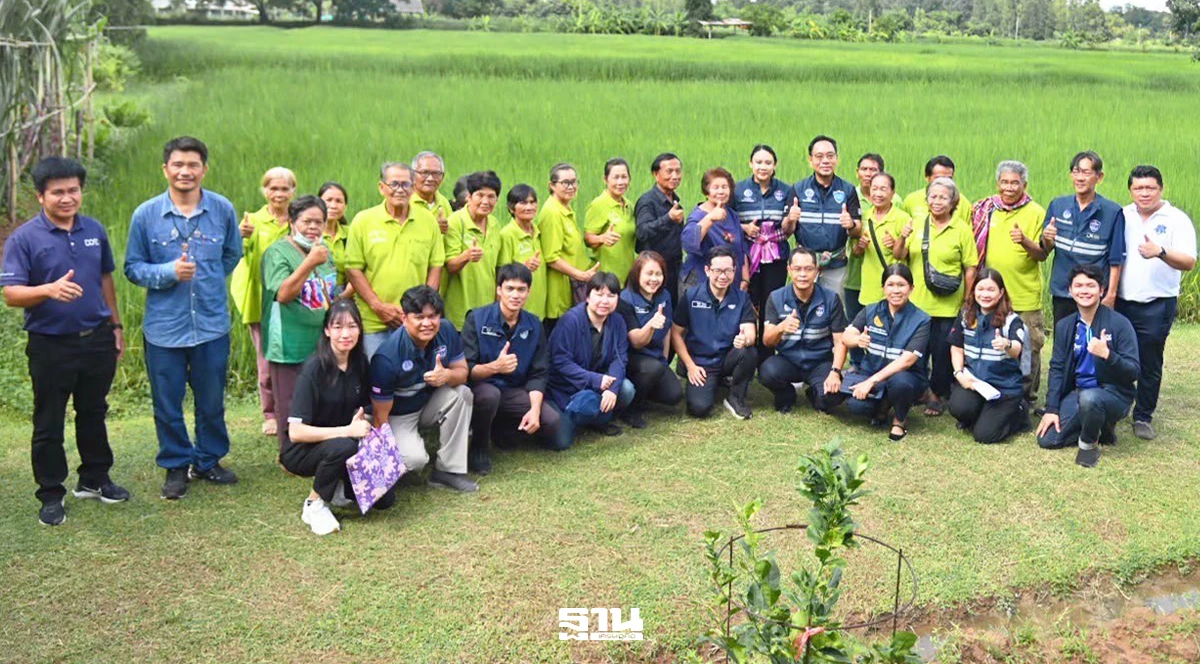
Officials inspected potential model sites in Roi Et and Khon Kaen on 17–18 September 2026. In Roi Et, สหกรณ์การเกษตรเกษตรวิสัย จำกัด (สาขานกเหาะ) operates a mill with capacity of 120 tonnes per day, a rice-quality improvement facility and an ISO- and HACCP-certified packaging room. This infrastructure allows the cooperative to process jasmine rice into premium grades and build its own brand for domestic and international markets.
In Khon Kaen, วิสาหกิจชุมชนกลุ่มแปรรูปผลผลิตทางการเกษตรบ้านโสกจาน links community-level cultivation with soil development, water management, mixed farming, milling and processing. Its community mill enables farmers to aggregate production and control quality themselves, reducing reliance on intermediaries and allowing paddy to be sold as milled rice or developed into higher-value products.
The Khon Kaen operation also uses an underground water-bank system and combines rice cultivation with vegetables and livestock. The department regards this as evidence that premium positioning begins with farm and resource management rather than only with milling. A more diversified production base can improve land use and reduce farmers’ exposure to crop-related risks.
Standards, by-products and harvest financing
The next challenge is converting measurable quality into higher market returns. The department plans to compile systematic information on rice varieties, distinctive traits, nutritional value and local origin stories, then match those attributes with demand. It also intends to develop a “Khao Praneet” mark as a signal that production and processing meet defined quality standards.
Circular production is another part of the program. Straw can be compressed, husks used as fuel or biomass energy, by-products directed into animal feed, and rice bran and broken rice processed into other goods. These uses are intended to reduce waste and production costs while adding revenue streams for farmers and processors.
The value-chain initiative will run alongside preparations for a large volume of 2026/27 main-crop rice expected to enter the market from November. Thansettakij reported that the department is preparing a credit program to delay paddy sales and another financing scheme enabling farmer institutions to collect rice and add value. The National Rice Policy and Management Committee approved the measures on 11 June 2026; they are due to proceed to the Ministry of Finance and the cabinet for consideration.