Thailand says US feed-corn agreement is private-sector deal, not government commitment
Thailand’s government says Commerce Minister Suphajee Suthumpun did not sign an agreement committing the state to import US feed corn. The arrangement covers a planned private-sector purchase of 1 million tonnes, subject to quotas, import controls and safeguards for domestic farmers.
Government rejects claim of state import commitment
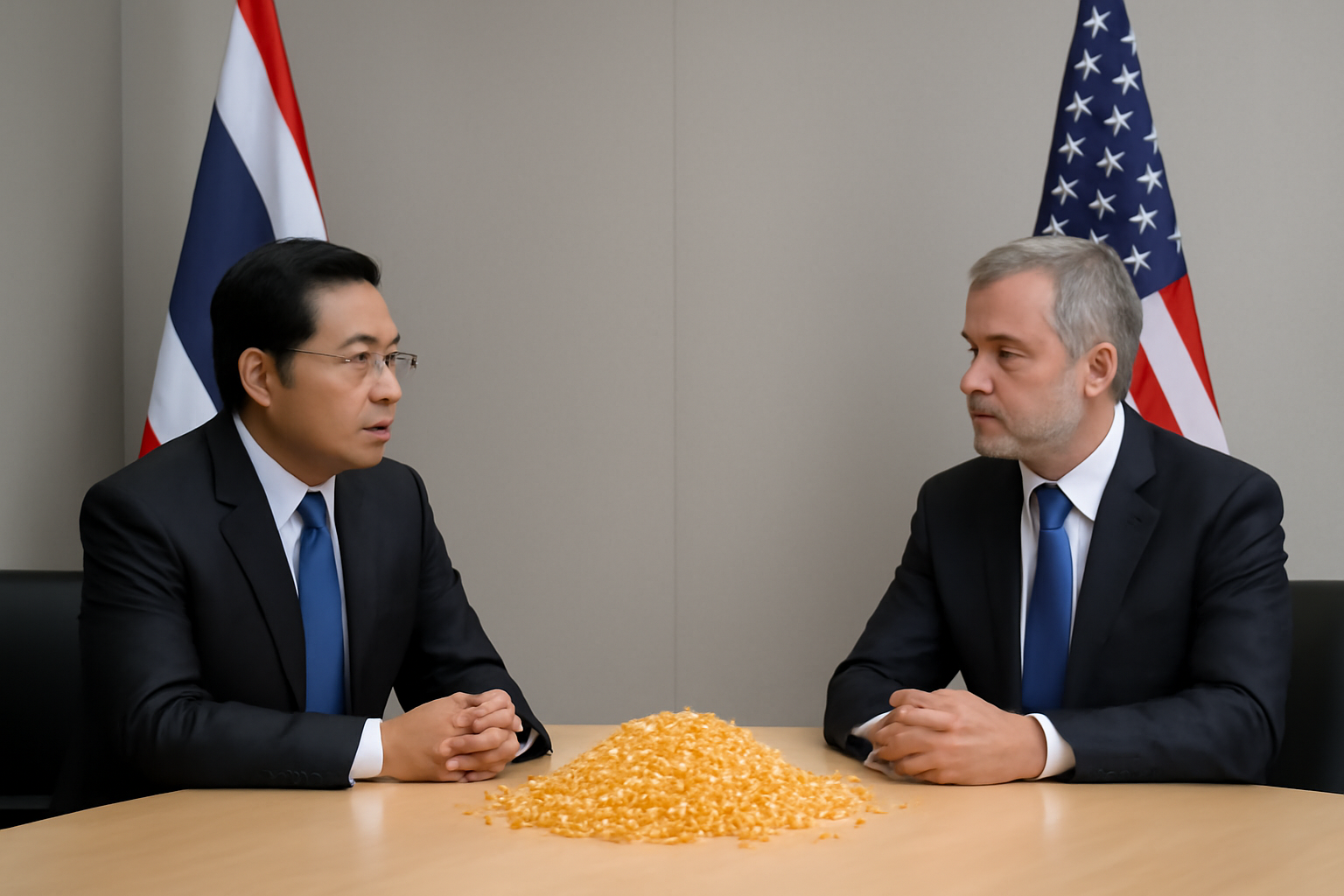
Thailand’s government has clarified that Commerce Minister Suphajee Suthumpun did not sign an agreement committing the government to import feed corn from the United States. The planned transaction is an arrangement between Thai and US private companies, while any shipments must comply with Thailand’s import rules and measures designed to protect domestic farmers.
The clarification addresses concern among Thai corn growers that the agreement could bring additional foreign grain into the country and depress prices. According to the Commerce Ministry, representatives of the Thai Chamber of Commerce, the Federation of Thai Chambers of Commerce, the Royal Thai Embassy in Washington and the ministry attended an early-May 2026 signing ceremony as witnesses. Their presence did not turn the private memorandum into a government purchase commitment.
One-million-tonne plan addresses domestic shortfall
The private-sector plan covers 1 million tonnes of US feed corn. Thai PBS reported that Thailand consumes about 9 million tonnes of feed corn but produces only 5 million tonnes domestically, leaving a gap of approximately 4 million tonnes. The livestock and feed industries currently cover that deficit through substitutes such as broken rice, rice bran and cassava chips, as well as imports from ASEAN countries and other neighboring suppliers.
The Commerce Ministry says diversification into US corn is intended to reduce the risk of raw-material shortages and support Thailand’s poultry, egg, pig, aquaculture and processed-meat industries. Those sectors need predictable feed supplies for domestic sales and exports. The Thai Chamber of Commerce has likewise argued that the planned volume forms part of Thailand’s existing import requirement rather than replacing local production.
Quotas, tariffs and traceability remain in force
The transaction does not give private buyers unrestricted access to the Thai market. Imports must remain within the applicable government framework, including timing and volume controls. The Commerce Ministry says corn entering above the 1-million-tonne quota would face a tariff of 72% plus an import fee of 180 baht per tonne, making excess shipments less competitive against domestic feed materials.
Environmental conditions also apply. Since January 1, 2026, imported feed corn must carry documentation showing that it comes from burn-free cultivation and must include production-origin information allowing traceability. These requirements have reduced some traditional supply options, while higher costs for alternative ingredients, including wheat and soybean meal, have increased pressure on feed manufacturers to secure additional sources.
Farmer impact will depend on implementation
The central issue for growers is therefore not whether the memorandum itself obliges the government to buy US corn, but how the authorities schedule and supervise actual imports. Shipments arriving during the domestic harvest could weigh on farmgate prices, while tightly managed arrivals could help feed producers cover the structural supply gap without displacing Thai output.
The ministry says it will coordinate with agricultural groups and related industries, including the rice-milling sector, because cheaper imported corn could also affect demand for rice bran and broken rice. The policy test will be whether the government can keep feed costs competitive while enforcing quota, traceability and seasonal safeguards across the full supply chain.