Thailand Moves to Upgrade Cassava Chain Toward Value-Added, Net-Zero Markets
Thailand's Department of Foreign Trade is pushing to raise the value of the country's cassava industry across the entire supply chain, business daily Prachachat reported. The initiative targets products suited to net-zero markets and follows pressure on the sector from production problems, weather and geopolitical factors. No budget, volume targets or timeline have been disclosed.
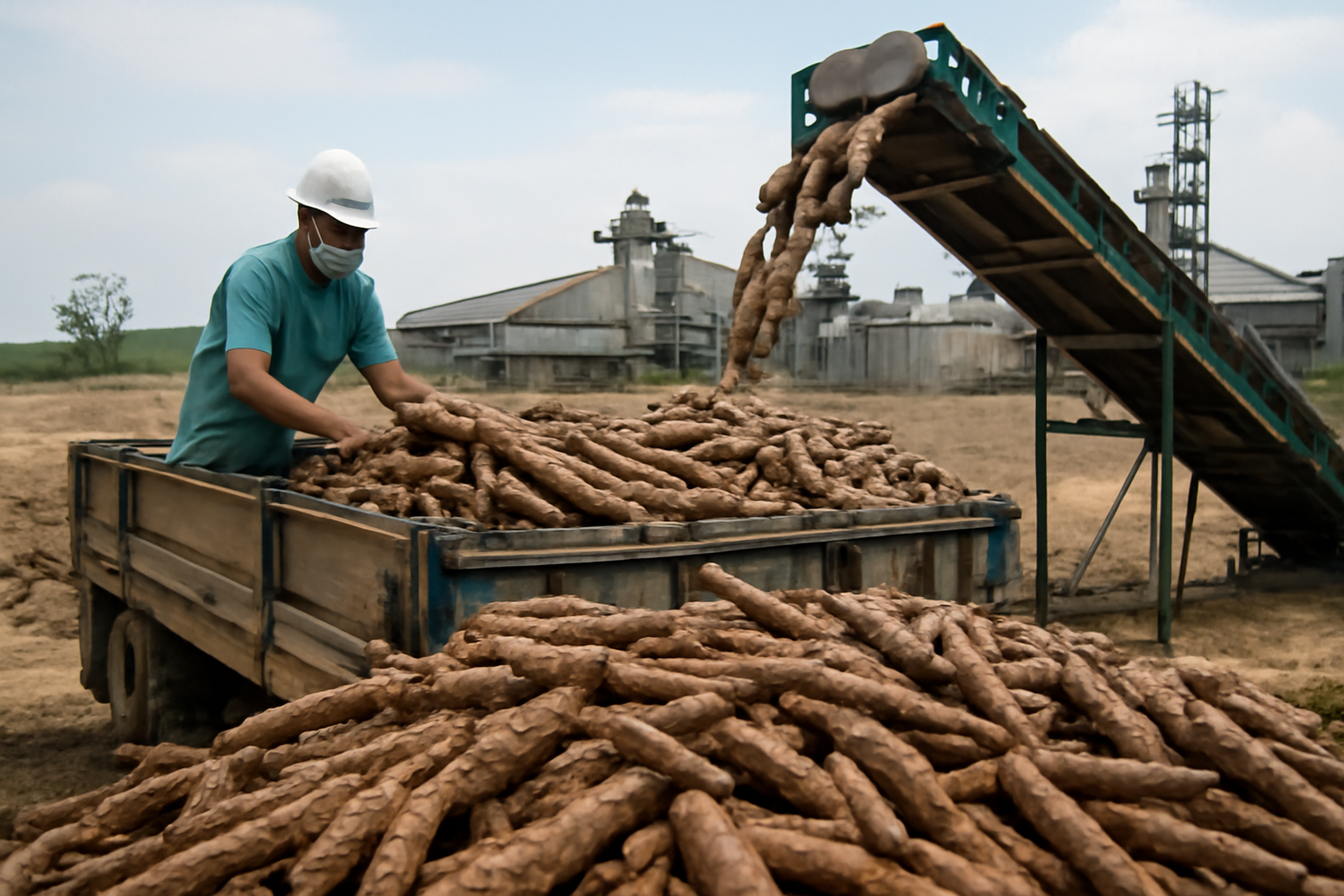
Thailand's Department of Foreign Trade is pushing to raise the value of the country's cassava industry across the whole supply chain, business daily Prachachat reported. The initiative is oriented toward products that can be sold into net-zero markets, and follows a period in which the sector has come under pressure from production problems, weather conditions and geopolitical factors.
A chain-wide approach
The department, an agency of the Ministry of Commerce, is treating the work as a chain-wide exercise rather than a factory-level one, according to Prachachat. A cassava chain begins with smallholder root growers and runs through chipping and drying yards to starch mills and downstream converters. Starch content and post-harvest handling at the farm gate set the ceiling on what processors can extract, which is why upgrade programmes confined to the processing end tend to stall against limits created upstream.
Prachachat's report does not attach figures to the plan. No budget, target volumes or completion date are given, and no list of priority products has been published. That leaves the direction clear and the mechanics open: whether support arrives as farm-level agronomy work, processing incentives, certification infrastructure or export promotion has not been specified.
Output, weather and geopolitics
The report identifies three sources of pressure bearing on the industry:
- Production problems, which weigh on both the volume and the quality of roots reaching mills.
- Weather conditions, the dominant variable in a root crop whose planting and harvest windows, yields and starch content all move with rainfall.
- Geopolitical factors, which affect demand, freight and the terms on which Thai product reaches buyers.
Why net zero enters the calculation
Cassava sits at the junction of food, feed, fuel and materials. Native and modified tapioca starch feed food processing, paper and textile manufacturing, while the same raw material supports fuel ethanol and bio-based plastics. As industrial buyers formalise their own emissions targets, the carbon footprint attached to a consignment becomes a commercial specification alongside price and starch content. Suppliers able to document that footprint reach contracts that undocumented product cannot.
That is the commercial logic behind moving from dried chips and native starch toward modified starch, bio-based materials and other processed goods. Higher-value output raises the revenue extracted from each tonne of roots and reduces exposure to the raw-commodity price cycle, which in cassava has historically been volatile and tightly linked to buyer demand.
What to watch
For processors, the practical questions are whether upgrading is financed and whether the resulting product earns a premium. Modified starch and bio-based material lines require capital, technical staff and stable feedstock quality. Smaller chipping and drying operations may not clear that threshold, and consolidation in the middle of the chain is a plausible consequence of any serious value-added push.
For growers, the test is whether farm-level yields and starch content improve, since a policy aimed at downstream value does not by itself address the production problems Prachachat cites. For importers of Thai starch and chips, the near-term signal is whether available specification and supply change. Until the department publishes detail, the plan remains a stated direction rather than a measurable programme, and its effect on trade flows cannot yet be assessed.