Thailand launches trade mission to expand cassava starch exports to the United States
Thailand's Department of Foreign Trade is sending a government-led delegation to Chicago on 15–17 July 2026 to court US buyers of cassava starch. The push leans on a tariff exemption under Annex A of the US Section 301 measures and on the product's Non-GMO and gluten-free profile.
Thailand courts US buyers for cassava starch
Thailand's Ministry of Commerce is stepping up efforts to expand exports of cassava starch to the United States, sending a government-led trade delegation to Chicago as it seeks to convert a tariff exemption into new sales. The Department of Foreign Trade (DFT) said the mission will visit Chicago, Illinois, from 15 to 17 July 2026, targeting the food and beverage industry across the US Mid-West.
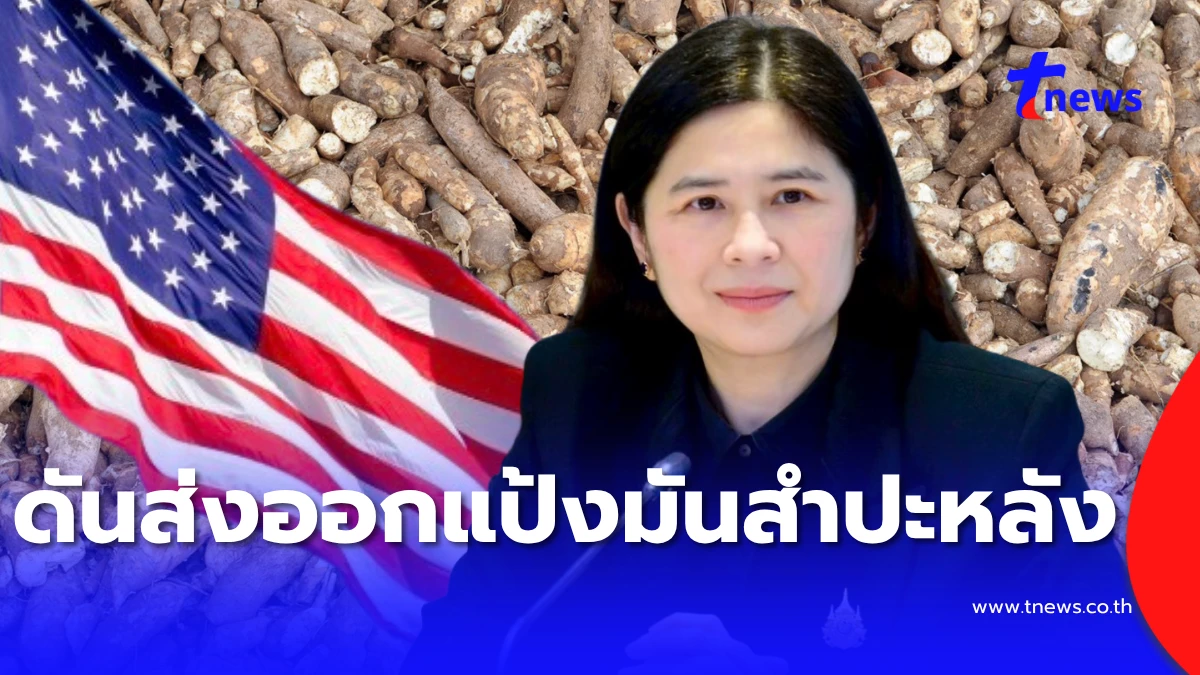
According to tnews.co.th, Nation TV and Naewna, the delegation combines Commerce Ministry officials with Thai academic specialists in cassava starch. Arada Fuangthong, Director-General of the DFT, said the trip aims to reassure American buyers about supply-chain security and to move Thai cassava starch into higher-value US industrial supply chains. The mission follows the market diversification policy of Deputy Prime Minister and Commerce Minister Supajee Sutthamphan, which pairs the defence of existing markets with the opening of new ones in North America.
Tariff exemption underpins the push
The central argument is a competitive edge on duties. The DFT said Thai cassava starch is exempt from tariffs under Annex A of the US Section 301 measures, which it presented as evidence that American industry values the Thai raw material for domestic production. Officials framed the exemption as a durable advantage over rival suppliers as they seek to lock in demand from US food and beverage manufacturers.
Beyond price, the DFT is marketing the product on quality. It described Thai cassava starch as a premium, safe raw material that is Non-GMO and gluten-free, aligning with US demand for clean-label ingredients. Those attributes, officials said, fit current global consumption trends and the requirements of American food and beverage producers.
Meetings and market strategy
In Chicago the Thai delegation is scheduled to meet the Illinois Economic Development Corporation (Illinois EDC) and the Chicagoland Food and Beverage Network (CFBN), both described as key bodies driving the Mid-West economy and supporting firms that seek trade opportunities abroad. The group will also hold talks with a major cassava starch importer that both manufactures and distributes to downstream US industries.
The DFT said the visit should widen market channels for Thai exporters, strengthen Thailand's role as a stable raw-material source in US supply chains, and reduce the risk of depending on a single export market. It cast the mission as a step toward reinforcing the long-term competitiveness of the Thai cassava starch industry on the world stage.
What is at stake for traders
For importers and exporters, the mission signals that Thailand intends to defend and grow its position in the US market rather than rely on its established buyers in Asia. The sources did not disclose export volumes, prices or contract values, and the delegation's outcome will depend on the commercial talks in Chicago. Still, the combination of duty-free access under Section 301 and clean-label positioning gives Thai suppliers a concrete pitch to US food and beverage manufacturers weighing raw-material sourcing.