Thai feed mills commit to buying 7,400 tonnes of burn-free maize at a premium
Thailand’s Commerce Ministry is matching feed manufacturers with farmer organizations to purchase 7,400 tonnes of maize grown without field burning. Five buyer-seller pairings are planned, with mills paying 0.05 baht per kilogram above the market price.
Five purchasing partnerships
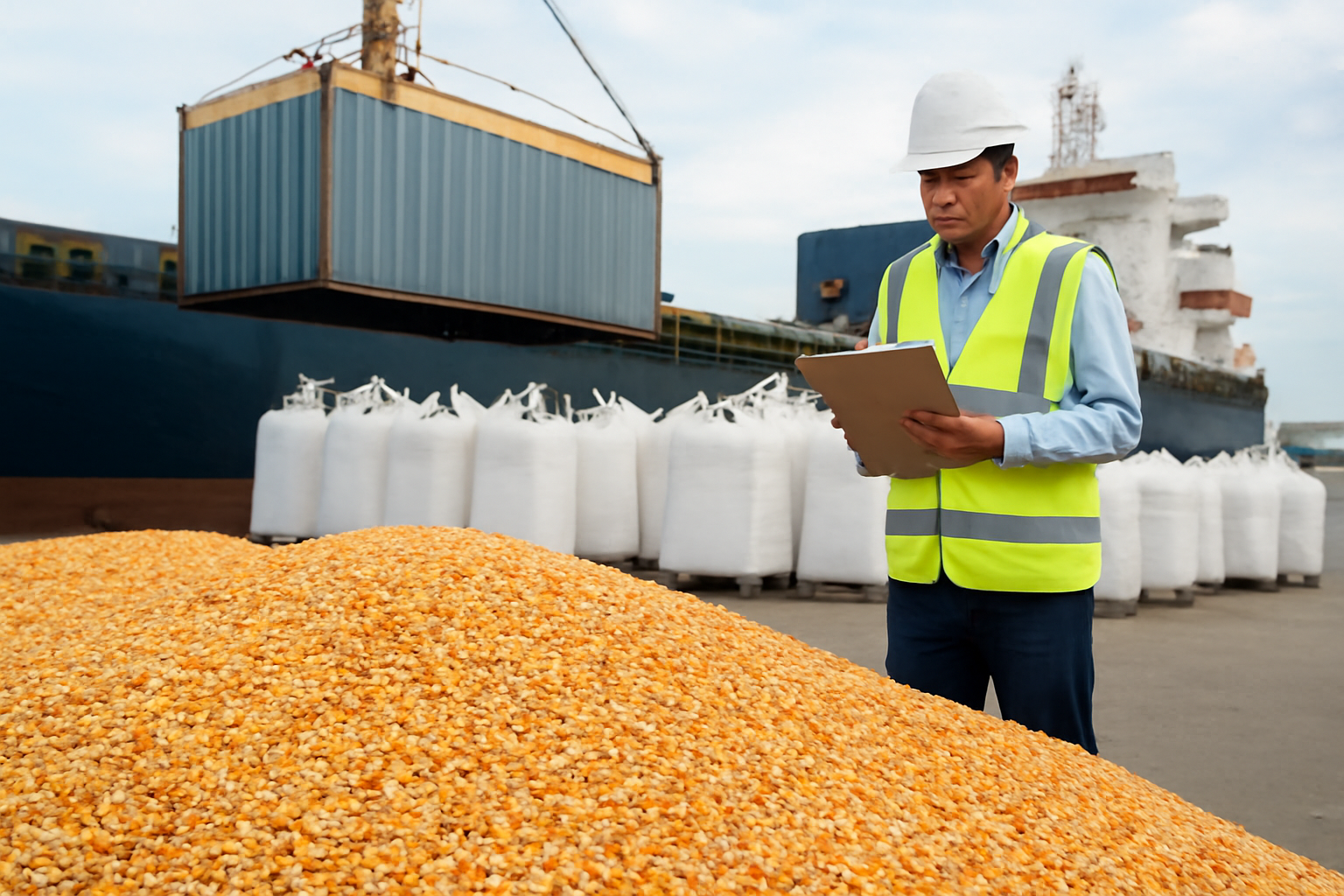
Thailand’s Commerce Ministry is moving ahead with a matching program connecting animal-feed manufacturers with farmer organizations that supply maize from areas where fields are not burned. The initiative covers five buyer-seller pairings and targets purchases of 7,400 tonnes of feed maize.
Participating manufacturers have agreed to pay 0.05 baht per kilogram above the market price. Applied across the entire target volume, that premium would represent an additional 370,000 baht for participating suppliers, although the final amount will depend on the volume actually delivered and accepted. The disclosed terms do not specify the market-price benchmark used to calculate the premium.
A commercial incentive against field burning
The program links an environmental production practice directly to a purchase commitment. Instead of relying only on restrictions or general appeals to stop burning, the arrangement gives participating farmers a defined price advantage for maize produced in burn-free areas. Feed mills, in turn, obtain a designated supply of grain associated with that practice.
The premium is modest at 0.05 baht per kilogram, making the purchase guarantee and access to established industrial buyers potentially as important as the additional price. For farmer organizations, aggregation can help assemble volumes suitable for direct delivery to feed manufacturers. For mills, dealing with organized suppliers may make it easier to coordinate collection and verify that eligible maize comes from the designated production areas.
Limited volume, measurable test
The 7,400-tonne target establishes a concrete starting volume but does not by itself indicate the program’s share of Thailand’s total feed-maize demand or production. No national production figures, delivery schedule, participating company names, farmer groups or provinces were included in the available announcement. The material also does not state whether the maize will be purchased in a single crop period or through several delivery windows.
Other commercial details remain important for assessing the result. These include moisture and quality specifications, transport costs, delivery points, payment terms and the method used to confirm that the maize qualifies as burn-free. The announcement does not provide those terms. Their implementation will determine how much of the stated premium reaches farmers after handling and logistics expenses.
Implications for feed manufacturers and growers
For feed manufacturers, the initiative creates a small but identifiable procurement channel for burn-free domestic maize. The five matches will show whether mills can secure the required quality and volume while maintaining a premium over prevailing market prices. Successful delivery of the full 7,400 tonnes would also provide evidence that farmer organizations can consolidate compliant supply for industrial users.
For growers, the immediate financial benefit is transparent: an extra 0.05 baht for every kilogram accepted under the program. The broader value will depend on reliable purchasing, clear verification and whether similar contracts are repeated or expanded. The first five pairings therefore matter less as a nationwide supply shift than as a practical test of whether environmental conditions can be incorporated into ordinary feed-grain procurement.