Thai farmers oppose amendment of Plant Variety Protection Act over seed-saving rights
The Thai Farmers and Agriculturists Association has come out against a proposed amendment to Thailand's Plant Variety Protection Act B.E. 2542, the law in force since 1999. The group says the revision could weaken farmers' right to save seed from their own harvest and replant it, and is demanding the government state plainly what farmers gain and what they lose. The association is separately pressing for a new round of per-rai relief payments.
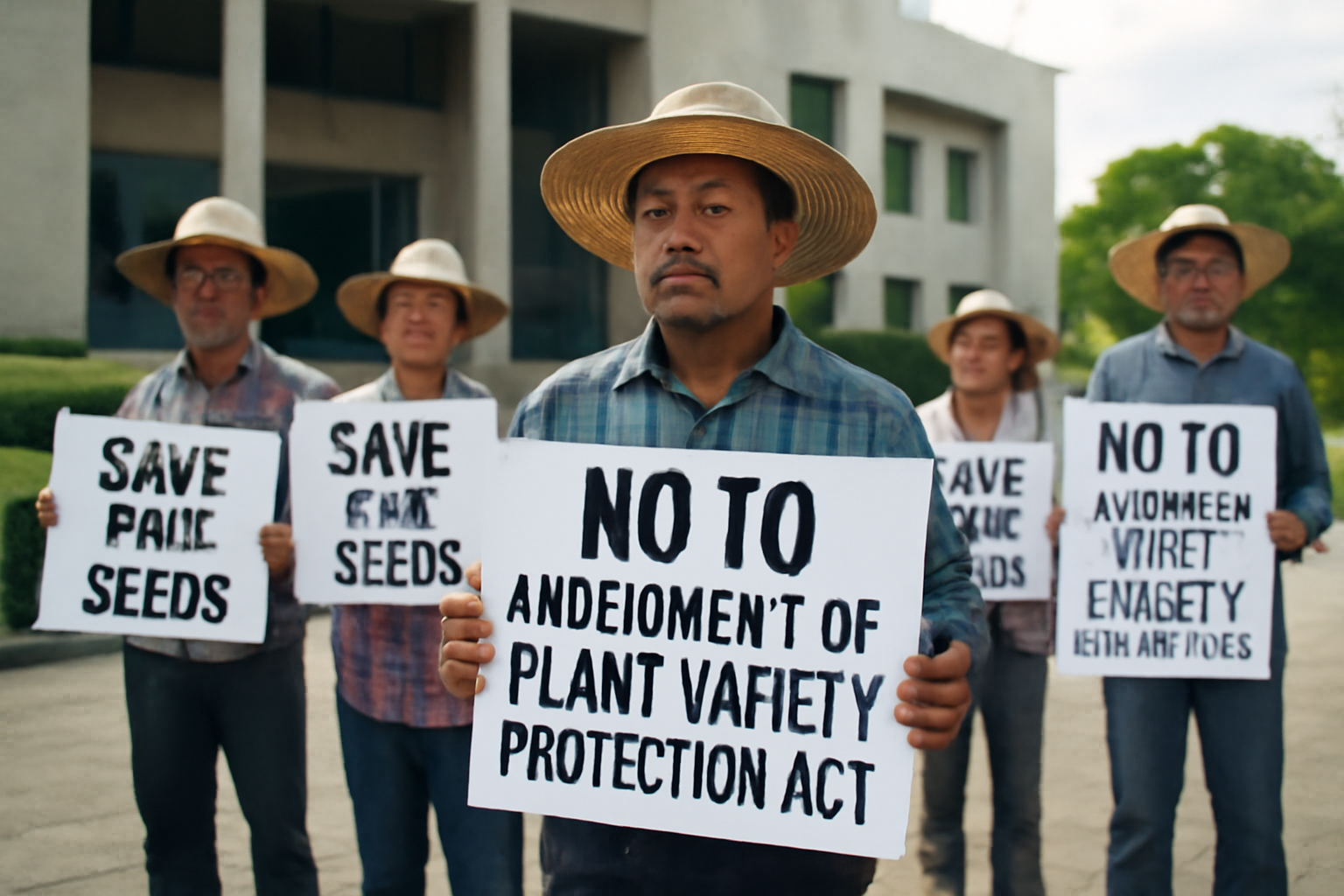
The Thai Farmers and Agriculturists Association has declared its opposition to a proposed amendment of Thailand's Plant Variety Protection Act B.E. 2542, the law that has governed the registration and protection of plant varieties in the kingdom since 1999. The group's central concern, as reported by the Thai business daily Prachachat Turakij, is that the revision could weaken the right of farmers to keep seed from their own harvest and sow it again the following season.
That right sits at the centre of Thai paddy cultivation. Growers who replant saved seed buy less certified seed each cycle, which lowers the cash outlay required before a crop is in the ground. Any legal change that narrows the practice would move part of that cost out of the farm and into the commercial seed supply chain, and it would do so season after season rather than once.
“What do farmers gain, what do they lose”
The association has demanded that the government answer that question directly. According to Prachachat Turakij, the group wants the authorities to set out plainly what paddy farmers would gain and what they would lose under the amended statute before the text advances. The framing matters: the objection is presented as a demand for disclosure and justification, not as a blanket refusal to modernise a law that has stood unchanged for more than two decades.
The objection reported by Prachachat Turakij is pitched at the level of principle rather than at individual clauses. The association has identified seed-saving as the test by which it will judge the amendment, which sets a clear benchmark for the government: whichever other changes the draft contains, the farm lobby's public position will be decided by how the replanting right is treated. That leaves the drafting ministry with a narrow negotiating space on the single provision that carries the most political weight.
A parallel demand for per-rai relief
The same association is pressing a second demand at the same time: a new round of state relief payments calculated per rai of planted land. The rai is the standard Thai land measure, equal to 1,600 square metres, or 0.16 hectares. Per-rai schemes are the established vehicle for direct budget transfers to Thai paddy growers, which makes the unit the reference point for the size of any package that emerges.
The association links the two demands in a single argument:
- Seed is a recurring cash cost that farmers currently manage in part by replanting their own harvested grain.
- Relief payments are a one-off transfer that leaves that underlying cost structure unchanged.
- A legal revision that pushes farmers toward buying certified seed every season would work against the relief being requested.
- The association therefore wants the compensation question and the legal question settled together, before the amendment moves forward.
What is at stake for breeders and the rice trade
Plant variety protection is the legal basis on which commercial breeders recover investment in new varieties. Stronger protection raises the incentive to develop and license improved planting material, including higher-yielding and disease-resistant rice lines; weaker protection keeps the cost of seed low for growers but reduces the commercial return on breeding work and the case for bringing foreign-bred material into the market. Thailand is one of the world's largest rice exporters, and the varieties planted domestically feed directly into the quality grades — fragrant, white and glutinous rice among them — on which the country's export position rests.
For now the dispute is procedural. The amendment has not been enacted, and the association's stated position is that the government must justify the change to the people who plant the seed before it becomes law. How the authorities respond — with a published draft, a formal consultation, or a revised relief package — will determine whether the opposition hardens into a broader campaign or is settled at the drafting stage. Seed companies, rice millers and exporters watching Thailand have the same incentive to see the text, since the treatment of the replanting right will shape both the cost of planting and the commercial value of protected varieties in one of Asia's key rice origins.