Tajikistan’s fruit harvest reaches 326,558 tonnes, including 85,668 tonnes of grapes
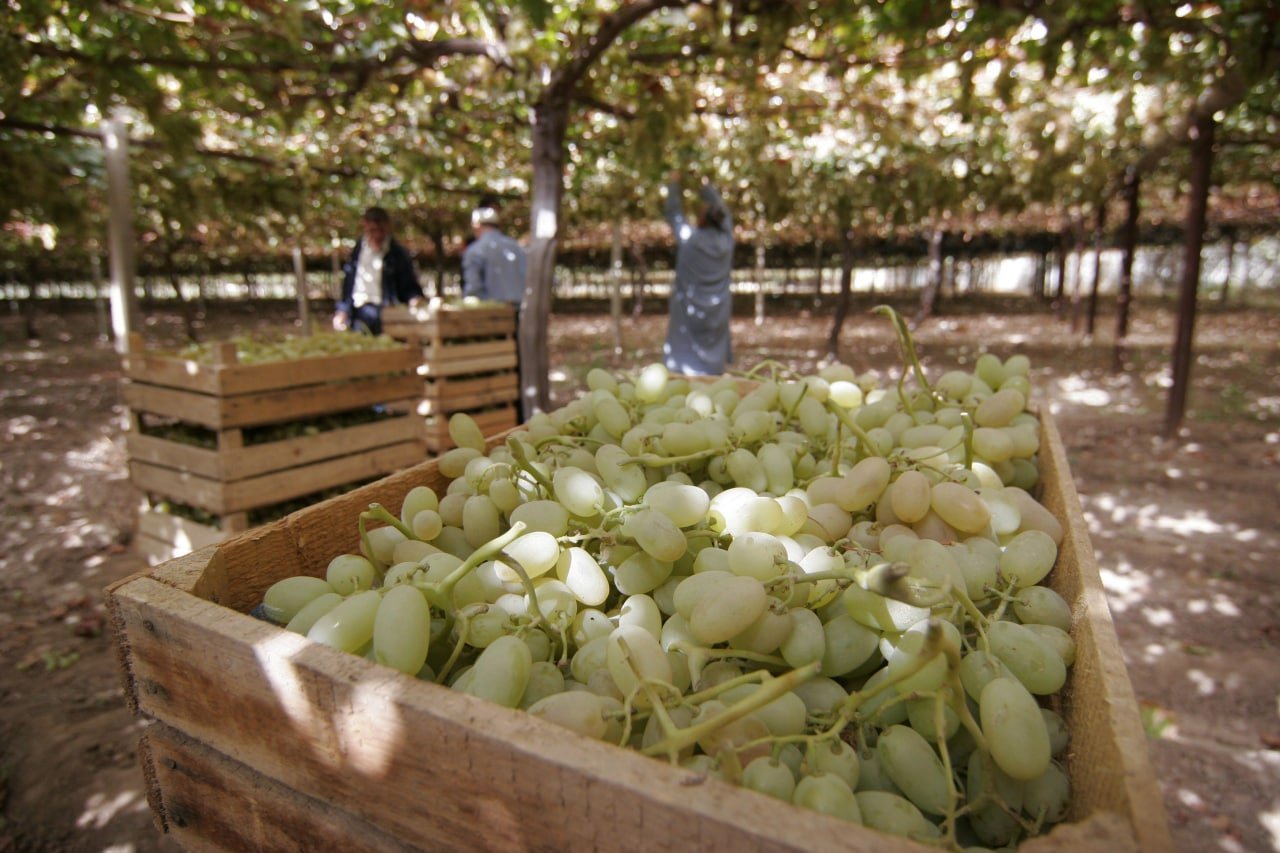
Tajikistan harvested 326,558 tonnes of fruit by September 11, including 85,668 tonnes of grapes. Growers are selling grapes fresh while also placing part of the crop into storage and drying it, although no volume breakdown has been published.
Fruit output passes 326,000 tonnes
Tajikistan’s farms had harvested 326,558 tonnes of fruit by September 11, according to the Ministry of Agriculture figures reported by the Khovar national news agency. Grapes accounted for 85,668 tonnes, or just over one-quarter of the total fruit volume collected by that date. EastFruit also reported the harvest at about 326,500 tonnes, including approximately 85,600 tonnes of grapes.
The figures cover a harvest that was still in progress, particularly for grapes. Khovar reported that growers in some northern villages of the Hissor Valley collect grapes in October, before cold weather arrives. The September data therefore represent an interim measure of seasonal supply rather than a final production result.
Large orchard and vineyard base supports supply
The country has 165,570 hectares of fruit-bearing orchards and 36,435 hectares of vineyards, according to the Agriculture Ministry data cited by Khovar. More than 119,000 hectares of new orchards and vineyards were established during 35 years of independence. The source said this figure was 2.3 times the corresponding 1991 level, reflecting the long expansion of Tajikistan’s permanent-crop area.
Government policy continues to support that development through the Programme for the Development of Horticulture, Viticulture and Citrus Growing in Tajikistan for 2025–2029. Khovar said implementation is intended to increase the vineyard area. For growers and processors, the larger planted base supports fresh-market availability while also providing raw material for drying and other forms of processing.
Grapes split between fresh sales, storage and drying
Grape growers are currently supplying the consumer market, placing fruit into storage and drying part of the crop, Khovar reported. The sources did not provide a tonnage breakdown among these three channels. That missing allocation is commercially significant because the balance between immediate sales and preservation will determine how much fruit reaches the market during the main harvest and how much remains available in winter and spring.
Traditional storage helps extend the sales season without requiring all grapes to be marketed at harvest. Khovar described dedicated rooms known as “angurkhona” in grape-growing communities in the northern Hissor Valley. Bunches are attached to lines suspended from the ceiling after being left in the sun for several hours so that the moist stems can wilt. Specialists cited by the agency said grapes can be kept in such rooms for winter and spring.
Crop diversity serves several market segments
Tajikistan grows early, mid-season, later and wine-grape varieties. Khovar’s list includes white Chillagii, Zarifi and early Hissori among early grapes; several black and white seedless types, white Husayni and Sultoni among other table varieties; and Saperavi, Rkatsiteli, red Muscat, Riesling, Pinot and Aligoté among wine grapes. This diversity gives farms options across fresh consumption, drying, storage and processing.
The harvest has implications beyond short-term fruit availability. Khovar identified horticulture as a source of raw materials for processors, rural employment, food supply and export capacity. With 85,668 tonnes of grapes already collected by September 11 and harvesting continuing in some areas into October, seasonal market pressure will depend on how efficiently growers direct the crop among fresh sales, storage and drying. The published data establish the scale of supply, but not the final harvest or the volumes assigned to each outlet.