Syria holds bread price after 13 September fuel hike as bakeries halt in Hasakah and Qamishli
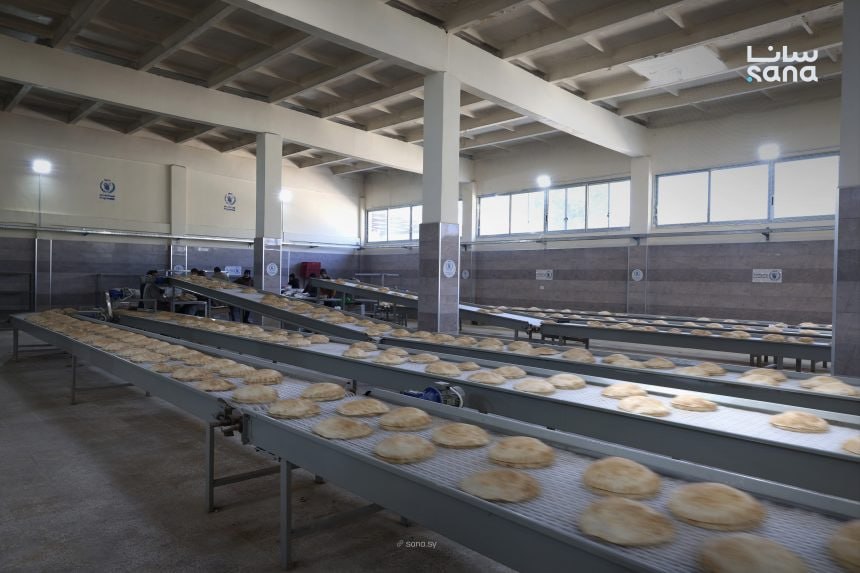
Revised petroleum product prices took effect in Syria on 13 September, lifting diesel to 175 new Syrian pounds per litre while a bundle of subsidised bread stayed at 40 pounds. Dozens of bakeries in Hasakah, Qamishli and the wider Jazira region suspended work. The Ministry of Economy and Industry cut the price of bakery flour from 20,000 to 15,000 pounds per tonne, raising the bread subsidy from 60% to 70%, and set out a plan to upgrade 200 bakeries and build four mills and 17 silos.
Syria's revised petroleum product prices took effect on 13 September, after the Permanent Committee for Determining Petroleum Product Prices approved an increase, according to ANF. The price of diesel rose to 175 new Syrian pounds per litre, Enab Baladi reported, while the price of a bundle of subsidised bread remained at 40 pounds.
The gap between higher fuel costs and a fixed bread price produced the first visible disruption within days. Dozens of bakeries in the cities of Hasakah and Qamishli and their surrounding countryside suspended operations, Enab Baladi reported, while 7al.net described stoppages across the wider Jazira region and a protest gathering in Qamishli.
Why fuel prices moved
The Syrian Ministry of Energy attributed the increase to an exceptional rise in the cost of securing petroleum derivatives on international markets, combined with overhaul works under way at the Banias refinery. The ministry described the adjustment as temporary and said it was intended to keep supplies flowing and maintain the availability of petroleum products on the domestic market.
Thawra linked the renewed focus on fuel pricing to continued volatility in global oil markets and to regional geopolitical and military tensions, citing the Israeli-Iranian war. Reporting on the protests noted that the effect of energy costs has moved beyond filling stations into transport, production, agriculture and the prices of basic goods.
Bread price held, flour subsidy raised
Deputy Minister of Economy and Industry Maher al-Hassan said there would be no change to either the price or the weight of a bread bundle, describing the position as categorical and final, in remarks carried by the Syrian news agency SANA on Monday 14 September 2026 and reported by Al Arabiya and Roayah News.
To offset higher production costs, the ministry reduced the price of flour allocated to bread production:
- flour for bread production cut from 20,000 to 15,000 Syrian pounds per tonne
- the subsidy rate on bread raised from 60% to 70%
- the price and weight of a bread bundle left unchanged
Al-Hassan said consumer protection bodies are monitoring bread production and distribution across the governorates, and that legal action will be taken against any party manipulating the weight or price of a bread bundle. He said there would be no tolerance for attempts to exploit current conditions to raise bread prices illegally, and that oversight of markets and bread distribution outlets would continue.
Milling and storage capacity plan
At an expanded meeting chaired by Maher Khalil al-Hassan with directors of public institutions and of the internal trade and consumer protection directorates in the governorates, the ministry set out a plan to upgrade 200 bakeries and build four mills and 17 silos, presented as a measure to strengthen food security and bring markets under control, according to Ouruba.
The programme targets the parts of the bread chain upstream of the bakery: milling capacity determines how much wheat can be turned into flour domestically, while silo capacity determines how much grain can be held between harvests and how exposed procurement is to timing.
Household spending under pressure
The fuel increase has landed at the start of the winter provisioning season, when Syrian households traditionally stock staple foods. Thawra reported that winter mouneh items are available in markets, but that higher prices for several components and weaker purchasing power have pushed families to recalculate the quantities they usually store, buying only essentials or looking for cheaper alternatives.
For bakeries, the pressure point is that the cost they cannot control, diesel for ovens and for transport, sits outside the flour subsidy. The measures announced so far cut the input cost of flour and leave the retail price fixed, which places the burden of the fuel increase on bakery margins until either fuel prices retreat, as the Ministry of Energy has indicated they may, or further support is extended.