Susanti Megah Expands Salt Processing in Gresik as Raw-Material Supply Remains a Constraint
PT Susanti Megah is developing a salt plant in Gresik, East Java, to increase production capacity and serve domestic demand. Public records list industrial salt capacity of 200,000 tonnes at the Gresik site, but reliable raw-salt procurement remains a central operational challenge.
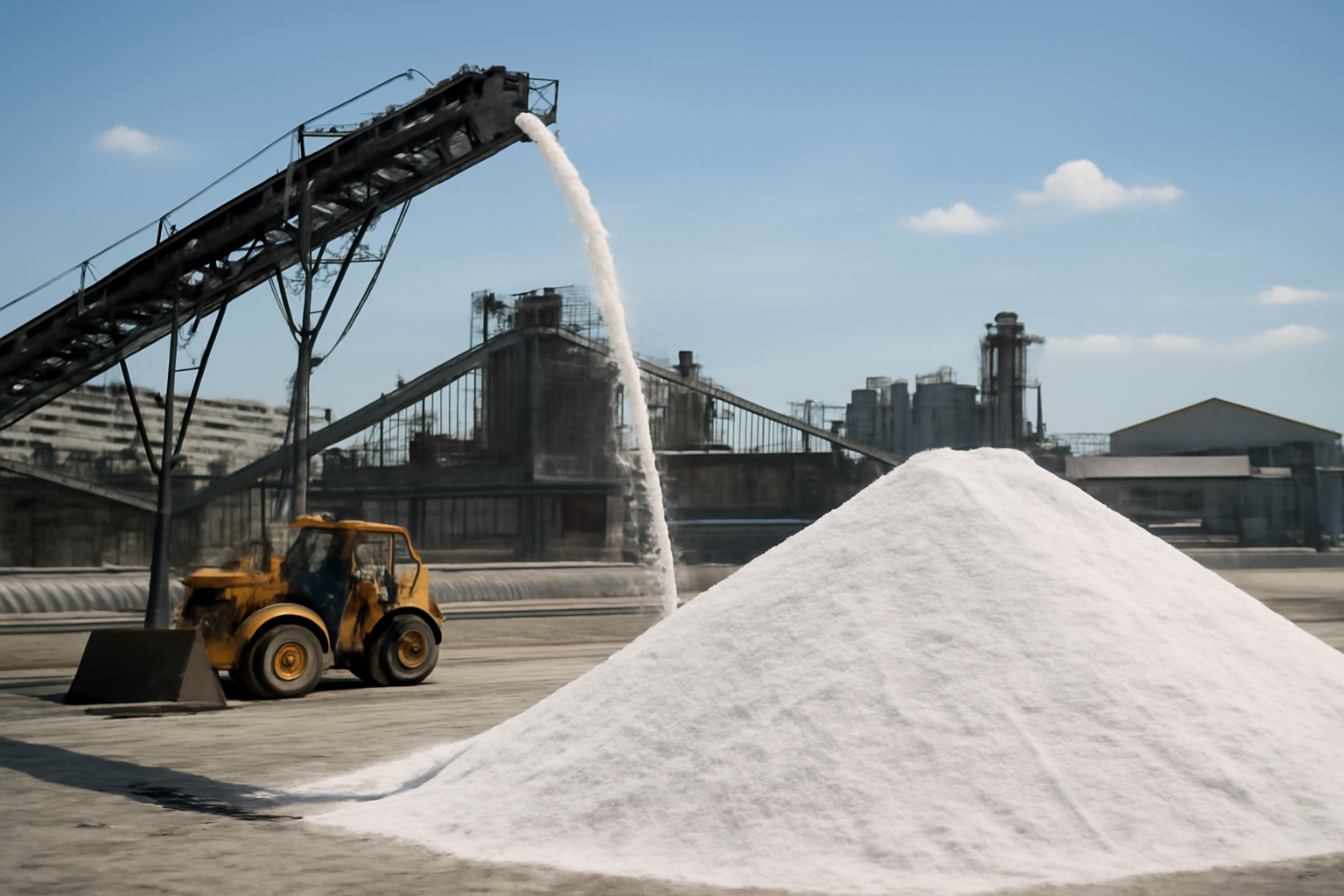
New processing capacity in East Java
PT Susanti Megah is expanding its salt business with a new plant in Gresik, East Java, according to Kanalsatu. The facility is intended to add production capacity and meet demand, although the company still faces a challenge in securing sufficient raw material for processing. The project places additional salt-processing infrastructure in one of Indonesia’s established industrial areas.
A 2023 company directory published by the Gresik regency investment and licensing authority lists PT Susanti Megah’s factory at Jalan Veteran 239 in Segoromadu, Kebomas. The directory records investment of Rp442 billion and production capacity of 200,000 tonnes of industrial salt. The record provides a scale for the Gresik operation, although the available Kanalsatu material does not specify a construction schedule, commissioning date or the incremental capacity attributable solely to the new project.
An established consumer and industrial salt producer
Susanti Megah already processes both consumer and industrial salt. A production study in the repository of Widya Mandala Surabaya Catholic University says the company was established in 1978 and operates a plant on Jalan Dupak in Surabaya. Its consumer products include Cap Kapal, Cap Jempol, Garami and original-equipment-manufacturing salt, while its industrial portfolio includes Jumbo, K1 Cyclone and K1PS.
The university study reports output of 90-100 tonnes per day for consumer salt and 120-190 tonnes per day for industrial salt under a batch-production system. Processing involves sorting, milling, washing, initial drying, mixing with a potassium iodate solution, final drying, screening and packaging. These stages mean that output depends not only on installed machinery but also on a consistent supply of crude salt with suitable quality characteristics.
Raw salt will determine effective utilization
The Gresik investment can increase nominal processing capacity, but its market effect will depend on plant utilization. Kanalsatu identifies raw-material availability as an unresolved challenge. If crude salt deliveries are insufficient or inconsistent in quality, the processor may be unable to operate the new equipment at its rated level. That would limit the additional volume available to food manufacturers, distributors and other industrial buyers.
Susanti Megah has experience handling both local and imported raw salt. Earlier technical material on its production process describes the use of crude salt followed by washing, drying, iodization and packaging. The expansion therefore highlights a broader distinction in Indonesia’s salt market: investment in refining and packaging can be completed independently, but effective production still requires dependable upstream supply. For local salt producers, the new plant may create an additional sales channel if they can meet the processor’s volume and quality requirements. For industrial users, the relevant measure will be stable delivered output rather than headline capacity alone.