Sugar Prices Rise More Than 35% as EU Output Is Forecast to Fall 14.8%
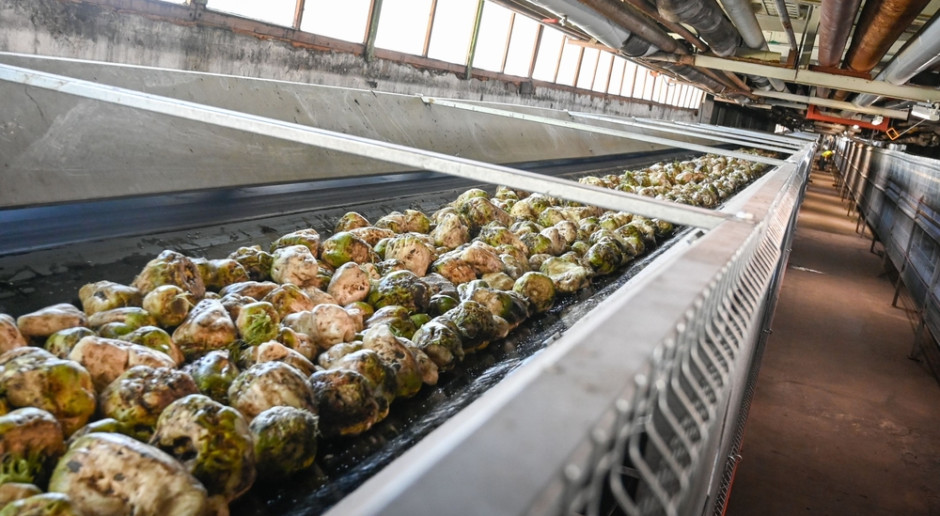
World sugar prices have risen more than 35% since the start of 2026 as the European Commission forecasts a sharp decline in EU production. Poland enters the tighter season with large stocks and a substantial export surplus, while Germany faces the biggest contribution to the EU contraction.
World price returns above 20 cents
Sugar traded at about 20.29 cents per pound on October 5, 2026, according to market data cited by dlahandlu.pl. The quotation gained nearly 2% that day and was more than 35% above its level at the start of the year. Over the previous 52 weeks, the increase exceeded 20%.
The rally marks a clear change from the first part of 2026, when sugar traded at around 14–15 cents per pound. Poland’s Ministry of Agriculture and Rural Development has pointed to a forecast global sugar deficit and lower European Union production as factors likely to influence prices in the coming months.
EU production forecast to lose 2.45 million tonnes
The European Commission expects the EU to produce 14.13 million tonnes of sugar in the 2026/27 season. That would be 2.45 million tonnes, or 14.8%, below the previous season. Production is forecast to fall by 16.2% in Poland, 15% in Germany and 12.8% in France.
Germany is expected to account for almost 28% of the entire reduction in EU output. Reports cited by the Polish agriculture ministry indicate that the German sugar beet harvest could be the smallest since 1990. Drought and high temperatures, particularly in southern Germany, are among the causes, alongside a smaller planted area and crop diseases. The ministry cautioned that weather conditions still make the precise scale of the harvest decline difficult to determine.
A contraction of this magnitude would tighten the regional balance and increase the importance of existing stocks and supplies from outside deficit markets. Food manufacturers will also be watching how quickly the increase in exchange quotations reaches contracted and wholesale sugar prices.
Retail and producer prices still reflect the earlier downturn
The rise in exchange prices contrasts with the trend recently experienced by consumers and producers. From August 2025 to July 2026, retail sugar prices fell by an average of 15.8% in Poland and 5.2% across the EU, according to data cited by the Polish ministry. In July 2026, Polish retail sugar was 16% cheaper than a year earlier, while prices in Germany were 4.6% higher.
EU producers sold white sugar for an average of €508 per tonne in the first half of 2026, down 6.7% year on year. These figures show that the recent commodity rally had not yet reversed the earlier decline throughout the supply chain. Its eventual effect will depend on purchasing contracts, inventories and the size of the 2026/27 crop.
Poland holds a large buffer and remains a net exporter
Poland’s position differs from that of many EU markets because domestic production has exceeded consumption for several years. Sugar stocks reached 1.5664 million tonnes in the first quarter of 2026, up 11.7% year on year. They were 25.7% above the three-year average and 36.6% above the five-year average. In absolute terms, stocks increased by 478,400 tonnes over three years and by 605,400 tonnes over five years, despite stronger exports and reduced imports.
Poland recorded a sugar trade surplus of 857,400 tonnes in 2025, with exports of 961,900 tonnes and imports of 104,500 tonnes. From January through May 2026, imports fell 17.3% year on year to 37,700 tonnes, while exports declined 10.5% to 433,900 tonnes. The ministry said the low volume of imports and Poland’s trade surplus mean imports do not affect domestic sugar prices.
Large inventories give Polish processors and traders more protection than operators in tighter EU markets, although a broad European production decline could support export opportunities and eventually raise replacement costs. The agriculture ministry has also asked Poland’s competition authority, UOKiK, to examine whether the domestic market shows practices that breach fair-competition rules. In its September 9 letter, the ministry said it had not yet received a response.