St. Petersburg wholesale sugar prices jump from 60 to 90 rubles per kilogram in July
Wholesale sugar prices in St. Petersburg rose from about 60 to 90 rubles per kilogram during July, according to market participants cited by Fontanka. Analysts disagree over whether the increase reflects seasonality or expectations of a smaller sugar beet harvest.
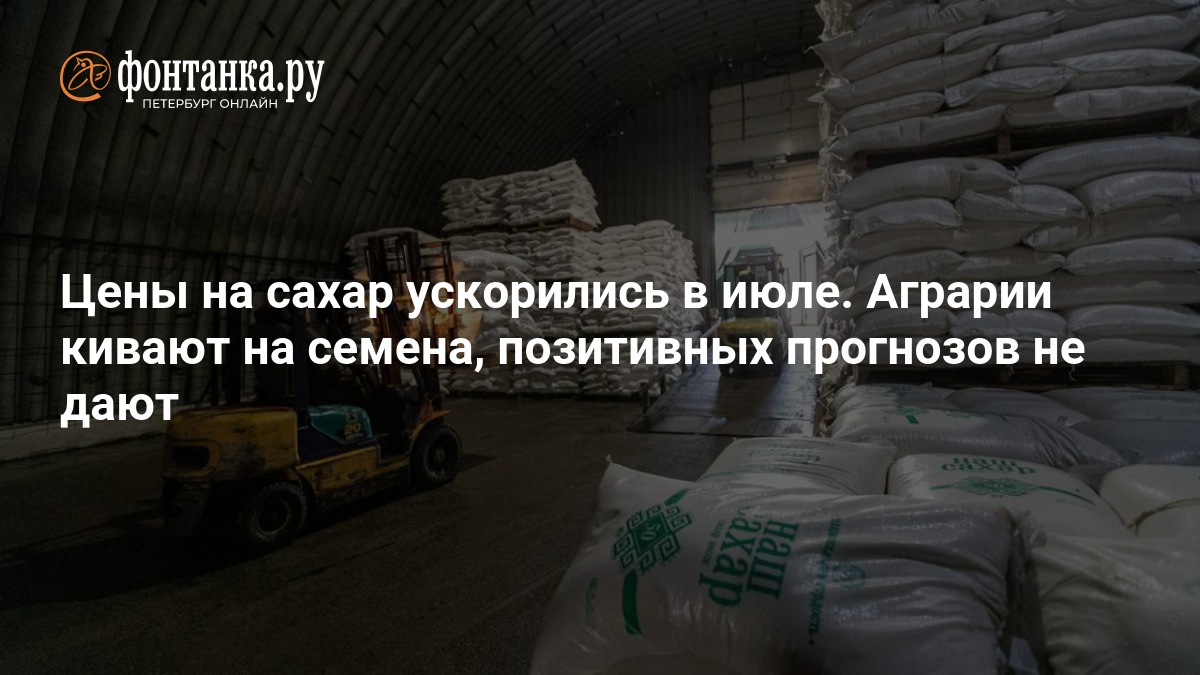
St. Petersburg records a 50% wholesale price increase
Wholesale sugar prices in St. Petersburg rose from about 60 to 90 rubles per kilogram during July, according to market participants cited by Fontanka. That represents an increase of roughly 50% within one month. One wholesale industry source told the publication that the movement was too pronounced to be explained solely by seasonal factors.
Official retail data also show sustained growth. Rosstat recorded sugar at 67.8 rubles per kilogram between December 2025 and February 2026. By July 8, the price had reached 79.79 rubles, an increase of 17.68%. Retail prices do not move in perfect step with wholesale quotations, but the two markets are closely connected.
Price increases were reported across several producing regions. Data published by sugar.ru showed Barnaul wholesalers raising offers from 70 rubles per kilogram on July 6 to 78 rubles on July 28. Belgorod quotations increased from 60–63 to 65–67 rubles, Voronezh Region offers from 62–63 to 65–66.7 rubles, and Lipetsk prices from 62–64 to 66.8 rubles. Trading company TD Sugar reported a rise for unpackaged sugar from 66.9 to 72.5 rubles per kilogram.
Smaller beet area raises supply concerns
Analysts differ over the causes. Grain Union head Arkady Zlochevsky linked weaker conditions in the sugar beet segment to the mandated shift toward domestically bred seed. Foreign varieties recently accounted for more than 90% of the market, but their share has fallen to 70%, he said. Zlochevsky expects both a slight decline in planted area and lower yields to reduce the total harvest.
Rosstat data put Russia's sugar beet area at 1.089 million hectares on June 1, 2026, down from 1.14 million hectares previously. One market participant cited by Fontanka said beet producers expecting a smaller crop were holding last year's inventories to make them last longer, supporting sugar prices.
Some producers have already completed the switch. Agroholding Step used only domestically bred sugar beet seed during the 2024 spring planting campaign, according to PR director Irina Gruzinova. Russian seed had accounted for 70% of its planting material in 2023.
New-crop processing could ease the market
IKAR lead expert Evgeny Ivanov offered a different assessment, saying prices remained within their traditional seasonal cycle. Wholesale prices normally rise from November to July and decline as the new crop enters the market. He said quotations in some locations had already been falling for a second week.
The first southern sugar beet processing plant started operating on July 26, and at least four of the region's fifteen plants were expected to be running by July 29. This means new-crop sugar was already being shipped to buyers in July. Carryover inventories could provide additional supply.
Russian sugar production is projected to decline only slightly, from about 6.4 million tonnes in the August-to-July season nearing completion to 6.3 million tonnes in 2026/27. Domestic consumption is 5.6 million tonnes per year, while another 0.4 million tonnes is imported, mainly from Belarus. Ivanov said lower output should not affect domestic availability because Russia could reduce exports instead. The market's direction should become clearer in autumn as the beet harvest and factory campaign advance.