Spanish produce export value rises 5.8% as third-country imports accelerate
Spain’s fresh fruit and vegetable exports reached €11.605 billion in the first half of 2026, up 5.8%, despite a 0.6% decline in volume. Imports rose faster, led by a 75.7% increase in lemon volumes, intensifying competition for Spanish growers.
Export revenue grows despite stable volumes
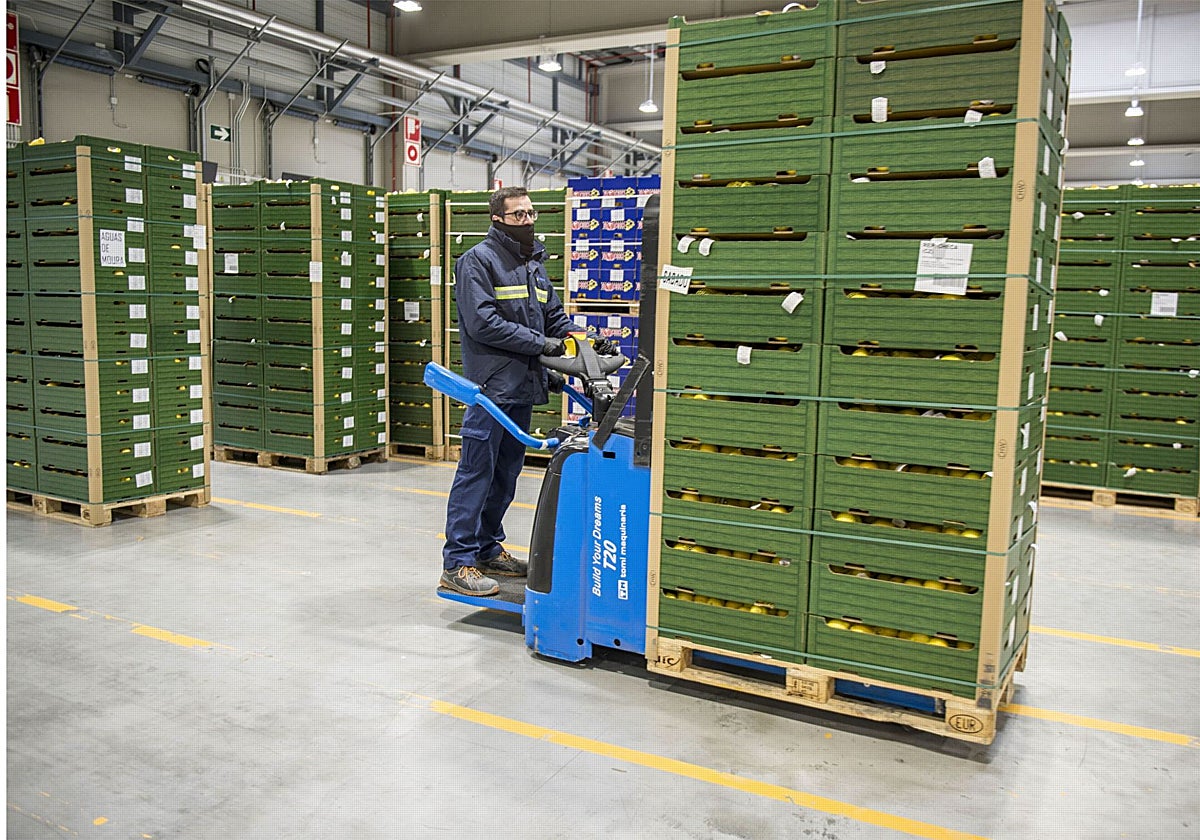
Spain’s fresh fruit and vegetable exports generated €11.605 billion in the first half of 2026, an increase of 5.8% from the same period of 2025, according to customs data processed by the Spanish Federation of Associations of Producers and Exporters of Fruits and Vegetables, Fepex. Export volume was broadly stable, declining 0.6% to 6.6 million tonnes. The divergence indicates that higher unit values, rather than volume expansion, drove the sector’s revenue growth.
The Region of Murcia accounted for 20% of exported volume. It ranked as Spain’s third-largest exporting autonomous community after Andalusia and the Valencian Community, while remaining the leading province. The figures underline Murcia’s exposure both to changing export prices and to growing competition from imported produce.
Vegetable exports fell 1.6% to 3.156 million tonnes, but their value increased 9% to €5.431 billion. Fruit shipments rose 0.4% to 3.443 million tonnes and generated €6.175 billion, up 3.1%. The stronger increase in vegetable revenue came despite lower physical sales, reflecting particularly sharp value gains in several greenhouse crops.
Vegetables gain value as citrus shipments weaken
Pepper exports reached 451,150 tonnes worth €1.128 billion. Volume declined 0.8%, while value rose 6.1%. Tomato shipments dropped 3.5% to 367,651 tonnes, but revenue increased 11.7% to €757 million. Cucumber exports grew 1.4% to 395,781 tonnes, while their value climbed 19% to €693 million.
Zucchini recorded the largest value increase among the specified vegetables. Export volume fell 5% to 247,095 tonnes, but revenue advanced 33.5% to €379 million. These results show that lower availability did not necessarily translate into weaker turnover for Spanish exporters during the period.
Fruit performance was mixed. Watermelon exports increased 18.3% to 451,454 tonnes and rose 13% in value to €393 million. Melon shipments grew 11.4% by volume and 15.4% by value. In contrast, orange exports declined 11.2% to 790,297 tonnes and fell 8.1% in value to €774 million. Mandarin volume decreased 6.6%, although revenue remained broadly stable at €748 million.
Lemon exports declined 2.2% to 363,352 tonnes, but their value increased 21% to €598 million. That combination contrasts with the sharp rise in imported lemons and makes the category a focal point for producers and traders assessing domestic supply, pricing and competition from third-country suppliers.
Imports outpace exports but surplus expands
Spain imported 2.566 million tonnes of fresh fruit and vegetables in the first half, 6.8% more than a year earlier. Import value increased 4.4% to €3.086 billion. Lemon imports posted the steepest reported increase, rising 75.7% to 30,280 tonnes. Orange inflows grew 43.8% to 64,888 tonnes, kiwi imports rose 20.7% to 105,684 tonnes and banana imports increased 14.4% to 241,683 tonnes.
Despite faster import growth, the sector retained a trade surplus of approximately €8.519 billion, 6.3% above the first half of 2025, Fepex said. The federation described export performance as resilient but warned that sustained import growth was increasing competition in Spain and the wider European Union market. It called for stronger competitiveness among Spanish farms and effective reciprocity in the application of production, social and environmental requirements.