Spanish citrus grower says labor-cost gap with Egypt threatens competitiveness
A Valencian grower says farm labor costs €15-€16 per hour in Spain, compared with €5-€6 for a full day in Egypt. Spanish producers are calling for equivalent labor, environmental and phytosanitary requirements on imported citrus.
Labor costs widen the production gap
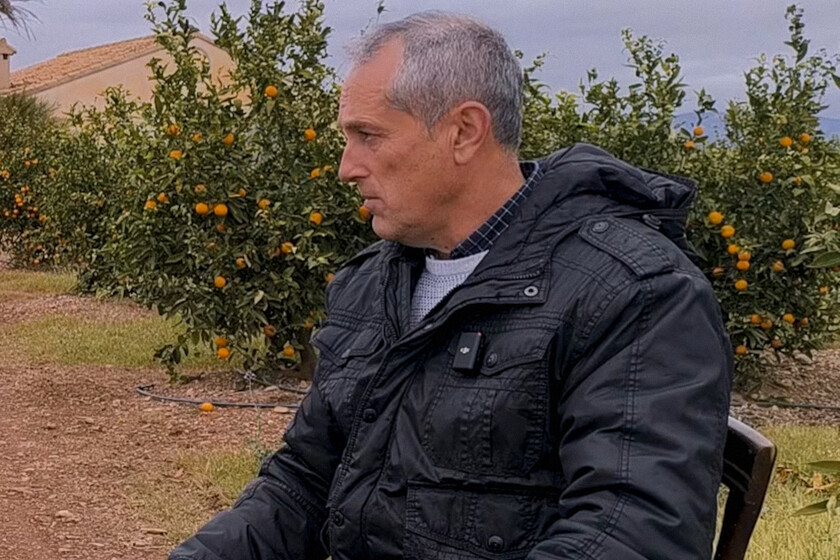
Spanish citrus producers are warning that the labor-cost difference with Egypt is undermining their ability to compete in the domestic and European markets. Valencian farmer Juan Manuel Martínez told Cultiva y Emprend that employing a farm worker in Spain costs a producer between €15 and €16 per hour. After taxes and social-security contributions, the worker receives about €11 net.
In Egypt, according to Martínez, an entire working day costs between €5 and €6. El Blog Salmón calculated that the relative difference exceeds 20 to 1 and that a full day of Egyptian agricultural labor is equivalent to less than 20 minutes of labor cost on a Spanish Mediterranean farm. Martínez manages 60 hectares of citrus and carob trees after leaving a salaried urban job at age 33. He said he entered farming without taking a bank loan.
The comparison illustrates the pressure on Spanish orange production, where harvesting is labor-intensive and producers cannot readily pass higher costs through the supply chain. Martínez argued that fertilizer and energy suppliers charge elevated prices while large retailers determine the final settlement paid for fruit. Consumers’ preference for the cheapest product further limits growers’ pricing power.
Growers demand equivalent import standards
Martínez said imported produce should meet the same labor, environmental and food-safety rules imposed on European Union growers. Spanish producers must absorb the cost of complying with EU restrictions on active substances used in crop protection, while they argue that imported oranges may be produced under different requirements.
He alleged that oranges treated with substances classified by the European Food Safety Authority as carcinogenic were reaching supermarkets. That claim was presented by El Blog Salmón as part of the grower’s criticism. Separate figures cited by the publication indicate repeated official alerts concerning Egyptian shipments, although they cover food consignments more broadly rather than establishing that every case involved oranges.
Border alerts and reduced inspection frequency
According to the Valencian Farmers’ Association, AVA-ASAJA, using notifications from the EU Rapid Alert System for Food and Feed, Egypt recorded 180 interceptions in 2024 and another 131 in 2025 because of unauthorized substances or residue-limit breaches. The source reports 672 customs rejections at European ports over the latest five-year period.
Detected substances included chlorpyrifos, an organophosphate insecticide prohibited in Europe since 2020 because of neurotoxic risks, and chlorpropham, a herbicide withdrawn in 2019. In some orange consignments, chlorpropham levels were reported at as much as 21 times the permitted legal limit.
At the same time, Commission Implementing Regulation (EU) 2024/286 reduced the minimum frequency of physical checks and sampling for oranges from Egypt from 20% to 10%. EU authorities said inspections indicated improved compliance. Agricultural organizations dispute that assessment, arguing that fewer checks weaken protection for local producers and preserve an unfair advantage for imported fruit.
Mirror clauses remain at the center of the dispute
The sector is pressing for so-called mirror clauses that would require imports to meet requirements equivalent to those governing EU production. Supporters say common labor, environmental and phytosanitary standards would narrow the competitive gap with third countries. The European Commission maintains that import controls must reflect risk assessments and international trade commitments.
For Spanish citrus businesses, the dispute affects more than farm wages. It determines how regulatory expenses, residue controls and purchasing practices are distributed between growers, importers and retailers. Without more comparable production rules, producer groups contend that Spanish oranges will continue to compete against fruit carrying substantially lower labor and compliance costs.